Asia · Trade
Special Economic Zones Shift Focus to Financial Infrastructure
As global trade reconfigures, Asia's economic zones are discovering that invisible financial systems matter more than physical hardware
KEY TAKEAWAYS
- ·Asia's special economic zones now compete on financial infrastructure depth rather than manufacturing costs alone, as investors prioritize payment systems, trade finance access, and institutional reliability.
- ·Physical infrastructure like ports and industrial estates enables activity, but financial ecosystems determine capital velocity through working capital access, foreign exchange platforms, and digital payment rails.
- ·Indonesia's economic zones face uneven capital inflows despite physical readiness, with financial infrastructure gaps raising operational costs and limiting supplier ecosystem integration compared to Thailand and Vietnam.
The Hardware Era Ends
The formula that built Shenzhen and Jurong is losing relevance. For decades, special economic zones across Asia competed on industrial estates, deepwater ports, and aggressive tax holidays. Nations measured success by foreign direct investment volumes and manufacturing cost advantages.
That playbook no longer determines winners. Supply chain redesign and geopolitical realignment have rewritten investor priorities. Multinationals now evaluate locations through resilience, digital connectivity, and institutional sophistication. The physical infrastructure remains necessary, but insufficient.
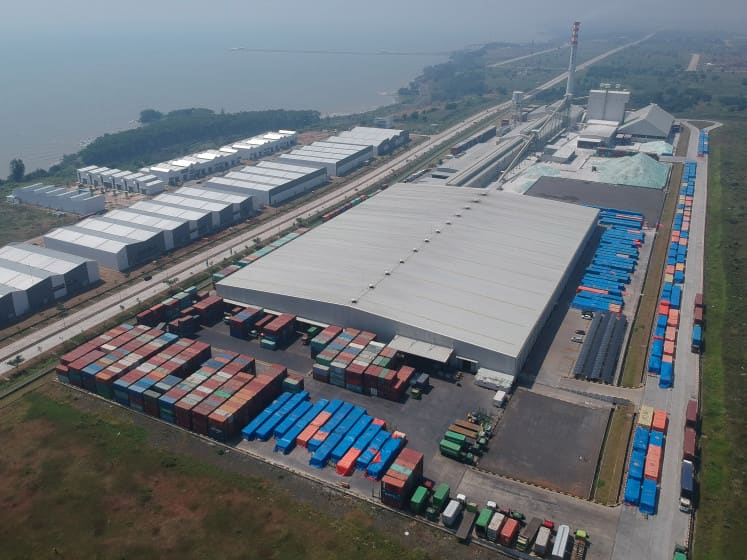
Indonesia's Batang Industropolis and similar zones across Southeast Asia illustrate the transition. Modern warehouses and container terminals draw initial attention. Sustained competitiveness, however, depends on systems investors cannot photograph: payment rails, trade finance networks, foreign exchange platforms, and working capital access.
Capital Velocity vs. Capital Attraction
Physical infrastructure enables economic activity. Financial infrastructure determines economic velocity. The distinction matters more as trade volumes grow and transaction complexity increases.
A container port moves goods between ships and trucks. A financial ecosystem moves capital between exporters, suppliers, banks, and multinational treasury operations. Export transactions require working capital lines. Supplier networks depend on liquidity. Cross-border operations demand seamless foreign exchange management.
Operational friction accumulates quickly in zones lacking financial depth. Transaction settlement delays cascade through supply chains. Elevated capital costs squeeze margins. Local small and medium enterprises struggle to integrate into multinational value chains. Investors face operational risk that offsets tax incentives.
The New Competitive Layer
Asia's economic zones now compete on institutional software, not just physical hardware. Singapore's dominance extends beyond Changi Airport and its port capacity. The city-state offers sophisticated banking infrastructure, transparent regulatory frameworks, and deep capital markets. Jurong's manufacturers access trade finance, hedging instruments, and treasury management platforms that reduce operational friction.
Emerging zones face a steeper climb. Shenzhen succeeded when manufacturing cost advantages could overcome institutional gaps. Today's investors optimize across multiple variables. A location might offer lower labor costs, but if payment systems lag or working capital proves expensive, the total cost of operations rises.
Financial infrastructure gaps manifest in measurable ways. Delayed receivables lock up working capital. Limited hedging options expose manufacturers to currency risk. Weak credit assessment systems exclude capable SMEs from supply chains. The cumulative effect: zones attract initial investment but struggle to build dense, integrated ecosystems.
Digital Finance and Ecosystem Integration
The next generation of competitive zones will layer digital financial services onto physical foundations. Real-time payment systems reduce transaction friction. Digital trade finance platforms cut documentation costs and accelerate capital turnover. Blockchain-based supply chain finance brings transparency to multi-tier supplier networks.
These systems particularly benefit smaller enterprises. Traditional trade finance requires extensive documentation and established banking relationships. Digital platforms democratize access. An SME supplier in a Central Java industrial park can secure working capital based on purchase orders from a multinational anchor tenant, without branch banking infrastructure.
Ecosystem integration depends on these invisible connections. Physical proximity matters less when digital systems enable efficient capital flow, information sharing, and risk management. A zone's value proposition shifts from cheap land and tax breaks toward network effects and reduced operational complexity.
Trust Infrastructure
Financial sophistication ultimately reflects institutional quality. Payment systems require reliable legal frameworks. Trade finance depends on enforceable contracts. Foreign exchange markets need regulatory clarity. Capital flows toward jurisdictions where rules remain predictable and disputes find resolution.
This presents challenges for developing economies building new zones. Physical infrastructure projects offer visible progress: cranes, roads, terminals. Institutional development proceeds slowly. Regulatory frameworks require iteration. Legal systems need time to build precedent. Banking sectors must accumulate expertise.
Yet this infrastructure determines whether zones achieve escape velocity. Investors tolerate higher costs in locations offering institutional reliability. They avoid locations where contract enforcement proves uncertain or regulatory frameworks shift unpredictably, regardless of physical amenities.
The Indonesia Test Case
Indonesia operates multiple special economic zones, from Batang in Central Java to newer developments in Kalimantan and Sulawesi. The government has invested substantially in roads, ports, and utilities. Tax incentives match or exceed regional competitors.
Capital inflows remain uneven. Some zones attract anchor tenants but struggle to build supplier ecosystems. Others see initial investment stall as operational realities emerge. The pattern suggests physical readiness alone cannot deliver sustained competitiveness.
Financial infrastructure depth varies significantly across Indonesian zones. Jakarta's proximity provides some advantage through established banking relationships and capital market access. More remote zones face steeper challenges. Working capital costs rise. Payment system inefficiencies accumulate. SME suppliers find credit scarce.
The competitive disadvantage compounds over time. Multinationals can manage institutional friction through internal resources. Their local suppliers cannot. Value chains remain shallow. Zones achieve lower integration than comparable locations in Thailand or Vietnam, where financial ecosystems prove more developed.
What Comes Next
Asia's economic zone competition is entering a new phase. The hardware buildout continues, but no longer differentiates winners. Every serious zone offers modern facilities and competitive incentives.
The decisive layer sits in financial architecture. Zones that reduce transaction friction, enable efficient capital flow, and integrate SMEs into value chains will capture investment. Those that focus exclusively on physical infrastructure will struggle to move beyond basic assembly operations.
For policymakers, this demands different priorities. Financial institution development, regulatory framework refinement, and digital payment infrastructure require sustained attention. These investments lack ribbon-cutting moments but determine long-term outcomes.
The shift favors locations with institutional depth over those with only cost advantages. Asia's next generation of successful zones will be built on invisible infrastructure that powers capital velocity, reduces operational risk, and enables ecosystem integration. Physical hardware opens doors. Financial software keeps them open.
RELATED STORIES

China Builds Alternative Supply Chain Standards for Global Trade
Cheng Wei-Lun · 3 min

Vietnam Ships 1.7 Million Tonnes of Coffee as Brazil Delays and EU Rules Reshape Trade
Tran Quoc Bao · 3 min
Vietnam's Trade Turnover Hits $770 Billion as Imports Surge Past Exports
Jun-ho Seo · 2 min
South Korea Breaks Full-Year Export Record in September
Tran Quoc Bao · 3 min
Spot something wrong? Email editor@briefasia.com. We log every correction publicly.