Asia · Politics
Southeast Asian Bloc Presses for Open Passage in Hormuz Strait
ASEAN foreign ministers cite international maritime law as Middle East tensions threaten energy flows and regional trade corridors
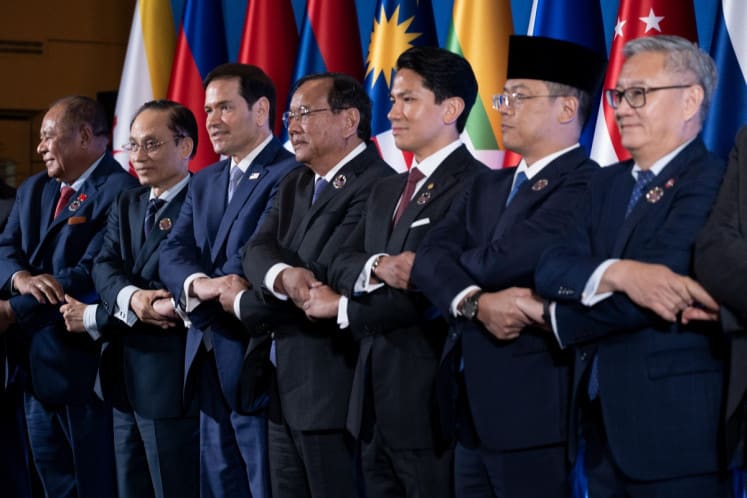
KEY TAKEAWAYS
- ·ASEAN foreign ministers called for unimpeded transit through the Strait of Hormuz, citing the UN Convention on the Law of the Sea during security talks in Manila.
- ·Middle East conflict has driven up energy prices and disrupted supply chains, agricultural production and fertilizer supplies across Southeast Asian economies.
- ·Ministers expanded discussions on food security cooperation and the ASEAN Power Grid to mitigate economic impacts from sustained energy volatility.
Regional Concerns Over Critical Waterway
Southeast Asian nations issued a formal call for unimpeded passage through the Strait of Hormuz during security discussions in Manila this week, underscoring how conflict thousands of kilometers away is reshaping economic calculations across the Asia-Pacific.
The statement emerged from the 59th ASEAN Foreign Ministers' Meeting, where the ten-member bloc invoked the 1982 UN Convention on the Law of the Sea and international civil aviation standards. Ministers emphasized the need for continuous transit of vessels and aircraft through the strait, which handles roughly one-fifth of global oil traffic.
The joint communiqué came after a week of diplomatic sessions that brought together ASEAN members with external partners including China, Japan, South Korea and the United States. Discussions repeatedly returned to the economic fallout from prolonged Middle East hostilities, which have pushed up energy costs and disrupted trade flows into Southeast Asian markets.
Supply Chain Pressures Mount
Energy price volatility has emerged as a persistent concern for the region's export-dependent economies. The conflict has also strained agricultural production and fertilizer supplies, adding pressure to food security planning across ASEAN member states.
Ministers devoted substantial attention to these economic impacts during Thursday's ASEAN Plus Three meeting with Northeast Asian counterparts. Talks centered on expanding cooperation in food security and accelerating deployment of the ASEAN Power Grid, a cross-border electricity transmission initiative designed to improve energy resilience.
The foreign ministers' statement marked a rare direct reference to the Hormuz situation from a bloc that typically favors consensus language on sensitive geopolitical matters. The specificity signals growing anxiety over how external shocks are affecting regional growth prospects.
Diplomatic Circuit Reflects Broader Tensions
The Manila gathering unfolded against a backdrop of intensifying competition for influence in Southeast Asia. This week's ministerial sessions, which included the East Asia Summit and ASEAN Regional Forum, saw major powers positioning themselves as reliable partners amid global fractures.
For ASEAN economies, the Hormuz issue cuts across multiple priorities. Indonesia and Malaysia are major energy exporters, while Singapore operates the world's largest bunkering hub. Vietnam and Thailand rely heavily on imported crude for manufacturing and power generation. Disruptions to maritime traffic in the Persian Gulf ripple quickly through these interconnected systems.
The joint statement stopped short of assigning blame or proposing specific enforcement mechanisms. Instead, it emphasized compliance with existing international frameworks and the safety of seafarers, a formulation designed to maintain the bloc's neutrality while registering concern.
Energy Security in Focus
ASEAN's attention to the Hormuz strait reflects broader questions about energy transition timelines and supply diversification. While several member states have accelerated renewable energy targets, the region remains dependent on hydrocarbon imports for baseload power and industrial feedstock.
The Middle East conflict has complicated planning assumptions. Sustained price elevation could accelerate investment in alternatives, but short-term volatility creates fiscal headaches for governments managing fuel subsidies and inflation expectations.
Thursday's discussions also touched on liquefied natural gas supply arrangements and regional storage capacity. Ministers explored options for coordinated reserves and emergency-sharing protocols, though no binding commitments emerged from the talks.
The Hormuz statement adds to a growing list of external issues commanding ASEAN attention, from South China Sea disputes to great-power technology competition. For a bloc built on economic integration, the message is clear: distant conflicts carry immediate costs, and safe passage through global chokepoints is no longer something to take for granted.
RELATED STORIES
Vietnam Bets $76 Billion Funding Gap Can Lure Capital Without Copying Rivals
Priyanka V. Rao · 4 min
Vietnam Draws $7.5 Billion From Singapore in Seven Months
Priyanka V. Rao · 3 min
Singapore and Vietnam Launch Strategic Dialogue on Talent and Technology
Priyanka V. Rao · 3 min
Thailand and New Zealand Set $8 Billion Trade Target Under New Partnership
Priyanka V. Rao · 3 min
Spot something wrong? Email editor@briefasia.com. We log every correction publicly.