Technology · Dev
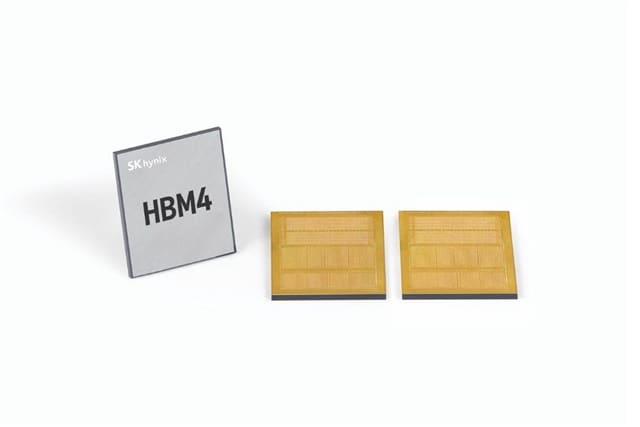
South Korean Suppliers Break into HBM4 Memory Testing Market
Digital Frontier and UniTest secure $172 million in tester orders from SK Hynix, challenging Japan's dominance in advanced memory equipment
KEY TAKEAWAYS
- ·SK Hynix awarded four HBM4 wafer tester contracts worth $172 million to South Korean suppliers Digital Frontier and UniTest in 2026.
- ·The orders mark a shift in memory testing equipment, a segment historically dominated by Japan's Advantest.
- ·Equipment will deploy at SK Hynix fabrication sites in late 2026 or early 2027 as the company prepares for HBM4 mass production.
Local Suppliers Enter Advanced Memory Testing
SK Hynix has placed four separate orders with South Korean equipment makers Digital Frontier and UniTest for HBM4 wafer testers, according to the companies. The combined value of the contracts reaches KRW247.84 billion, approximately $172 million, all secured during 2026.
The orders represent a notable development in the memory testing equipment landscape, where Japan's Advantest has historically held a commanding position. Both Digital Frontier and UniTest are domestic suppliers based in South Korea, and their selection by SK Hynix signals growing capability among local vendors to meet the technical demands of next-generation high-bandwidth memory production.
HBM4 Testing Requirements
High-bandwidth memory in its fourth generation requires specialized testing equipment capable of validating performance at speeds and densities that exceed previous iterations. Wafer-level testing catches defects before packaging, a critical stage for memory destined for AI accelerators and data center processors where reliability standards are unforgiving.
SK Hynix has been racing to scale production of HBM3E and prepare manufacturing lines for HBM4, which is expected to enter mass production in the next 12 to 18 months. The company competes directly with Samsung and Micron in a market where supply constraints have driven memory prices higher and where customers including Nvidia, AMD, and cloud providers are locking in long-term capacity agreements.
Securing local suppliers for test equipment offers SK Hynix potential advantages in lead times, service responsiveness, and supply-chain resilience. It also reflects South Korea's broader industrial strategy to build self-sufficiency in semiconductor tooling, an area where the country has lagged behind the United States, Japan, and the Netherlands.
Shifting Equipment Dynamics
Advantest, headquartered in Tokyo, has supplied memory testers to major producers in South Korea, Taiwan, and the United States for decades. The company's ACS and T5800 series have been workhorses in DRAM and NAND facilities. While Advantest remains the incumbent, the entry of Digital Frontier and UniTest into HBM4 testing indicates that technical barriers are no longer insurmountable for well-capitalized domestic players.
Neither Digital Frontier nor UniTest has disclosed the technical specifications of their HBM4 testers, but winning orders from SK Hynix implies that the equipment meets the yield, throughput, and accuracy benchmarks required for high-volume manufacturing. Both companies have been investing in R&D and expanding engineering teams in recent years, part of a wave of Korean equipment startups and mid-tier firms targeting niches within the semiconductor capital equipment market.
What Comes Next
The immediate impact will be visible in SK Hynix's capital expenditure and equipment installation schedules. The company is expected to deploy the new testers at its fabrication sites in Icheon and Cheongju, where HBM production is concentrated. Installation and qualification typically take several months, meaning the equipment will likely come online in late 2026 or early 2027.
For Digital Frontier and UniTest, the SK Hynix contracts serve as validation that could open doors to other memory makers. Samsung, which operates its own HBM lines, and international customers may consider Korean suppliers if these initial deployments prove successful. Repeat orders and expansions into other test categories, such as package-level or burn-in testing, would further cement their market position.
Broader implications extend to South Korea's semiconductor equipment industry. Government-backed initiatives, including subsidies and R&D grants, have aimed to reduce dependence on foreign tooling. Wins in advanced memory testing, a segment with high technical and financial barriers, suggest that policy support is beginning to translate into commercial traction. Whether this momentum extends to lithography, deposition, or etch equipment, where foreign dominance is even more pronounced, remains an open question.
RELATED STORIES

SK Hynix May Fast-Track Gwangju Fab Investment Alongside Yongin Expansion
Jun-ho Seo · 3 min
Samsung and SK Hynix Turn Down KEPCO's Multibillion-Dollar Prepayment Demand
Cheng Wei-Lun · 4 min
LG Pivots to AI-Defined Vehicle Platform as Korea Chases China's Self-Driving Lead
Jun-ho Seo · 3 min
South Korea Taps Three Telecom Giants to Deliver Free AI Services Nationwide
Cheng Wei-Lun · 3 min
Spot something wrong? Email editor@briefasia.com. We log every correction publicly.