Technology · AI
South Korea Triples AI Budget to $7.6 Billion in Push for Tech Dominance
Seoul's "AI for All" initiative will train 5.14 million citizens in 2026 while government coordinates major conglomerates to build sovereign foundation models

KEY TAKEAWAYS
- ·South Korea increased its national AI budget from 3.3 trillion won to 10.1 trillion won in 2026, nearly tripling spending despite fiscal concerns.
- ·The government will train 5.14 million citizens in AI during 2026 through three consortia led by SK Telecom, KT, and Kakao, providing free chatbot access.
- ·A talent shortage remains the primary obstacle to South Korea's ambition of becoming the third major AI power after the United States and China.
A State-Led AI Mobilisation
South Korea will train 5.14 million people in artificial intelligence during 2026, providing citizens with free access to AI chatbots built on domestically developed foundation models. The government's budget for AI has jumped from 3.3 trillion won ($2.5 billion) in 2025 to 10.1 trillion won ($7.6 billion) this year, according to Ministry of Science and ICT figures.
The spending increase comes despite ongoing concerns about fiscal health. Seoul is applying the same industrial strategy that previously built its semiconductor and shipbuilding sectors, concentrating resources on technologies it considers essential for economic survival.
Three consortia led by SK Telecom, KT, and Kakao will operate the "AI for All" programme. The government will supply them with up to 512 Nvidia B200 GPUs and subsidise development and operating costs. Citizens will use the AI chatbots without subscription fees or usage limits.
The ministry has granted participating companies access to public service systems, allowing their chatbots to connect with government AI agents that handle taxation, healthcare appointments, education, and support programmes. Such integration between private AI services and public infrastructure remains restricted in most other markets.
Cross-Party Consensus on AI Ambitions
South Korea's AI strategy has survived a change of government. The conservative administration under Yoon Suk-yeol set a goal of becoming one of the world's top three AI powers alongside the United States and China. When the progressive government led by Lee Jae-myung took office in 2025 following Yoon's impeachment, it maintained the same objective.
A recent survey found nearly 70 per cent of South Koreans believe AI services deployed through government-corporate collaboration will benefit society. This contrasts with debates in Western democracies, where AI adoption discussions often centre on privacy violations and job displacement.
The consensus extends beyond public opinion. Government and business leaders hold frequent coordination meetings in Seoul. In 2025, the Ministry of Science and ICT selected five industry-led teams to develop sovereign foundation models: Naver Cloud, Upstage, SK Telecom, NC AI, and LG AI Research.
Semiconductor Strength Underpins AI Push
South Korea views AI as directly connected to its semiconductor industry, which forms the backbone of its economy. AI expansion drives demand for advanced memory, computing infrastructure, and AI chips, all areas where South Korean manufacturers hold significant positions.
The country's approach prioritises rapid deployment over regulatory caution. Seoul's long-term plan includes giving citizens access to personal AI agents, moving beyond general-purpose chatbots to individualised AI assistance.
This implementation-first strategy differs from approaches in Europe, where AI policy emphasises governance, regulation, and data privacy. It also contrasts with the innovation-led model associated with Silicon Valley, where private sector research drives development.
Developmental State Model Returns
The state is acting as planner, investor, and coordinator. Ministry agencies function as pilot organisations responsible for fostering strategic industries, a role they performed during South Korea's industrialisation.
The government finances public access while providing material support to private partners. By encouraging widespread AI use early, Seoul aims to create a large domestic market where South Korean companies can develop, test, and refine their models without depending on foreign platforms.
This model mirrors the state-business collaboration that built South Korea's export-oriented manufacturing base. Major conglomerates work closely with government agencies to meet national technology targets, a pattern less common in neoliberal regulatory states where such coordination often draws scrutiny.
Talent Shortage Remains Key Challenge
South Korea faces a shortage of AI talent, the primary obstacle to its ambitions. If it can address this constraint, the country may establish itself as the third major AI power after the United States and China.
Success would likely produce a global AI landscape where South Korean companies join American and Chinese firms as dominant players. The pattern would resemble today's semiconductor industry, where a small number of countries control key technologies while most of the world remains on the consumer side.
The actions taken now will determine which countries actively shape AI development versus those that passively adopt foreign technologies. South Korea's tripling of its AI budget signals its determination to be in the first group.
RELATED STORIES
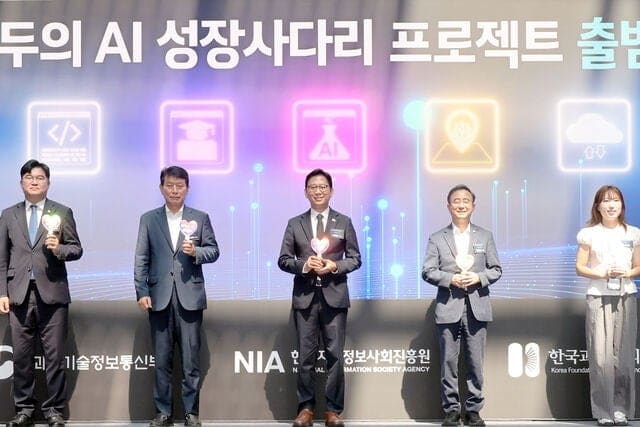
South Korea Taps Three Telecom Giants to Deliver Free AI Services Nationwide
Cheng Wei-Lun · 3 min
Samsung and SK Hynix Turn Down KEPCO's Multibillion-Dollar Prepayment Demand
Cheng Wei-Lun · 4 min
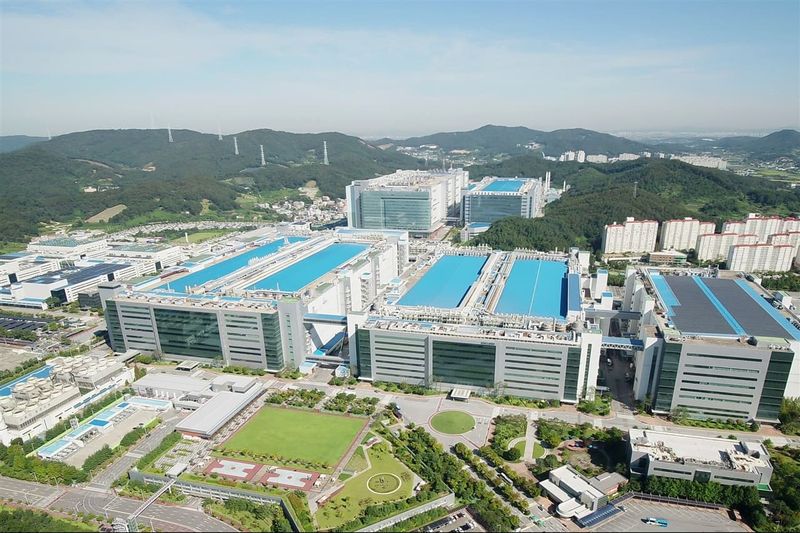
Samsung Display Restarts Asan OLED Campus as Foldable Phones Stage Recovery
Cheng Wei-Lun · 4 min

South Korea Records Highest September Export Start on Semiconductor Demand
Tran Quoc Bao · 3 min
Spot something wrong? Email editor@briefasia.com. We log every correction publicly.