Asia · Trade
South Korea Records Second-Highest Monthly Export Total on Semiconductor Strength
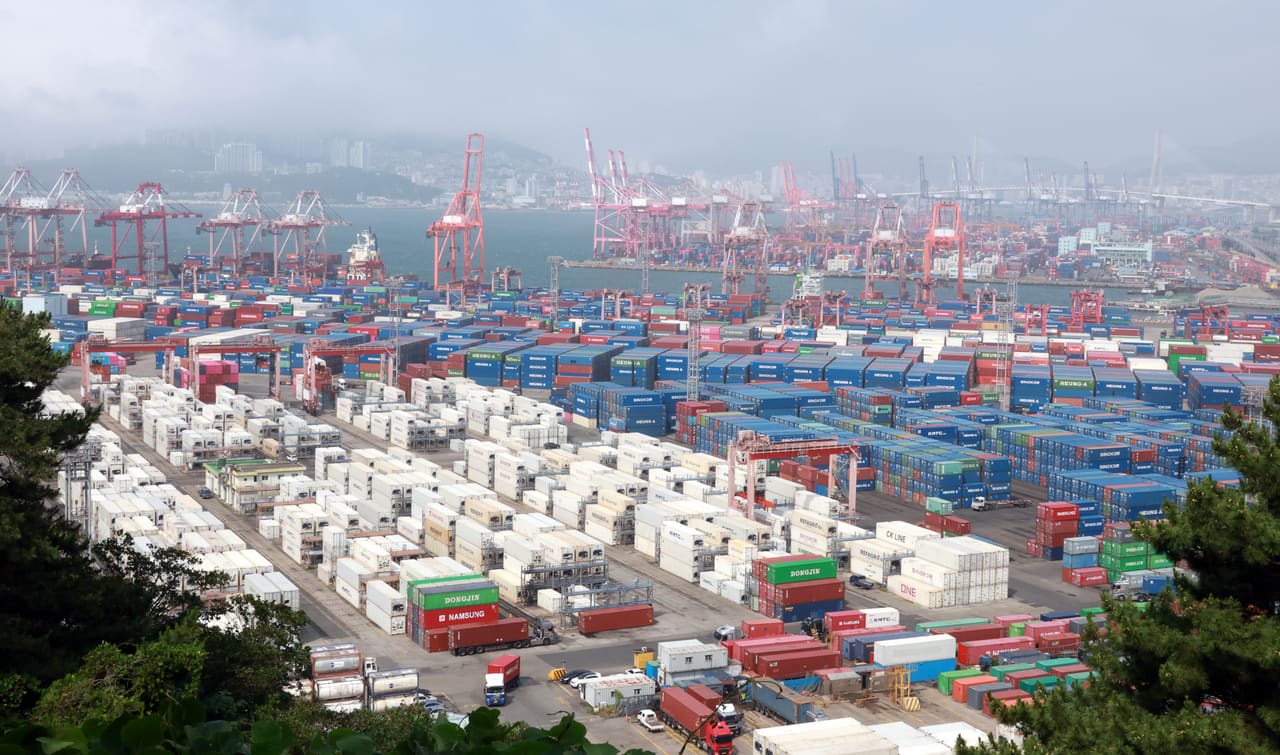
July shipments reached $98.89 billion, driven by robust global demand for memory chips, as the trade surplus widened to $30.32 billion.
KEY TAKEAWAYS
- ·South Korea's July exports climbed 63 percent year-on-year to $98.89 billion, the second-highest monthly total on record.
- ·Memory-chip shipments drove the surge as data-center and AI infrastructure demand remained strong, widening the trade surplus to $30.32 billion.
- ·Diversification into petrochemicals, automotive batteries, and new markets helped sustain momentum beyond the semiconductor sector.
Shipment Surge Reflects Chip Sector Momentum
South Korea logged $98.89 billion in outbound shipments during July, the second-largest monthly figure on record and a 63 percent climb from the same period last year, according to the Ministry of Trade, Industry and Resources. The result fell just short of June's all-time peak of $102.2 billion but underscores the resilience of Korea's export-led economy as memory-chip orders remain firm across global markets.
Imports rose 26.5 percent over the year to $68.56 billion, yielding a trade surplus of $30.32 billion for the month. The gap marks one of the widest balances Seoul has posted this year, reflecting both strong external demand and a relatively subdued import bill despite higher commodity and energy costs.
Memory Chips Anchor the Rally
The semiconductor sector continues to anchor Korea's trade performance. Memory-chip shipments have rebounded sharply over the past year as data-center operators and artificial-intelligence infrastructure builders stockpile high-bandwidth memory modules and advanced DRAM. Samsung Electronics and SK hynix, the country's two dominant chipmakers, have both reported tighter supply conditions and firmer contract prices in recent quarters, a reversal from the inventory glut that weighed on margins through much of the previous cycle.
Industry observers note that the current upturn differs from past cycles in its breadth. Demand is no longer concentrated in consumer electronics or smartphones; instead, enterprise customers building out AI training clusters and cloud infrastructure are driving incremental orders. That shift has allowed Korean producers to sustain higher utilization rates at their fabrication plants even as consumer-device sales moderate in key markets.
Broader Export Mix Supports Growth
Beyond semiconductors, other segments contributed to the July tally. Petrochemical shipments benefited from higher global feedstock prices and steady demand from Southeast Asian manufacturers, while automotive exports edged upward on the back of electric-vehicle battery sales and finished-vehicle deliveries to North America and Europe. Steel and machinery exports also posted modest gains, reflecting ongoing infrastructure investment across emerging Asia.
The Ministry of Trade, Industry and Resources has pointed to diversification as a key factor in sustaining export momentum. Over the past eighteen months, Seoul has worked to deepen trade ties with India, Vietnam, and the Gulf states, reducing the economy's reliance on any single destination market. That strategy appears to be paying dividends as geopolitical friction and shifting supply chains reshape global trade flows.
Trade Surplus Widens Amid Import Moderation
The $30.32 billion surplus represents a notable expansion from earlier months. While import growth of 26.5 percent might appear robust in isolation, it remains well below the pace of export gains, a dynamic that has allowed the current-account balance to strengthen. Energy imports, which had surged following the spike in oil and liquefied-natural-gas prices, have stabilized as global commodity markets cool. Meanwhile, demand for capital goods and industrial inputs has remained steady but measured, reflecting a cautious approach among domestic manufacturers wary of overcapacity.
Economists tracking Korea's external accounts expect the surplus to remain elevated in the near term, barring a sharp reversal in semiconductor demand or a renewed spike in energy costs. The Ministry of Trade, Industry and Resources has signaled confidence that export growth will hold above 20 percent on a year-over-year basis through the third quarter, though officials acknowledge that comparisons will become more challenging as base effects from the prior year's downturn fade.
Regional Context and Forward Outlook
Korea's export performance stands in contrast to the more uneven recoveries seen elsewhere in Northeast Asia. Japan has struggled with yen weakness and softer demand for industrial machinery, while Taiwan's shipment growth has been narrower, concentrated almost exclusively in advanced logic chips for AI accelerators. Korea's broader industrial base and its strength in both memory and legacy semiconductors have provided a more balanced foundation for growth.
Looking ahead, the sustainability of the current trajectory will hinge on several variables. Memory-chip pricing remains subject to cyclical swings, and any slowdown in AI infrastructure spending could dampen orders. Trade frictions, particularly around technology exports and supply-chain realignments, continue to pose downside risks. At the same time, Korea's pivot toward high-value segments, including advanced packaging and next-generation battery technology, offers potential upside if global capital expenditure on green energy and digital infrastructure remains robust.
For now, Seoul's trade officials are projecting cautious optimism. The July figures reinforce the view that Korea's export engine has regained traction, even as global economic conditions remain uneven. Whether that momentum can carry through the second half of the year will depend on how quickly end-market demand evolves and whether geopolitical headwinds intensify or ease.
RELATED STORIES
South Korea's Export Surge Powers Economic Upturn Through Third Quarter
Jun-ho Seo · 4 min
South Korea Breaks Full-Year Export Record in September
Tran Quoc Bao · 3 min
SK Hynix Union Rejects Wage Deal in Razor-Thin Vote
Cheng Wei-Lun · 3 min

South Korea Records Highest September Export Start on Semiconductor Demand
Tran Quoc Bao · 3 min
Spot something wrong? Email editor@briefasia.com. We log every correction publicly.