Asia · Trade
South Korea's July Exports Jump 52% as Chip Shipments Triple
Semiconductor exports drive trade surplus in first three weeks of month, fueled by AI demand across Asian manufacturing hubs
KEY TAKEAWAYS
- ·South Korea's exports reached $54.9 billion in the first 20 days of July, up 52.3 percent year-on-year, with semiconductor shipments nearly tripling.
- ·Imports rose 20 percent to $42.7 billion, generating a $12.2 billion trade surplus driven by high-margin chip sales to AI infrastructure buyers.
- ·The export surge reflects sustained demand for high-bandwidth memory from data center operators, with Korean fabs running near capacity to meet orders.
Semiconductor Surge Powers Trade Growth
South Korea recorded outbound shipments worth $54.9 billion in the first three weeks of July, a 52.3 percent increase over the same period last year, according to customs data released this week. The Korea Customs Service figures show semiconductor exports nearly tripled year-on-year, reflecting sustained demand from data center operators and device manufacturers across Asia and North America.
Imports during the July 1-20 window climbed 20 percent to $42.7 billion, producing a trade surplus of $12.2 billion. The gap marks the strongest performance for the opening stretch of July in three years and underscores the divergence between Korea's high-margin chip exports and its import basket, which tilts toward energy and raw materials.
AI Infrastructure Drives Chip Demand
The spike in semiconductor shipments follows a multi-quarter rally in memory and logic chips used in artificial intelligence workloads. Samsung Electronics and SK hynix, the country's two dominant chipmakers, have expanded production of high-bandwidth memory modules that sit inside AI accelerators from Nvidia, AMD, and newer entrants. Data center operators in the United States and China have placed large orders for these components, and Korean fabs are running near capacity to meet delivery schedules.
Industry analysts note that the current cycle differs from previous booms. Where earlier peaks were driven by consumer electronics or PC replacement waves, this expansion is anchored in enterprise infrastructure spending. Hyperscale cloud providers are building out GPU clusters at a pace that requires steady inflows of cutting-edge memory, and Korean suppliers hold a commanding share of that market.
Regional Context and Export Mix
Korea's export profile has shifted noticeably over the past 18 months. Semiconductors now account for roughly one-quarter of total outbound value, up from one-fifth two years ago. Shipments to Southeast Asian assembly hubs have also grown, as electronics manufacturers in Vietnam, Thailand, and Malaysia integrate Korean components into finished products destined for global markets.
Petrochemical and steel exports, which once formed a larger share of Korea's trade ledger, have grown more slowly. Demand from China's construction and automotive sectors remains uneven, and Korean producers face competition from Middle Eastern petrochemical complexes that benefit from lower feedstock costs. The divergence highlights how much Korea's trade performance now hinges on the health of the semiconductor cycle.
Import Growth and Trade Balance Outlook
The 20 percent rise in imports reflects higher volumes of crude oil, liquefied natural gas, and industrial machinery. Energy costs have moderated from their 2024 peaks, but Korea remains a large net importer of hydrocarbons. The country's refining sector processes crude for re-export as refined products, adding some value but leaving the trade balance sensitive to global energy price swings.
Machinery imports have picked up as Korean manufacturers invest in new production lines for advanced chips and electric vehicle batteries. Capital equipment from Japan, the Netherlands, and the United States forms a significant slice of the import bill, and these purchases tend to correlate with expectations of sustained export demand.
What Comes Next
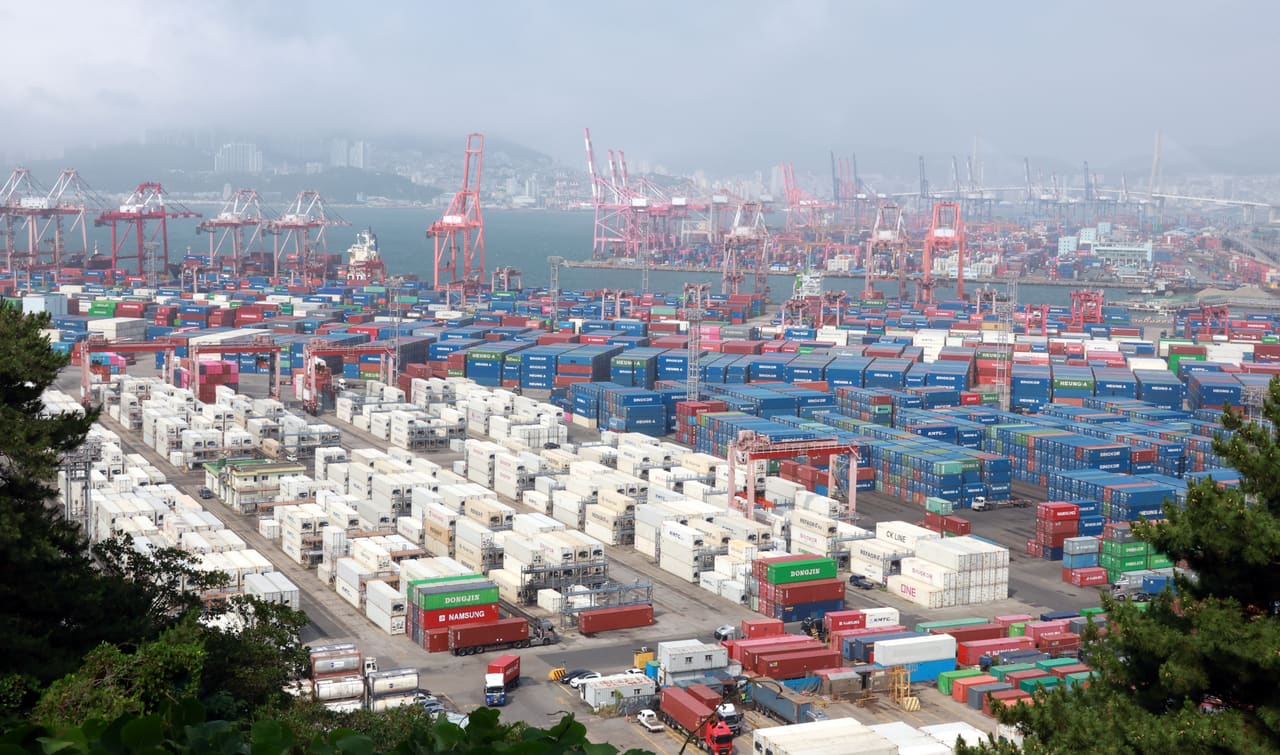
July's partial data will be finalized at month-end, and most analysts expect the full-month figure to show a similar trajectory. Forward-looking indicators, including new export orders and container throughput at Busan and Incheon, point to continued strength in August. Memory chip spot prices have stabilized after a sharp run-up earlier this year, suggesting that volume rather than price is now the main driver of export growth.
Korea's export engine remains tightly coupled to the investment plans of a small number of large tech companies. Any pullback in AI infrastructure spending, or a delay in next-generation chip adoption, would quickly show up in the customs data. For now, the pipeline is full and Korean chipmakers are racing to expand capacity in line with customer commitments.
RELATED STORIES
South Korea Breaks Full-Year Export Record in September
Tran Quoc Bao · 3 min
SK Hynix Union Rejects Wage Deal in Razor-Thin Vote
Cheng Wei-Lun · 3 min

South Korea's Alcohol Production Hits 27-Year Low as Wellness Trends Reshape Drinking Culture
Cheng Wei-Lun · 3 min
South Korea Creates Fiscal Buffer Fund to Manage Semiconductor Tax Surge
Cheng Wei-Lun · 4 min
Spot something wrong? Email editor@briefasia.com. We log every correction publicly.