Asia · Business
South Korea Posts Fastest Quarterly Income Growth in Nearly Four Decades
Semiconductor exports drive GDP expansion despite Middle East oil volatility, with Q2 growth reaching levels unseen since the 1980s
KEY TAKEAWAYS
- ·South Korea's GDP expanded 0.6% in Q2 2026 following a revised 1.8% gain in Q1, marking the fastest quarterly income growth in 38 years.
- ·Semiconductor exports absorbed volatility from Middle East oil price swings, with chip demand from AI infrastructure and data centers sustaining the trade surplus.
- ·The Bank of Korea released preliminary figures Thursday, with revisions expected as consumption patterns and business investment data become available.
Chip Sector Anchors Economic Expansion
South Korea's economy maintained momentum through the second quarter of 2026, with semiconductor exports offsetting headwinds from volatile energy markets tied to Middle Eastern instability. The Bank of Korea released preliminary figures Thursday showing real gross domestic product rose 0.6 percent in the April-June period compared to the previous quarter.
The quarterly expansion follows a revised 1.8 percent gain in the first three months of the year, according to the central bank's data. The consecutive quarters of growth mark the fastest pace of income expansion the country has seen in 38 years, a period stretching back to the late 1980s when South Korea was still consolidating its position as an industrial power.
Export Engine Fires on All Cylinders
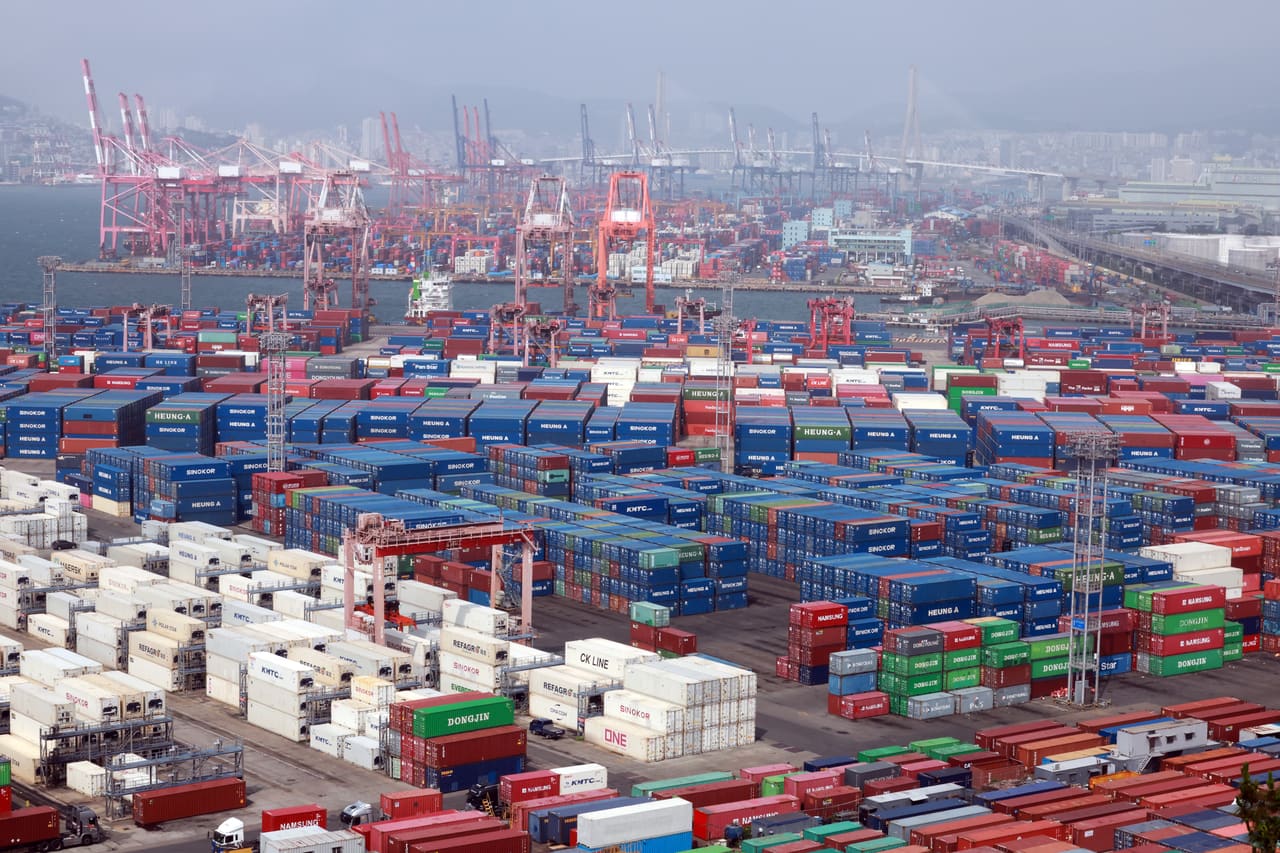
Semiconductor shipments anchored the quarter's performance, with Korean chip manufacturers capitalizing on sustained global demand for memory products and advanced logic chips. The sector's strength proved sufficient to absorb shocks from crude oil price swings triggered by escalating conflict in the Middle East, which sent energy import costs higher across most of the quarter.
Korea's export-dependent economy has historically shown vulnerability to external shocks, particularly energy price volatility given the country imports virtually all its petroleum needs. The resilience demonstrated in Q2 suggests the technology sector's current upcycle carries enough force to cushion broader macroeconomic pressures.
The Bank of Korea's preliminary assessment captures an economy threading a narrow path between competing forces. On one side, the semiconductor industry continues to benefit from artificial intelligence infrastructure buildout, data center expansion, and smartphone replacement cycles across major markets. On the other, geopolitical tension in oil-producing regions has kept energy costs elevated, squeezing margins for manufacturers and dampening consumer purchasing power.
Historical Context and Regional Implications
The 38-year comparison point places the current growth trajectory in rare company. South Korea's economy last achieved comparable quarterly income gains during the late 1980s, a period characterized by rapid industrialization, currency adjustments following the Plaza Accord, and preparation for the 1988 Seoul Olympics. That era saw the country transition from labor-intensive manufacturing toward higher-value sectors, a shift that laid groundwork for today's technology dominance.
The current cycle differs in composition. Where 1980s growth drew heavily on textiles, shipbuilding, and consumer electronics assembly, today's expansion leans on capital-intensive semiconductor fabrication and design. Samsung Electronics and SK Hynix together command significant global market share in DRAM and NAND flash memory, positioning Korea at a critical node in technology supply chains.
Regional competitors face their own challenges. Taiwan's economy remains closely tied to chip manufacturing but contends with elevated geopolitical risk. China continues to invest heavily in domestic semiconductor capacity, though export controls from the United States and its allies have constrained access to cutting-edge manufacturing equipment. Japan has refocused on materials and equipment supply rather than chip production itself.
Energy Costs and Trade Balances
Oil price volatility stemming from Middle Eastern conflict introduced uncertainty throughout the quarter. Brent crude futures swung within a wide range as markets priced in supply disruption risk, though actual production cuts remained limited. For Korea, each sustained ten-dollar increase in per-barrel prices translates to billions in additional annual import costs, widening the trade deficit unless offset by export gains.
The semiconductor sector's performance proved sufficient to maintain a positive trade balance despite energy headwinds. Chip exports to China, the United States, and Southeast Asia all posted year-on-year gains, with AI-related demand showing particular strength. Memory chip prices, which had languished through much of 2024 and early 2025, stabilized and began recovering as inventory corrections completed and new data center projects accelerated component orders.
Forward Indicators
The Bank of Korea's preliminary data will be revised twice in coming months as more complete information becomes available. Economists will watch whether the 0.6 percent quarterly pace proves sustainable or represents a peak in the current cycle. Domestic consumption patterns, business investment trends, and external demand signals will all factor into third-quarter performance.
Central bank policy remains accommodative by historical standards, with benchmark rates held steady to support growth while monitoring inflation pressures. The won's exchange rate against the dollar has traded in a relatively stable range, avoiding the sharp depreciation that can accompany commodity price surges.
Korea's economic trajectory through the remainder of 2026 will depend heavily on semiconductor market conditions, energy price paths, and the broader global technology spending environment. The 38-year growth milestone offers a moment to assess how far the country's economic structure has evolved, even as familiar vulnerabilities to external shocks persist.
RELATED STORIES
South Korea Creates Fiscal Buffer Fund to Manage Semiconductor Tax Surge
Cheng Wei-Lun · 4 min
South Korea Breaks Full-Year Export Record in September
Tran Quoc Bao · 3 min
SK Hynix Union Rejects Wage Deal in Razor-Thin Vote
Cheng Wei-Lun · 3 min
Seoul Faces Economic Pressure as US Policy Shift Strains Trade and Security Ties
Cheng Wei-Lun · 4 min
Spot something wrong? Email editor@briefasia.com. We log every correction publicly.