Technology · Dev
South Korea to Fund Full Infrastructure for Semiconductor Clusters
New enforcement rules allow government to cover up to 100% of power, water, and utility costs as Seoul doubles down on chip manufacturing competitiveness
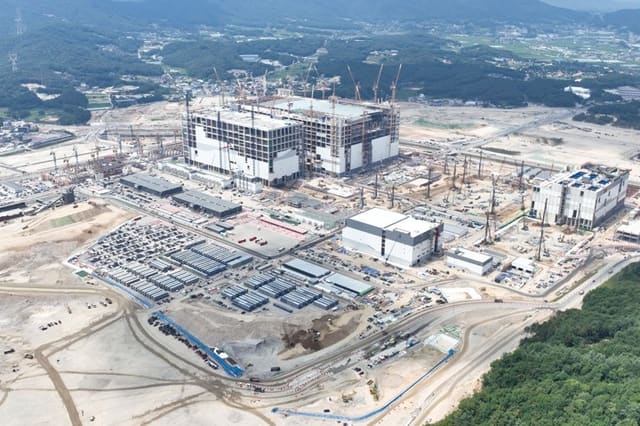
KEY TAKEAWAYS
- ·South Korea will fund 50 to 100 percent of infrastructure costs for designated semiconductor clusters under Cabinet-approved rules effective August 11.
- ·The policy covers power, water, and utility networks critical to chip fabs, positioning Seoul among Asia's most aggressive state supporters of the industry.
- ·Implementation details including budget size and cluster designation criteria will be published by the Ministry of Trade, Industry and Resources in coming weeks.
Cabinet Approves Unprecedented Support Package
South Korea has cleared the way for state funding to cover the entire cost of infrastructure for designated semiconductor manufacturing zones, according to enforcement rules approved by the Cabinet on Tuesday. The decree, which implements the country's special semiconductor law, takes effect August 11.
Under the new framework, central and local governments may fund between 50 percent and 100 percent of the total cost of building and operating infrastructure required for chip clusters, the Ministry of Trade, Industry and Resources announced. The infrastructure scope includes power supply networks, water treatment facilities, and related utilities critical to semiconductor fabrication plants.
The policy positions South Korea among the most aggressive state backers of chip manufacturing in Asia, where governments are racing to secure domestic production capacity amid supply chain fragilities exposed during recent global shortages. The move reflects Seoul's determination to maintain its edge in memory chips while expanding into logic and advanced packaging.
Regional Context and Competitive Pressure
The timing aligns with intensifying subsidy competition across the region. Taiwan continues to anchor its economic strategy around TSMC's dominance in advanced foundry services, while Japan has committed billions in subsidies to lure TSMC and other players to Kumamoto and Hokkaido. China, despite U.S. export controls, pours state capital into domestic champions including SMIC and Hua Hong Semiconductor.
South Korea's approach differs in structure. Rather than case-by-case subsidies negotiated with individual firms, the infrastructure model spreads the benefit across all participants in designated clusters. This lowers the barrier for both incumbent giants like Samsung and SK hynix and potential new entrants, including packaging specialists and materials suppliers.
The financial commitment signals that Seoul views semiconductor self-sufficiency not merely as industrial policy but as economic security. Memory chips and foundry services together account for a substantial share of South Korea's export revenue, and any disruption in fabrication capacity carries macroeconomic risk.
Implementation and Scale
Details on the total budget envelope and the criteria for designating clusters remain to be published by the Ministry of Trade, Industry and Resources. Industry observers expect existing semiconductor hubs in Gyeonggi Province and potential expansions in regional cities to qualify under the new rules.
The variable subsidy rate, ranging from half to full coverage, likely allows officials to tailor support based on strategic priority, cluster maturity, and private sector co-investment levels. Full funding may be reserved for zones targeting cutting-edge nodes or critical supply chain gaps, while mature clusters with established players might receive the minimum 50 percent share.
For chipmakers, the infrastructure guarantee reduces upfront capital expenditure and shortens the timeline from site selection to production ramp. Power and water availability have historically been bottlenecks in fab expansions, particularly as leading-edge facilities consume megawatts and require ultra-pure water in volumes that strain municipal systems.
What Comes Next
The enforcement rules operationalize legislation passed earlier this year, which also included tax incentives and streamlined permitting for semiconductor projects. Together, these measures form South Korea's answer to the U.S. CHIPS Act and the European Chips Act, each of which mobilizes tens of billions in public funds.
Market participants will watch how quickly the Ministry designates the first clusters and whether the framework attracts foreign investment. While South Korea's chip ecosystem is dominated by domestic giants, the infrastructure model could appeal to multinational materials firms, equipment makers, and design houses seeking proximity to leading-edge fabs.
The broader test will be execution. Infrastructure projects are prone to delays and cost overruns, and coordinating central and local government funding streams adds complexity. Success hinges on whether Seoul can deliver utilities on the timeline that semiconductor roadmaps demand, particularly as the industry moves toward sub-two-nanometer nodes and gate-all-around transistor architectures that require even tighter tolerances and resource stability.
RELATED STORIES

Samsung's Device Division Reports First Quarterly Loss as Chip Costs Surge
Cheng Wei-Lun · 3 min
Samsung and SK Hynix Turn Down KEPCO's Multibillion-Dollar Prepayment Demand
Cheng Wei-Lun · 4 min
SK Hynix May Fast-Track Gwangju Fab Investment Alongside Yongin Expansion
Jun-ho Seo · 3 min

South Korea Taps Three Telecom Giants to Deliver Free AI Services Nationwide
Cheng Wei-Lun · 3 min
Spot something wrong? Email editor@briefasia.com. We log every correction publicly.