Finance · Markets
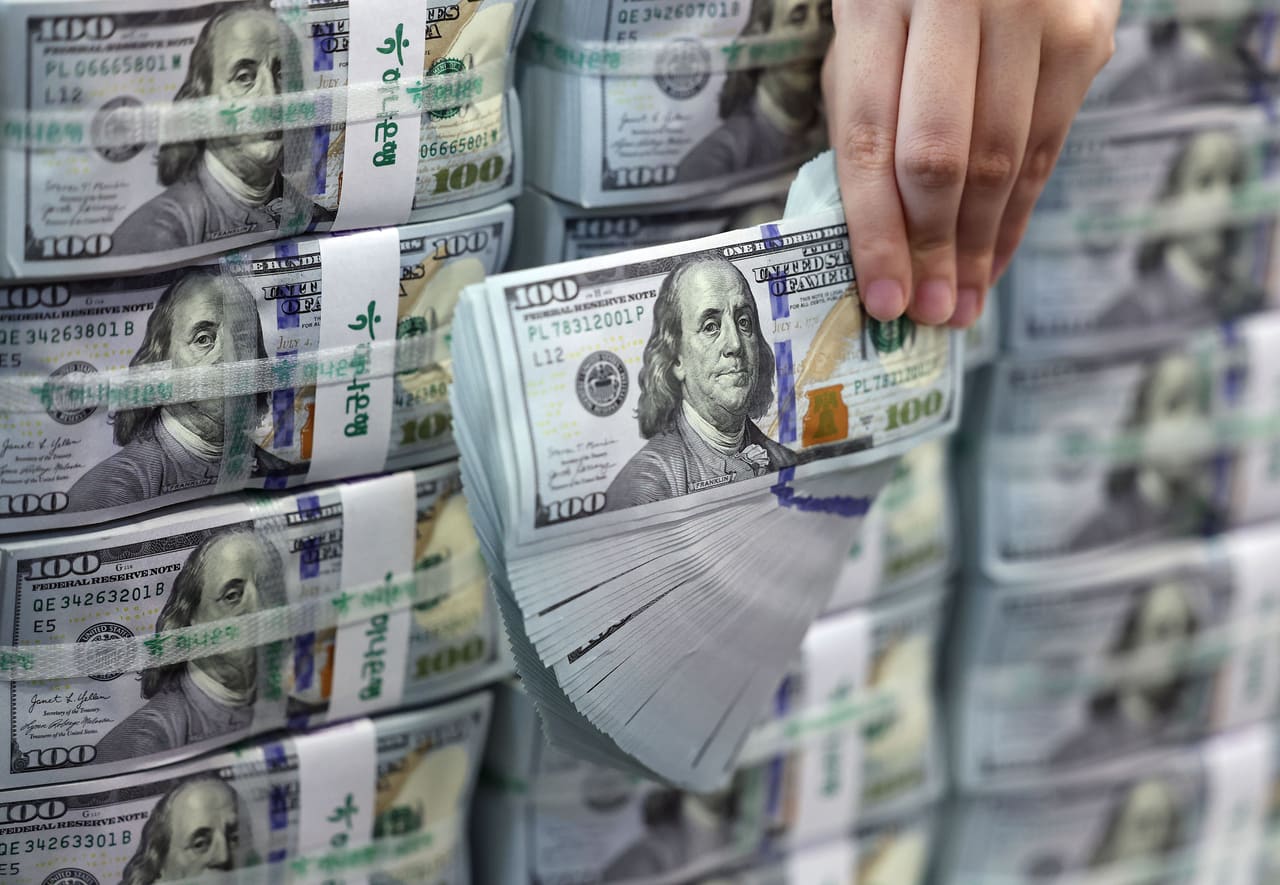
South Korea's Foreign Reserves Climb to $427.95 Billion in July
A second consecutive monthly gain reflects bond issuance and dollar-denominated asset appreciation as Seoul shores up its external buffer
KEY TAKEAWAYS
- ·South Korea's foreign exchange reserves increased $590 million in July to $427.95 billion, the second consecutive monthly gain.
- ·The rise stemmed from issuance of foreign exchange stabilization bonds and appreciation in US-denominated assets held by the Bank of Korea.
- ·Korea's reserve buffer now covers seven months of imports and exceeds twice its short-term external debt, reinforcing currency stability.
Reserves Extend Gains
South Korea's foreign exchange reserves climbed to $427.95 billion at the end of July, marking the second straight month of expansion, according to the Bank of Korea. The $590 million monthly increase followed a $370 million gain in June, signaling steady accumulation as authorities tap international capital markets and benefit from asset revaluation.
The central bank pointed to two primary drivers: fresh issuance of foreign exchange stabilization bonds and appreciation in the value of US-denominated assets. Stabilization bonds, a tool Seoul uses to manage liquidity and smooth currency volatility, inject foreign currency into reserves when sold to offshore investors. The BOK did not disclose the size or maturity of July's bond sales, but the mechanism remains a staple of Korea's reserve management toolkit.
Dollar Strength and Asset Mix
The gain also reflects mark-to-market effects. When the dollar strengthens against other major currencies in which Korea holds reserves - such as the euro, yen, or pound - the dollar value of those non-US holdings rises. July saw mixed currency movements: the dollar firmed against the yen but softened slightly against the euro, creating a net positive revaluation effect on Korea's diversified reserve portfolio.
Korea's reserves are spread across government securities, deposits at foreign central banks, and holdings at the International Monetary Fund and the Bank for International Settlements. US Treasuries and agency debt form the largest share, offering both liquidity and yield. The BOK periodically adjusts the currency and asset mix to balance return, safety, and the ability to intervene in foreign exchange markets if needed.
Regional Context
At $427.95 billion, South Korea ranks among Asia's top reserve holders, trailing only China, Japan, and India. The buffer is roughly equivalent to seven months of goods imports or twice the country's short-term external debt, comfortably above conventional adequacy benchmarks. That cushion matters in a region where capital can flow out quickly during risk-off episodes - something Korean policymakers remember from past currency crises.
Other Asian economies have also been building reserves this year. Taiwan reported a modest uptick in July, while Singapore's official foreign assets edged higher. The common thread is a preference for self-insurance in an environment of elevated US interest rates, sticky inflation, and uncertain trade policy. For Korea, reserves also backstop the won, which has traded in a narrow range against the dollar over the past quarter despite periodic bouts of volatility tied to export data and semiconductor demand.
What Comes Next
The trajectory of Korea's reserves in the months ahead will hinge on three factors: the pace of stabilization bond issuance, movements in the dollar index, and any direct intervention by the BOK to smooth currency swings. With US rates expected to hold steady through year-end and the won under modest depreciation pressure from a widening trade deficit, Seoul may opt to issue additional bonds or draw on currency swap lines with major central banks if volatility spikes.
Investors and policymakers will also watch for any shift in reserve composition. A sustained rally in gold prices earlier this year prompted some central banks to diversify into bullion, though the BOK has historically kept its gold allocation minimal. Any material change would signal a reassessment of tail risks in the global financial system.
For now, the two-month climb underscores Korea's continued commitment to maintaining a robust external position. In a world where currency stability can hinge on perception as much as fundamentals, a rising reserve total sends a clear message: Seoul has the firepower to defend the won and meet external obligations, no matter what turbulence lies ahead.
RELATED STORIES
Seoul Market Climbs on Tech Rally After US Jobs Data
Cheng Wei-Lun · 3 min

KT&G Posts Fourth Consecutive Quarter of Double-Digit Profit Growth
Cheng Wei-Lun · 3 min
South Korean Retail Investors Pivot to US Leveraged ETFs After Domestic Crackdown
Cheng Wei-Lun · 3 min
South Korea's Pension Giant Faces Questions Over Market Timing
Jun-ho Seo · 3 min
Spot something wrong? Email editor@briefasia.com. We log every correction publicly.