Travel & Dining · Dining
South Korea's Ediya Coffee Launches Alipay+ Discount for Regional Travelers
The local chain rolls out targeted payment promotions as Seoul intensifies efforts to capture Asia's mobile wallet users
KEY TAKEAWAYS
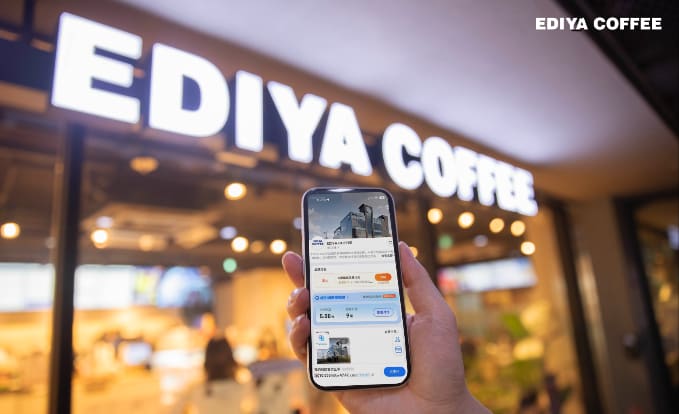
- ·Ediya Coffee introduced a 20 percent discount for foreign customers using Alipay+ partner wallets, with Alipay users eligible for up to 15 yuan off per transaction across three redemptions.
- ·The promotion reflects South Korea's broader effort to streamline cross-border payments as the country recorded 11.03 million international arrivals in 2025, with Chinese visitors forming the largest group at 3.67 million.
- ·Competitors in South Korea's saturated coffee market are likely monitoring the initiative as payment convenience becomes a differentiator for capturing tourist spending without eroding domestic margins.
A Play for Regional Wallet Share
Ediya Coffee has opened its doors wider to foreign customers by integrating discount incentives tied to Alipay+, the cross-border payment network that links mobile wallets across Asia. The promotion targets travelers using partner e-wallets, offering a 20 percent discount coupon valid across the chain's full menu.
For customers paying through Alipay itself, the deal caps savings at 15 yuan per transaction, with redemptions allowed three times. Users of Alipay+ partner wallets, including AlipayHK and others in the network, can also access the coupon structure, though specific terms vary by wallet provider.
The move positions Ediya Coffee as one of the more accessible local chains for inbound travelers navigating Seoul's coffee landscape, where payment friction has historically been a barrier for visitors without Korean credit cards or mobile banking apps.
Seoul's Broader Digital Hospitality Push
Ediya's promotion arrives as South Korea accelerates infrastructure improvements for foreign tourists, particularly those from mainland China, Hong Kong, and Southeast Asia, where Alipay and its partner wallets dominate everyday transactions. The country recorded 11.03 million international arrivals in 2025, with Chinese visitors representing the largest single cohort at 3.67 million, according to data from the Korea Tourism Organization.
Retail and hospitality operators have increasingly adopted QR-based cross-border payment systems to reduce dependency on cash and physical card networks. Alipay+ itself connects over a dozen regional wallets, including Touch 'n Go from Malaysia, GCash from the Philippines, and TrueMoney from Thailand, creating a unified acceptance layer for merchants.
For Ediya, which operates more than 3,000 stores across South Korea and competes against both global chains and local rivals like Compose Coffee and Mega Coffee, the integration represents a tactical effort to convert foot traffic from tourist districts into repeat purchases. The chain has historically focused on affordability and ubiquity rather than premium positioning, making it a natural fit for value-conscious travelers.
Payment Rails as Competitive Advantage
The discount structure itself is straightforward but signals a recognition that payment convenience can drive store selection among foreign visitors. A 20 percent discount on a typical Ediya order, which averages around 4,000 to 5,000 won for an Americano or latte, translates to savings of roughly 800 to 1,000 won per visit, enough to influence choice in a saturated market.
Cross-border payment platforms have become a key lever for merchants seeking to differentiate on service rather than product alone. In Japan, convenience store chains like FamilyMart and Lawson have long integrated Alipay and WeChat Pay to capture spending from Chinese tourists. South Korea's adoption has lagged slightly but is now accelerating as the government pushes digital payment interoperability through initiatives like the Korea Pay integration framework.
Ediya's announcement did not specify the promotion's duration or whether it would expand to include other payment networks such as WeChat Pay or Korean domestic wallets like Naver Pay. The company also did not disclose transaction volume targets or projections for incremental revenue from foreign customers.
What Comes Next
The promotion is likely to be closely watched by competitors, particularly as South Korea's coffee market remains one of the most saturated in Asia, with per capita consumption exceeding that of the United States. Chains that can successfully tap international demand without cannibalizing domestic margins may gain an edge as tourism recovers to pre-pandemic levels and beyond.
For travelers, the immediate takeaway is simple: mobile wallets linked to Alipay+ now offer measurable savings at one of South Korea's largest coffee chains, reducing one friction point in a market that has historically required local payment methods. Whether other chains follow with similar integrations will depend on how effectively Ediya converts the promotion into sustained international traffic.
RELATED STORIES

Homeplus Secures Funding and Resumes Operations as Court Deadline Looms
Jun-ho Seo · 4 min

South Korea Builds New Retail Bridge for Fashion Export Push
Jun-ho Seo · 3 min
Seoul Market Climbs on Tech Rally After US Jobs Data
Cheng Wei-Lun · 3 min
SK Hynix Eyes Stake Sale in $3 Billion China Packaging Facility
Cheng Wei-Lun · 2 min
Spot something wrong? Email editor@briefasia.com. We log every correction publicly.