Lifestyle · Fashion
South Korea Builds New Retail Bridge for Fashion Export Push
Hyundai Department Store and state content agency join forces to place emerging Korean brands in overseas pop-up stores
KEY TAKEAWAYS
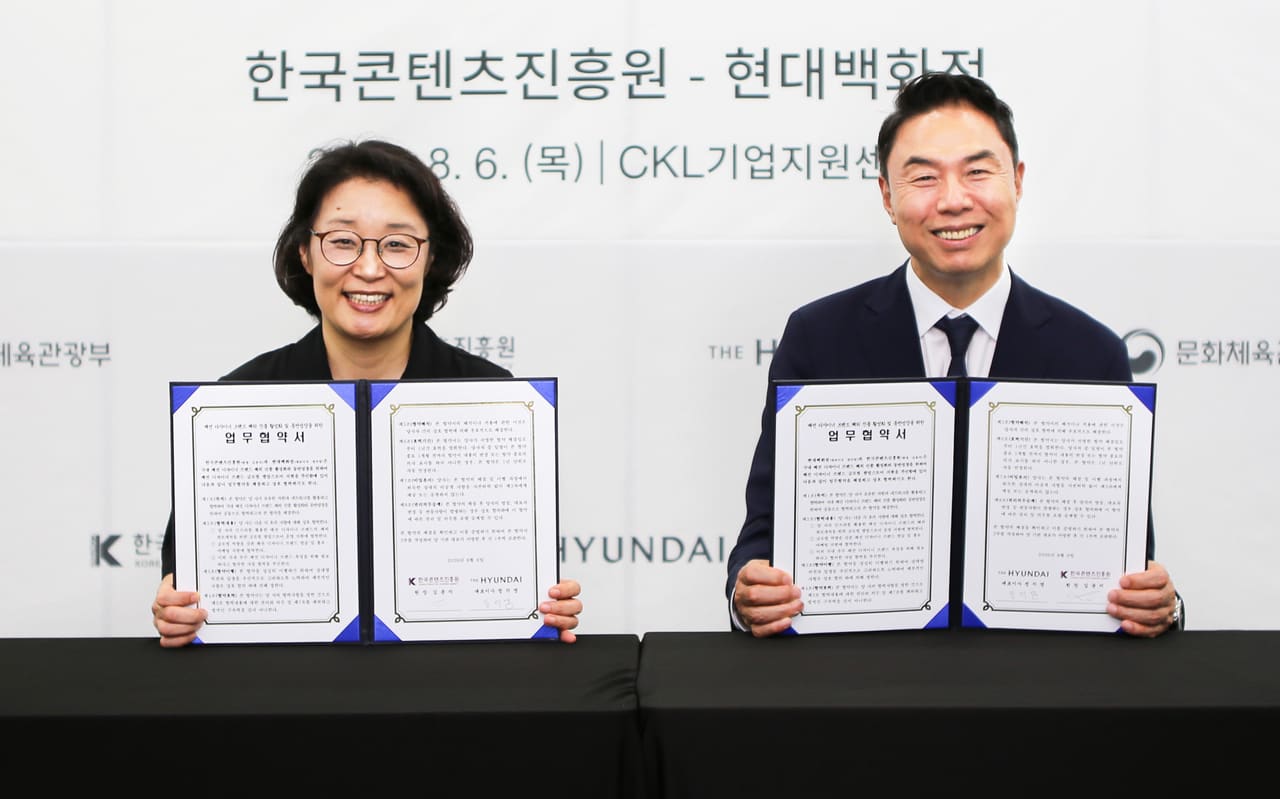
- ·Hyundai Department Store and the Korea Creative Content Agency signed an agreement to help Korean fashion brands enter overseas markets through pop-up stores and shared logistics support.
- ·Hyundai will provide its global retail network and store operations while KOCCA covers logistics and export costs for selected brands.
- ·The partnership aims to lower barriers for small and mid-sized Korean fashion labels seeking international expansion without heavy upfront investment.
A Public-Private Channel for Fashion Exports
South Korea is opening a new pathway for its fashion brands to reach international consumers. Hyundai Department Store announced Friday that it has signed a memorandum of understanding with the Korea Creative Content Agency to support Korean fashion labels seeking overseas expansion through pop-up stores and related infrastructure.
The partnership pairs Hyundai's global retail footprint with KOCCA's export assistance capabilities. Under the agreement, the two organizations will jointly identify Korean fashion brands with export potential and provide them with access to prime retail locations in key international markets.
Hyundai Department Store will contribute its overseas store network and operational expertise in foreign retail environments. KOCCA, the state-backed agency responsible for promoting Korean creative industries, will handle logistics coordination and cover a portion of export-related expenses for participating brands.
Pop-Up Stores as Market Entry Points
The initiative centers on temporary retail installations rather than permanent storefronts. Pop-up stores offer emerging brands a lower-risk method to test foreign markets without committing to long-term leases or extensive capital investment. They also allow retailers like Hyundai to experiment with brand mixes and gauge consumer response before making permanent merchandising decisions.
For Korean fashion labels, particularly small and mid-sized companies, the arrangement addresses two persistent barriers to international expansion: access to premium retail real estate and the upfront costs of cross-border logistics. Many promising Korean brands lack the resources to negotiate directly with foreign property owners or absorb the expenses of shipping inventory overseas, clearing customs, and managing returns.
By pooling public sector funding with private sector retail infrastructure, the partnership attempts to compress the timeline and reduce the financial burden of market entry. Brands selected for the program will gain visibility in established shopping destinations where foot traffic and consumer spending patterns are already proven.
Korea's Fashion Ambitions in a Crowded Field
South Korea has been working to elevate its fashion industry beyond domestic consumption. While Korean pop culture, beauty products, and consumer electronics have achieved substantial global recognition over the past two decades, fashion remains a more fragmented story. A handful of Korean designers and labels have gained international followings, but the sector as a whole has not yet matched the export success of Japan's minimalist aesthetic or China's manufacturing scale.
Government agencies like KOCCA have been tasked with changing that trajectory. The agency already supports Korean content creators in film, music, gaming, and other creative industries. Extending similar support to fashion aligns with broader national strategies to diversify export revenue and build cultural influence through consumer goods.
Hyundai Department Store, one of South Korea's major retail operators, has been expanding its presence outside the country in recent years. The company operates stores in several Asian markets and has used its platform to showcase Korean brands alongside international labels. The KOCCA partnership formalizes a role the retailer has been playing informally: serving as a launchpad for domestic brands seeking foreign buyers.
Challenges Ahead
The success of the program will depend on brand selection, timing, and the ability to convert temporary retail presence into sustained market traction. Pop-up stores generate buzz and collect customer data, but they do not guarantee long-term sales channels. Brands that perform well in a pop-up format still need to establish distribution agreements, manage inventory flows, and build customer loyalty in markets where they have little brand recognition.
The partnership also enters a retail landscape that has become more complex since the pandemic. Consumer shopping behavior continues to shift between physical stores and online platforms, and inflation in many markets has made discretionary spending more selective. Korean brands will compete not only with established international labels but also with local designers and fast-fashion chains that dominate affordable segments.
Still, the infrastructure matters. By reducing financial and logistical friction, the Hyundai-KOCCA arrangement gives Korean fashion brands a clearer path to international visibility. Whether that visibility translates into market share will depend on the brands themselves and the appetite of overseas consumers for what South Korea's fashion industry has to offer.
RELATED STORIES

South Korea's Beauty Export Success Built on Contract Manufacturing Model
Cheng Wei-Lun · 3 min
Homeplus Secures Funding and Resumes Operations as Court Deadline Looms
Jun-ho Seo · 4 min

KT&G Posts Fourth Consecutive Quarter of Double-Digit Profit Growth
Cheng Wei-Lun · 3 min
Incheon Airport Launches Korea's First Passenger-to-Freighter Conversion Service
Cheng Wei-Lun · 3 min
Spot something wrong? Email editor@briefasia.com. We log every correction publicly.