Technology · AI
South Korea Eyes AI Leadership as President Lee Courts Silicon Valley Investment
Lee Jae Myung frames artificial intelligence as a historic inflection point for the nation, pledging to shift from technology follower to global front-runner during San Francisco visit.
KEY TAKEAWAYS
- ·President Lee Jae Myung positioned artificial intelligence as a historic opportunity for South Korea to shift from technology follower to global leader during a two-day visit to San Francisco.
- ·The trip focused on securing investment and partnerships with Silicon Valley firms that control AI infrastructure, leveraging South Korea's strength in high-bandwidth memory chips.
- ·Seoul faces competition from China's state-backed AI push, Japan's trusted-partner positioning, and Singapore's regulatory agility in attracting compute infrastructure and research labs.
A Shift in National Ambition
South Korea's President Lee Jae Myung has staked his administration's technology agenda on a single proposition: that artificial intelligence represents not merely an incremental upgrade but a fundamental reset, one that could allow Seoul to leapfrog its historical position as a fast follower in the global innovation race.
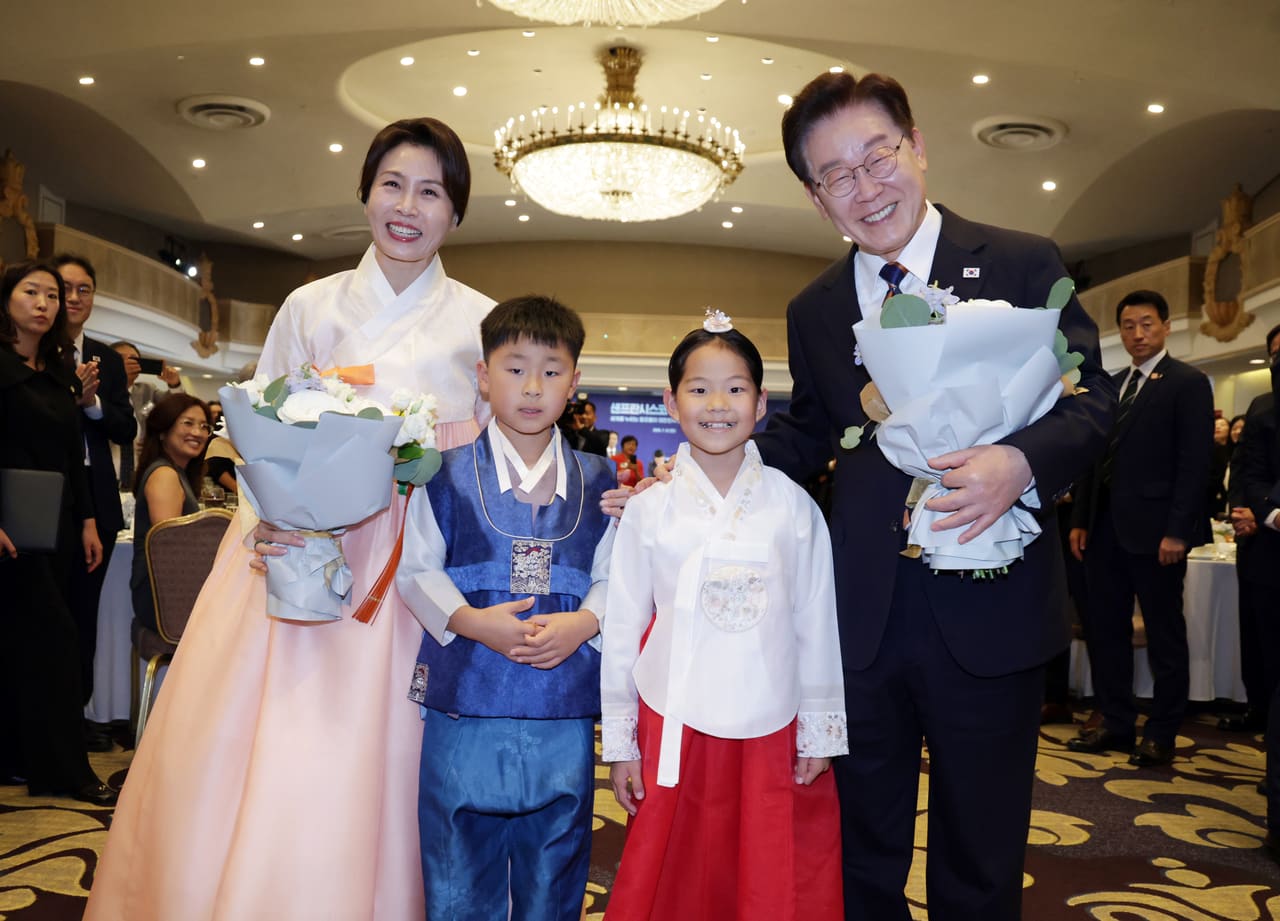
Speaking to South Korean expatriates in San Francisco on Saturday, Lee framed AI as a civilizational hinge comparable to humanity's mastery of fire. The rhetoric signals a strategic pivot for a country that built its semiconductor and electronics dominance by perfecting manufacturing scale and supply-chain efficiency rather than pioneering new categories.
The president's remarks came on the second day of a two-day visit designed to court investment and technical partnerships with Silicon Valley's largest players. Lee's itinerary has centered on private meetings with executives from companies that control critical AI infrastructure, from cloud compute to foundational models, and that hold the capital to fund large-scale deployments across Asia.
Why San Francisco Matters Now
The timing reflects Seoul's calculation that the current AI wave, unlike earlier technology cycles, remains fluid enough for a well-capitalized entrant to claim a leadership position. Unlike the smartphone era, where platform lock-in by Apple and Google left limited room for challengers, AI tooling and deployment patterns are still being written. South Korea's chipmakers already supply the high-bandwidth memory essential for training large language models, giving the country a tangible stake in the value chain.
Lee's outreach also acknowledges a harder truth: South Korea's domestic market is too small to sustain the capital intensity of frontier AI research. Partnerships with U.S. firms offer access to hyperscale data centers, research talent, and enterprise distribution networks that would take years to replicate domestically. In exchange, Seoul can offer regulatory predictability, manufacturing capacity, and a bridgehead into Northeast Asian markets where American firms face mounting political friction.
The visit follows months of internal debate within South Korea's government about whether to double down on its traditional strength in hardware or to make a more aggressive play in software and services. Lee's language suggests the administration has chosen the latter, even if it means accepting dependence on foreign platforms in the near term.
The Follower-to-Leader Bet
Lee's pledge to transform South Korea from follower to leader is not without precedent. The country executed a similar leap in memory chips during the 1980s, moving from licensed production to design leadership within a decade. That transition, however, was underwritten by state-directed credit, protected domestic markets, and a willingness to sustain losses until scale economies kicked in.
Replicating that model in AI will be harder. The technology is less capital-intensive than fabs but far more dependent on talent, and South Korea's rigid labor markets and hierarchical corporate cultures have struggled to retain the kind of engineering talent that thrives in California or Singapore. The government has announced visa reforms and tax incentives aimed at luring researchers, but execution has lagged.
There is also the question of what leadership means in a domain where the most capable models are trained by a handful of American firms with budgets that exceed the GDP of mid-sized economies. South Korea's strategy appears to hinge on vertical integration: leveraging its chipmaking prowess to secure favorable terms with model developers, then using those relationships to build application-layer companies that can serve enterprise and government customers across Asia.
Regional Context and Competition
Lee's trip unfolds against a backdrop of intensifying regional competition. China has mobilized state resources behind its own AI champions, despite U.S. export controls that restrict access to cutting-edge chips. Japan has positioned itself as a trusted partner for Western AI firms wary of Beijing, offering data localization and joint research facilities. Singapore has used its regulatory nimbleness to attract AI labs and compute infrastructure.
South Korea's advantage lies in its hybrid position: aligned with Washington on security matters, but economically intertwined with China in ways that complicate any full decoupling. That duality could make Seoul an attractive partner for firms seeking to navigate the fracturing tech landscape, provided the government can manage the political risks.
The president's rhetoric about fire and new eras may sound grandiose, but it reflects a genuine strategic wager. For a country whose postwar prosperity was built on catching up, the AI transition represents a rare chance to help set the rules rather than merely follow them. Whether Lee can convert that ambition into industrial reality will depend on decisions made not in San Francisco ballrooms but in budget negotiations, visa offices, and boardrooms back in Seoul.
RELATED STORIES
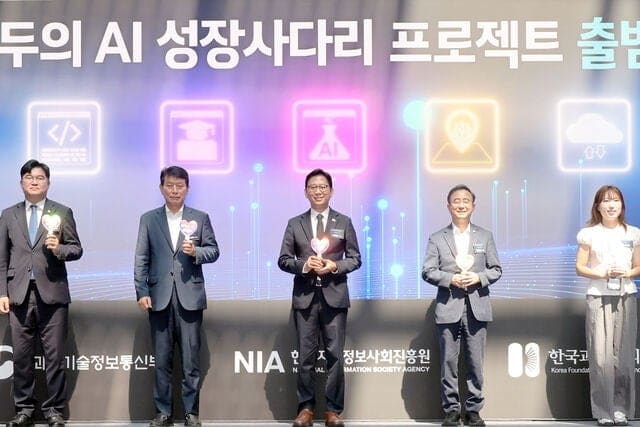
South Korea Taps Three Telecom Giants to Deliver Free AI Services Nationwide
Cheng Wei-Lun · 3 min
Samsung and SK Hynix Turn Down KEPCO's Multibillion-Dollar Prepayment Demand
Cheng Wei-Lun · 4 min
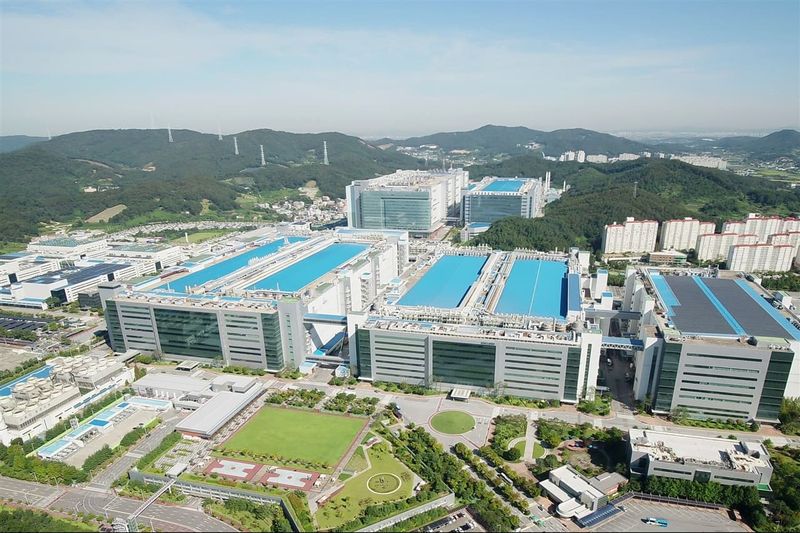
Samsung Display Restarts Asan OLED Campus as Foldable Phones Stage Recovery
Cheng Wei-Lun · 4 min

South Korea Records Highest September Export Start on Semiconductor Demand
Tran Quoc Bao · 3 min
Spot something wrong? Email editor@briefasia.com. We log every correction publicly.