Technology · AI
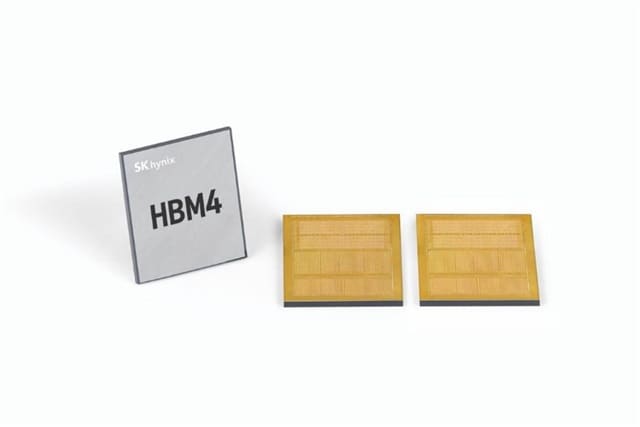
SK Hynix Gains Pricing Power as DDR5 Demand Strengthens HBM4 Negotiation Leverage
Conventional memory price increases driven by AI infrastructure spending are reshaping the chipmaker's position in high-bandwidth memory contract talks
KEY TAKEAWAYS
- ·SK Hynix is using rising DDR5 and conventional DRAM prices to strengthen its negotiating leverage in HBM4 contract talks scheduled for late 2026 and 2027 production.
- ·DDR5 spot prices have climbed 18 to 22 percent since early 2026, creating opportunity cost arguments that support higher HBM pricing as both products compete for the same manufacturing capacity.
- ·South Korea controls approximately 65 percent of global DRAM production, with SK Hynix and Samsung facing capacity allocation trade-offs between high-margin HBM and volume conventional memory.
Memory Markets Converge
SK Hynix is capitalizing on an unusual market dynamic: strength in conventional memory is bolstering its negotiating position for next-generation high-bandwidth memory contracts. The South Korean chipmaker faces rising demand for DDR5, NAND flash, and enterprise SSDs alongside HBM orders, creating pricing leverage as hyperscale customers compete for limited production capacity.
The convergence marks a departure from previous cycles, when HBM demand existed in isolation from mainstream memory markets. AI infrastructure spending now drives requirements across the entire product portfolio, forcing buyers to secure supply across multiple categories from the same vendors.
SK Hynix has allocated approximately 40% of its DRAM wafer capacity to HBM production, according to industry estimates. The remaining capacity serves conventional DDR5 modules for servers, workstations, and high-performance computing systems. As DDR5 pricing firms on supply constraints, the company gains flexibility to push for higher margins on HBM4 contracts scheduled to begin volume shipments in late 2026 and early 2027.
The Pricing Mechanism
Memory contract negotiations typically occur six to nine months before production ramps. HBM4 discussions now underway involve pricing structures that reflect both spot market conditions and long-term supply commitments. When conventional DRAM prices rise, chipmakers can credibly argue that opportunity costs justify higher HBM pricing, since the same manufacturing lines could produce either product.
DDR5 spot prices have climbed 18-22% since the start of 2026, driven by data center server refreshes and the proliferation of AI inference workloads at the edge. Enterprise SSD pricing has followed a similar trajectory, with contract prices for high-capacity PCIe Gen5 drives increasing by double digits quarter over quarter.
The price increases extend beyond SK Hynix. Samsung Electronics and Micron Technology have also reported firming conditions across their memory portfolios, though Samsung faces production allocation challenges as it ramps HBM3E volumes while maintaining conventional DRAM output.
Capacity Allocation Dilemma
The leverage dynamic creates strategic tension. Hyperscale cloud providers and AI accelerator manufacturers require guaranteed HBM supply to support product roadmaps, but they also purchase large volumes of DDR5 for CPU-based infrastructure. A customer pressuring SK Hynix on HBM4 pricing risks losing priority access to conventional memory at a time when supply is tight.
SK Hynix has signaled it will prioritize higher-margin HBM production over commodity DRAM if pricing gaps widen. The company's HBM revenue reached approximately USD 8.4 billion in 2025, representing roughly 28% of total DRAM sales. That share is expected to approach 35-38% by the end of 2026 as HBM4 volumes ramp.
The shift affects capacity planning across the memory industry. Competitors Samsung and Micron face similar trade-offs, though their product mix and customer concentration differ. Samsung supplies HBM to both Nvidia and its own AI accelerator division, while Micron serves a broader set of customers with lower market share in the highest-performance HBM tiers.
Regional Implications
The pricing dynamic carries particular weight in Asia, where memory manufacturing remains concentrated. South Korea accounts for approximately 65% of global DRAM production capacity, with SK Hynix and Samsung operating fabs in Icheon, Cheongju, and Pyeongtaek. Taiwan-based packaging partners handle HBM assembly, creating interdependencies that affect supply chain flexibility.
China's expanding memory production adds complexity. Changxin Memory Technologies has increased DDR5 output, offering an alternative source for customers willing to navigate export control restrictions. The availability of lower-cost Chinese DDR5 in certain markets reduces SK Hynix's pricing power for conventional memory in those regions, but regulatory barriers prevent Chinese suppliers from competing in HBM markets, preserving the South Korean chipmaker's leverage where it matters most.
Japanese materials suppliers also benefit from the memory upcycle. Increased DRAM and HBM production drives demand for photoresists, high-purity chemicals, and specialty gases, with companies like JSR Corporation and Shin-Etsu Chemical reporting order strength through 2026.
Contract Dynamics Ahead
HBM4 contracts now being negotiated will shape profitability through 2027 and into 2028. The technology delivers approximately 1.5 times the bandwidth of HBM3E while reducing power consumption, making it essential for next-generation AI training clusters and inference systems. Nvidia, AMD, and custom chip designers at hyperscalers have all signaled plans to adopt HBM4 in products launching between late 2026 and mid-2027.
SK Hynix enters those negotiations with a stronger hand than it held during HBM3E contract talks in 2024, when conventional memory markets were weak and buyers held pricing leverage. The current environment inverts that dynamic, giving memory suppliers the ability to push back on aggressive pricing demands.
The outcome will determine whether the memory industry can sustain elevated margins through the next phase of AI infrastructure buildout, or whether competition and customer pressure will compress profitability despite strong demand fundamentals.
RELATED STORIES
Memory Makers Gain Leverage as AI Server Costs Climb
Cheng Wei-Lun · 3 min

South Korea Records Highest September Export Start on Semiconductor Demand
Tran Quoc Bao · 3 min
SK Hynix May Fast-Track Gwangju Fab Investment Alongside Yongin Expansion
Jun-ho Seo · 3 min
SK Hynix Eyes Deeper Collaboration With Japan's Chip Sector
Cheng Wei-Lun · 4 min
Spot something wrong? Email editor@briefasia.com. We log every correction publicly.