Technology · Dev
SK Hynix Bets $39 Billion on Two New Fabs Amid AI Memory Surge
South Korea's second-largest chipmaker greenlights Yongin and Cheongju plants to lock in manufacturing capacity as artificial intelligence workloads reshape memory demand
KEY TAKEAWAYS
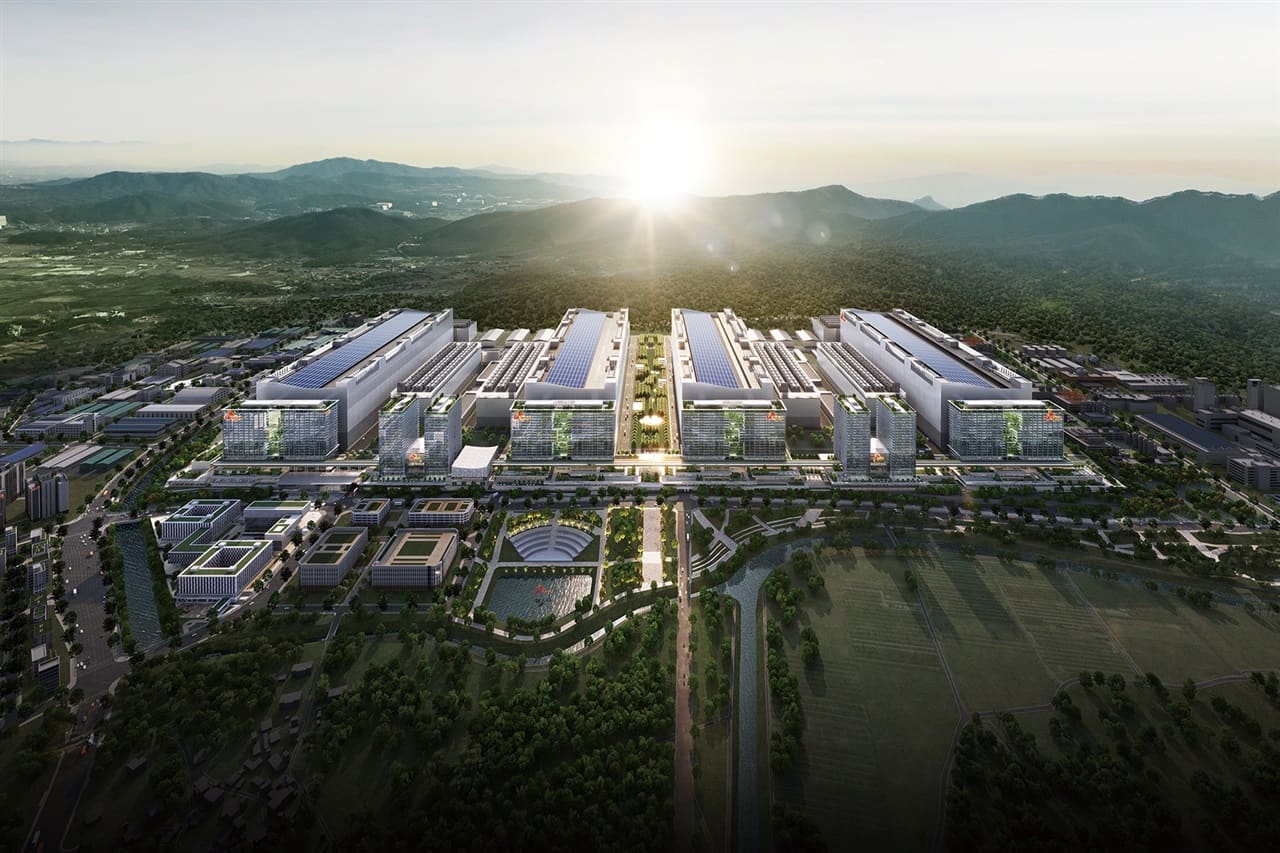
- ·SK Hynix approved roughly $39 billion for a second Yongin DRAM fab and a new Cheongju NAND plant, with construction timelines pointing to volume output around 2029 or 2030.
- ·The investment targets high-bandwidth memory for AI accelerators and enterprise NAND storage, positioning the company for structural demand growth rather than cyclical PC or smartphone restocking.
- ·Equipment lead times and yield ramps on advanced nodes will determine whether the new capacity translates into margin expansion or triggers oversupply if competitors launch similar expansions.
A Long-Horizon Play
SK Hynix has approved approximately $39 billion in capital expenditure for two new fabrication plants on home soil, directing the lion's share toward advanced memory production. The company will invest 35.2 trillion won in a second Yongin facility and 19.1 trillion won in a Cheongju NAND factory, according to SK Hynix. Management framed the outlay as a capacity hedge rather than a bet on near-term pricing, signaling confidence that artificial intelligence workloads will sustain elevated memory consumption well into the next decade.
The Yongin site, located south of Seoul in Gyeonggi Province, already hosts one of the company's most advanced DRAM lines. A second fab there will concentrate on high-bandwidth memory variants tailored for AI accelerators and data-center GPUs, segments where SK Hynix has carved out leadership against Samsung and Micron. The Cheongju plant, meanwhile, will focus on NAND flash, a category the company has historically trailed in market share but views as critical for enterprise storage infrastructure supporting large language models and training clusters.
Timing and Scale
At roughly 54 trillion won total, the twin projects represent one of the largest single-year commitments by a Korean chipmaker since Samsung's 2021 foundry push. SK Hynix did not disclose a construction timeline, though industry observers note that leading-edge memory fabs typically require three to four years from groundbreaking to volume production. That window suggests the Yongin expansion could begin output in late 2029 or early 2030, assuming regulatory clearances and equipment deliveries proceed on schedule.
The investment comes as memory spot prices have stabilized after two years of volatility. DRAM contract prices rose modestly in the first half of 2026, supported by restocking at cloud providers and steady demand from smartphone makers, yet remain below the peaks of 2021. SK Hynix executives have emphasized that the new capacity is designed to meet structural demand growth from AI inference and training, rather than cyclical PC or handset refreshes, a distinction that reflects lessons learned from previous over-build episodes.
Regional Context
South Korea's semiconductor ecosystem has benefited from sustained government support, including tax incentives and streamlined permitting for fab construction. The Ministry of Trade, Industry and Energy has designated memory manufacturing a strategic priority, mindful of competition from Chinese state-backed entrants and the risk of supply-chain bifurcation. SK Hynix's Yongin and Cheongju projects will likely qualify for accelerated depreciation and infrastructure co-investment, though the company has not detailed subsidy arrangements.
The move also underscores a broader regional race. Samsung is expanding its Pyeongtaek complex, while Taiwan's TSMC continues to add capacity in Hsinchu and Kaohsiung for logic chips that pair with high-bandwidth memory. Japan has lured TSMC and Micron with subsidies for advanced packaging and DRAM, and Singapore remains a hub for back-end assembly. SK Hynix's dual-site strategy keeps the company anchored in Korea while maintaining flexibility to source materials and equipment from across Asia.
What the Market Watches
Investors and customers will track two variables: equipment lead times and yield ramps. Memory toolmakers, particularly those supplying extreme-ultraviolet lithography and atomic-layer deposition systems, face order backlogs stretching into 2028. Any delay in tool delivery could push first wafers further out and compress the window before the next downturn. Yield performance on advanced nodes, especially for HBM3E and next-generation NAND, will determine whether the new capacity translates into profitable revenue or margin pressure.
For hyperscalers and AI infrastructure players, the announcement offers reassurance that memory supply will scale alongside compute. Meta, Microsoft, and Google have all flagged memory bandwidth as a bottleneck in training frontier models, and securing long-term offtake agreements with SK Hynix has become a priority. The Yongin fab's focus on HBM positions the company to capture a disproportionate share of that high-margin segment, provided execution remains tight and competitors do not flood the market with similar expansions.
SK Hynix's $39 billion commitment is a bet that the AI memory cycle will prove longer and deeper than previous infrastructure waves. Whether that thesis holds will depend on the pace of model scaling, the economics of inference at the edge, and the degree to which memory architectures evolve to reduce per-token consumption. For now, the company is building as if demand will outstrip supply, a posture that contrasts with the caution that defined the industry's last downturn.
RELATED STORIES
Seoul Rejects Profit-Sharing Pressure on Samsung and SK Hynix
Cheng Wei-Lun · 3 min
SK Hynix Eyes Stake Sale in $3 Billion China Packaging Facility
Cheng Wei-Lun · 2 min
LG Uplus Hits Record Quarterly Profit as AI Data Centers Offset Revenue Dip
Cheng Wei-Lun · 3 min
South Korea Mobilizes Conglomerates for Humanoid Robot Push
Cheng Wei-Lun · 3 min
Spot something wrong? Email editor@briefasia.com. We log every correction publicly.