Technology · Dev
SK Hynix Commits $38 Billion to Expand Memory Chip Production in South Korea
The memory giant plans new DRAM and NAND facilities in Yongin and Cheongju to meet surging AI-driven demand, with first cleanrooms targeted for 2028-2029
KEY TAKEAWAYS
- ·SK Hynix will invest 54 trillion won ($38 billion) in new DRAM and NAND facilities in Yongin and Cheongju through April 2031.
- ·The Yongin Y2 fab will target high-bandwidth memory production with first cleanroom opening in June 2029, while Cheongju M17 is set for late 2028.
- ·The expansion supports South Korea's goal to double memory production capacity within five years and maintain leadership amid regional competition.
Massive Capital Deployment for AI Memory
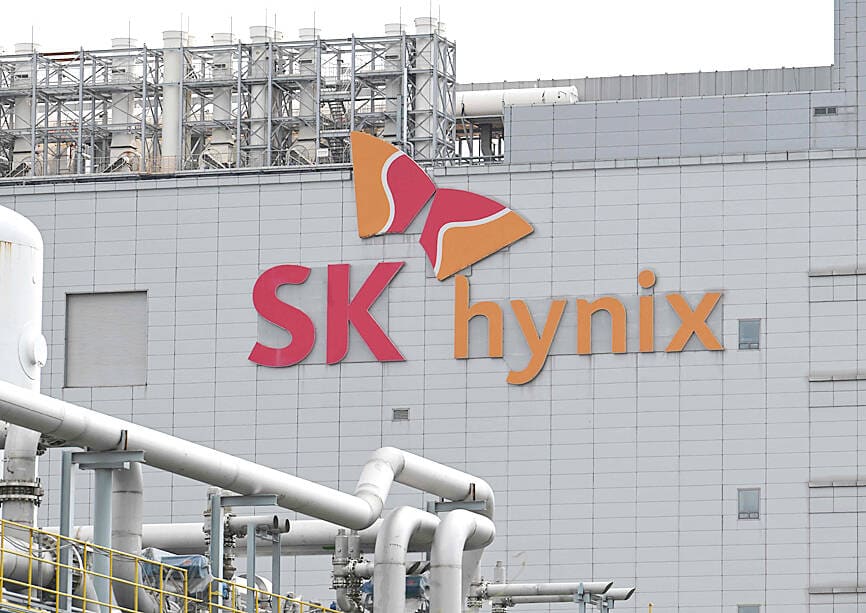
SK Hynix announced plans to invest 54 trillion won ($38 billion) in expanding its chipmaking facilities across South Korea, the company said in a statement. The expansion covers construction of a new DRAM manufacturing facility in Yongin and a NAND fabrication plant in Cheongju, with approximately two-thirds of the budget allocated to the DRAM project.
The investment period extends through April 2031 and represents one of the largest single commitments by a memory manufacturer in recent years. SK Hynix framed the expansion as a direct response to continuously growing demand for memory in the artificial intelligence era, particularly for high-bandwidth memory and advanced storage solutions.
The new Yongin Y2 facility will be the second of four fabs planned at the Yongin semiconductor cluster, according to the company. Groundbreaking is scheduled for July next year, with the first cleanroom targeted to open in June 2029. The facility will focus on producing high-bandwidth memory and other next-generation DRAM products designed for AI workloads that require the lowest latency.
The Cheongju M17 expansion is set to break ground in February next year, with its first cleanroom targeted for completion by the end of 2028. This plant will manufacture NAND flash memory, providing solid-state storage capacity for applications requiring fast access to large data volumes.
Nvidia Partnership Drives Strategic Positioning
As a key supplier to Nvidia and a linchpin of the AI infrastructure boom, SK Hynix has benefited from surging demand for specialized memory products. The company's production capacity is sold out through next year, and it has increasingly secured long-term supply agreements with customers seeking to lock in access to advanced memory technologies.
Yet the company's stock performance has reflected broader volatility in AI sentiment. Shares in SK Hynix closed down 4.9 percent on the day of the announcement, though they trimmed losses to 2.1 percent in post-market trading. The stock has become a source of significant swings in South Korea's KOSPI index as market participants oscillate between enthusiasm and skepticism about the sustainability of AI-driven demand.
Questions persist about whether SK Hynix can maintain its current profit margins over the long term, even as it continues to capture premium pricing for high-bandwidth memory products. The company filed a separate disclosure stating it would detail shareholder return plans in the third quarter, noting it is actively reviewing additional initiatives to enhance shareholder value.
National Ambitions in Memory Manufacturing
The expansion aligns with South Korea's broader industrial strategy to cement its dominance in memory production. Seoul aims to double the country's memory production capacity within five years and secure world-class manufacturing capabilities that pull far ahead of competing nations, according to the Ministry of Trade, Industry and Resources.
SK Hynix and Samsung Electronics have both made substantial commitments to building South Korea's domestic manufacturing and AI capabilities. The government's plan, announced at the end of June, seeks to leverage the country's existing strength in memory chips while positioning it as a critical node in global AI supply chains.
The investment comes as competition in the semiconductor industry shifts beyond traditional process-node scaling. Industry experts have noted that leadership increasingly depends on system-level optimization, advanced packaging, and materials innovation rather than transistor scaling alone. Memory manufacturers face pressure to deliver not just higher density but also greater bandwidth, lower power consumption, and tighter integration with processing units.
Regional Capacity Race
The scale of SK Hynix's commitment reflects the capital intensity required to maintain competitiveness in memory manufacturing. Fab construction costs have escalated as equipment becomes more sophisticated and cleanroom standards more stringent. The company's timeline of three to four years from groundbreaking to initial production is typical for advanced memory facilities.
South Korea's push to expand capacity occurs against a backdrop of regional competition. China has invested heavily in domestic memory production, though it lags in advanced nodes and high-bandwidth memory technologies. Taiwan remains focused on logic chips, while Japan has sought to rebuild capacity in partnership with foreign manufacturers.
For SK Hynix, the Yongin and Cheongju expansions represent a bet that AI-driven demand for memory will sustain growth through the end of the decade. The company's ability to ramp production efficiently and maintain technology leadership will determine whether the investment delivers the returns shareholders expect in an increasingly crowded and volatile market.
RELATED STORIES
Seoul Rejects Profit-Sharing Pressure on Samsung and SK Hynix
Cheng Wei-Lun · 3 min
SK Hynix Eyes Stake Sale in $3 Billion China Packaging Facility
Cheng Wei-Lun · 2 min
LG Uplus Hits Record Quarterly Profit as AI Data Centers Offset Revenue Dip
Cheng Wei-Lun · 3 min
South Korea Mobilizes Conglomerates for Humanoid Robot Push
Cheng Wei-Lun · 3 min
Spot something wrong? Email editor@briefasia.com. We log every correction publicly.