Asia · Business
Singapore's Ministers Defend Dual-Track Economic Strategy in Parliament
Government pushes back on opposition calls to pivot away from multinationals, arguing both foreign and domestic firms are essential for growth
KEY TAKEAWAYS
- ·Singapore's cabinet ministers defended the city-state's dual approach of attracting multinationals while supporting local SMEs during an August 5 parliamentary debate with opposition lawmakers.
- ·Transport Minister Jeffrey Siow argued that local firms often succeed because of relationships with MNCs and that Singapore's domestic market is too small to serve as the primary growth driver.
- ·The amended government motion passed with 87 PAP and 9 Nominated MP votes, while all 12 Workers' Party legislators rejected the revised version after their original proposal was modified.
The Debate
Singapore's government defended its longstanding economic approach during a heated parliamentary session on August 5, with cabinet ministers arguing that prosperity requires maintaining strong ties to global capital while nurturing homegrown enterprises.
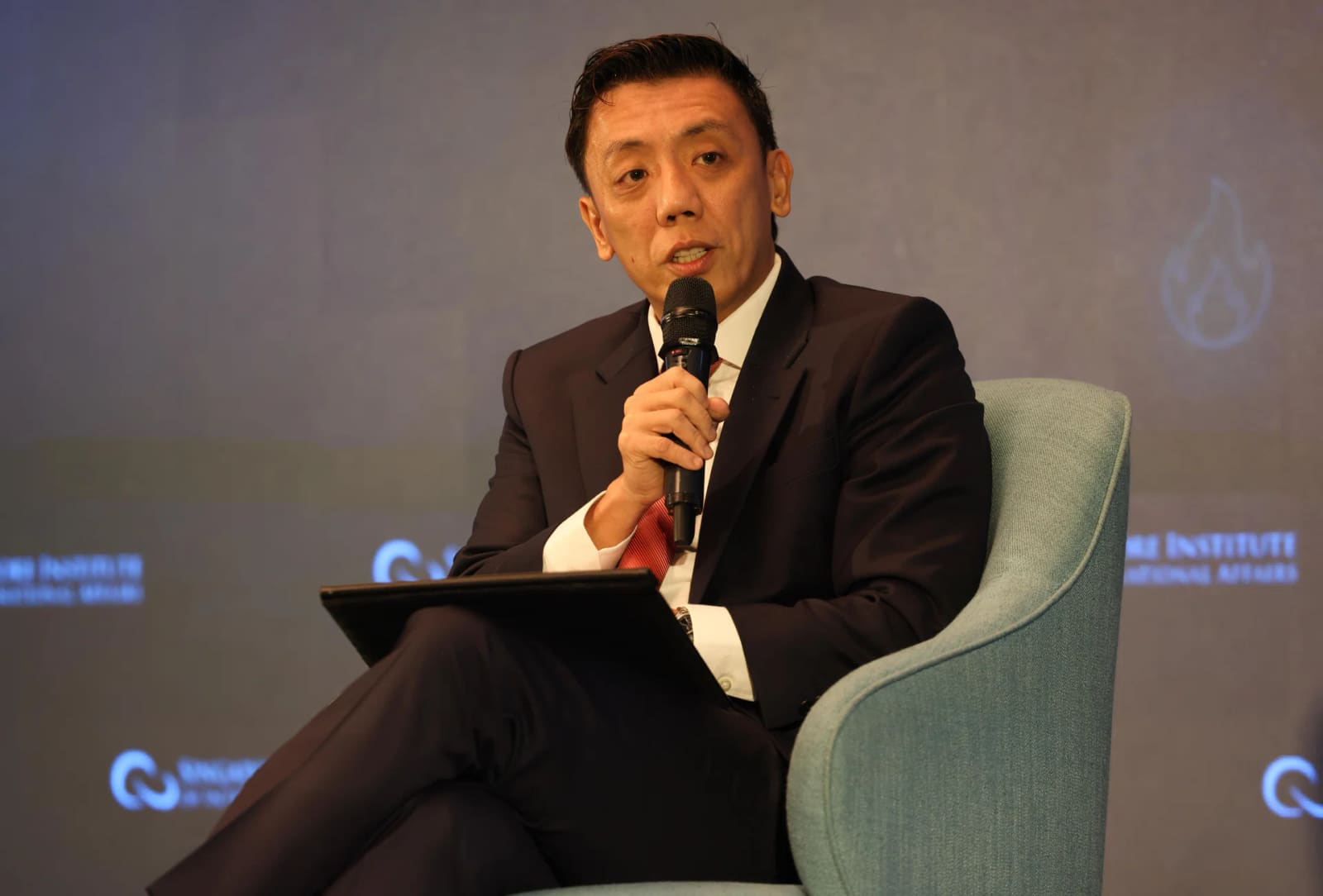
Transport Minister Jeffrey Siow told lawmakers that multinational corporations deliver resources and technical capabilities the domestic economy cannot yet generate independently. He emphasized that Singaporean SMEs often succeed precisely because of their commercial relationships with international firms, not despite them.
The exchange came during debate over a Workers' Party motion calling for what the opposition termed "a more equal and inclusive economy." Opposition MPs Kenneth Tiong and Jamus Lim proposed shifting away from what they described as excessive reliance on foreign multinationals and government-linked conglomerates.
Lim argued for pivoting toward small and medium enterprises as the primary growth engine, suggesting the government reduce its emphasis on tax incentives designed to attract footloose international capital. The opposition framed its position as an evolution rather than a rejection of existing policy.
Government Response
Siow characterized the opposition's stance as fundamentally misunderstanding how Singapore's economy functions. He suggested the Workers' Party viewed domestic and international businesses as locked in zero-sum competition, a framework he rejected.
The minister pointed to Singapore's limited consumer base as a structural constraint that makes inward focus unrealistic. Retreating toward domestic demand in response to global uncertainty would fail given the market's inherent scale limitations, according to Siow.
Trade and Industry Minister Tan See Leng acknowledged that healthy domestic consumption signals confidence and provides companies with an initial proving ground. However, he stressed that the local market alone cannot provide the scale necessary for firms with regional or global ambitions, particularly in advanced sectors.
Senior Minister of State Low Yen Ling told Parliament the government would continue helping local businesses expand beyond Singapore's borders. Siow added that few countries match Singapore's level of institutional support for domestic enterprises.
The Amendment Battle
PAP MP Edward Chia proposed four amendments to the Workers' Party motion, including replacing the word "notwithstanding" with "in line with" when referencing the government's June Economic Strategy Review. Chia also sought to insert references to "global enterprises" and "external demand" into language that originally mentioned only local companies.
Lim clarified in his reply that the opposition did not propose excluding foreign investment or sidelining multinationals. Instead, the Workers' Party aimed to strengthen consumer demand, which has historically lagged behind other advanced economies.
Siow thanked Lim for the clarification while attributing the confusion to the original motion's absence of references to international commerce.
The amended motion passed with support from all 87 PAP MPs and nine Nominated MPs. The Workers' Party's twelve legislators voted against the amendment replacing "notwithstanding" and rejected the revised motion entirely.
Youth Employment Concerns
Bipartisan anxiety about graduate job prospects surfaced during the debate. Tiong raised concerns about offshoring and artificial intelligence adoption potentially blocking young Singaporeans from entry-level roles.
PAP MP Patrick Tay echoed these worries, flagging the risk that AI could erode traditional starter positions and disrupt career progression pathways for workforce entrants.
Minister of State for Manpower Dinesh Vasu Dash countered that job vacancies continue to exceed the number of active jobseekers. He disputed the opposition's characterization of broken entry pathways, describing the current employment picture as more resilient than suggested.
The Underlying Tension
The parliamentary clash reflects a broader question facing Asian financial hubs: how to balance openness to global capital with domestic political pressures to deliver tangible benefits for local workers and businesses.
Singapore's model has historically prioritized attracting foreign direct investment through competitive tax rates, regulatory predictability, and world-class infrastructure. Critics argue this approach disproportionately benefits international corporations while leaving SMEs and workers vulnerable to global market volatility.
The government maintains that its strategy has delivered rising living standards across multiple generations. Ministers emphasized that supporting local companies and welcoming multinationals are complementary rather than competing objectives.
The debate comes as regional governments reassess their development models amid supply chain restructuring, geopolitical fragmentation, and rapid technological change. Singapore's challenge is executing this balancing act in an economy where the domestic market will always represent a constraint rather than an engine of growth.
RELATED STORIES
Singapore Wage Council Opens Consultation for 2026-2027 Guidelines
Priyanka V. Rao · 2 min

Singapore's Religious Sector Collected $1.4 Billion in Donations Last Year
Priyanka V. Rao · 4 min

Utah Positions Itself as Lower-Profile Alternative to Texas for Asian Capital
Priyanka V. Rao · 4 min
Singapore Banks Hit Record Highs on Wealth Management Surge
Priyanka V. Rao · 2 min
Spot something wrong? Email editor@briefasia.com. We log every correction publicly.