Real Estate · Homes
Singapore Preps 13-Hectare Kallang Site for 2,500 Private Homes
URA proposes carving the former Lee Rubber industrial estate into three residential plots, with plans to preserve one octagonal warehouse as a heritage marker in a new waterfront park.
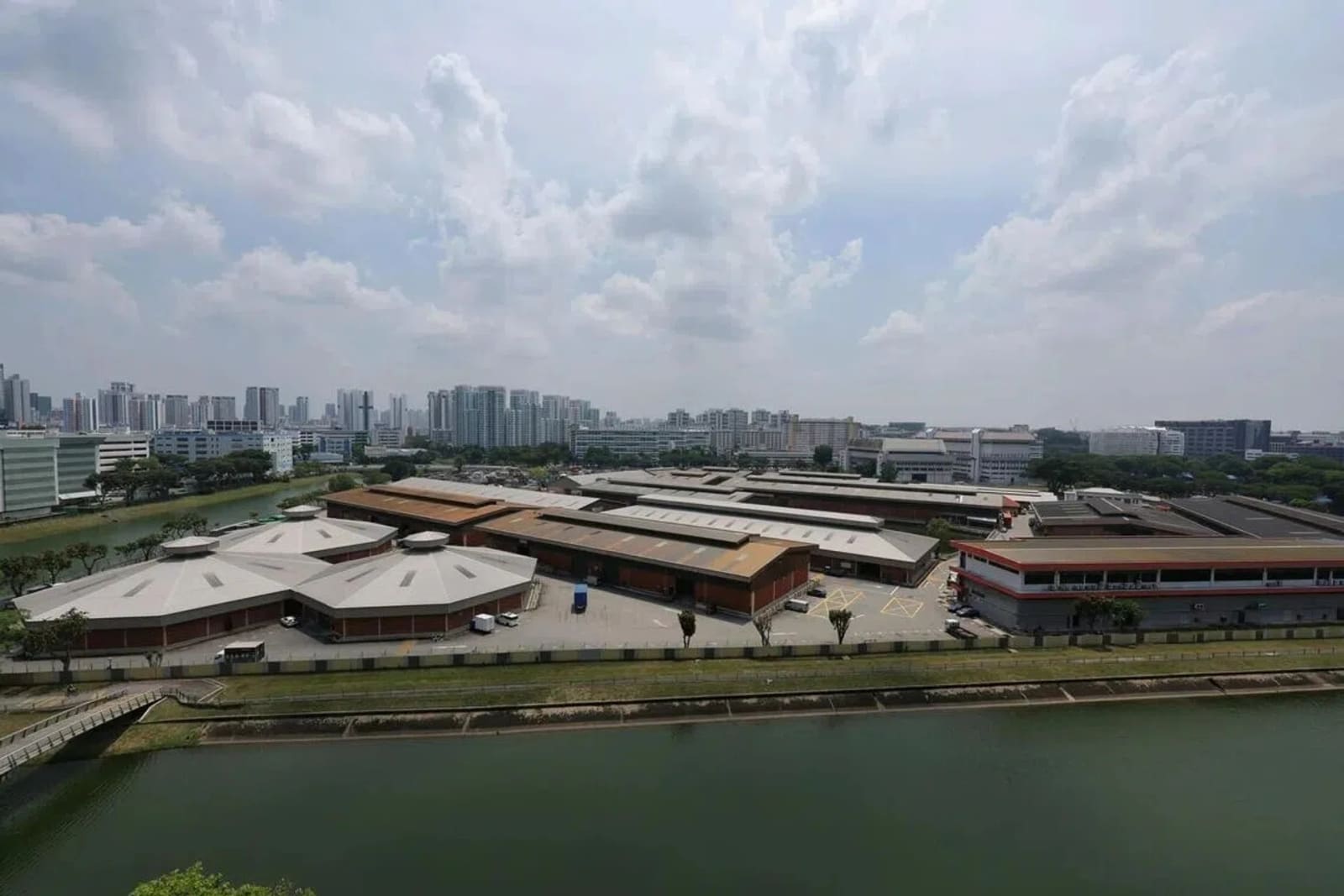
KEY TAKEAWAYS
- ·Singapore's URA proposed redeveloping the 13-hectare Kallang Distripark into three residential plots that could yield approximately 2,500 private condominium units, with a mix of freehold and leasehold tenures.
- ·The site, owned by entities linked to Lee Rubber Company and zoned for housing since 2003, includes three octagonal warehouses designed by architect Victor Chew, one of which may be retained as a heritage marker in a planned two-hectare park.
- ·The waterfront location near Geylang Bahru MRT station positions the development to inject new residential supply into a mature estate where most HDB flats date from the 1970s.
From Rubber Warehouses to Residential Towers
Singapore's Urban Redevelopment Authority has published a proposed Master Plan amendment to redevelop Kallang Distripark, a disused rubber factory and warehouse complex, into private housing. The agency released the proposal on August 14, responding to a private development submission it had received.
The 13-hectare site, zoned for housing since 2003, is currently held by entities linked to Lee Rubber Company, founded by Chinese entrepreneur and philanthropist Lee Kong Chian. Part of the land is freehold, while the remainder sits on a 99-year lease expiring in 2067.
The site includes three octagonal buildings known as the Lee Rubber Godowns, designed by the late architect Victor Chew of Kumpulan Akitek. According to URA, the agency is working with the owner to potentially retain one warehouse as a heritage marker within a planned neighbourhood park. Studies on the preservation proposal are ongoing. If physical retention proves unfeasible, the site's history will be documented through digital archives or interpretive storyboards, URA stated.
Three Plots, Multiple Tenures
The proposed amendment divides the estate into three housing parcels with varying land tenures and yield potential.
The largest plot, approximately 3.6 hectares adjacent to Kallang Bahru, sits predominantly on freehold land. Property analysts estimate the site could accommodate roughly 1,200 condominium units.
A second residential plot of about 1.6 hectares abuts Pelton Canal, also largely freehold. Analysts project this parcel could support between 450 and 550 units.
The third plot, spanning approximately 2.4 hectares on leasehold land, is zoned for mixed use with commercial space on the ground floor. Estimated yield ranges from 600 to 800 units, according to market observers.
The remainder of the site includes a two-hectare park, new access roads, and a 1.8-hectare reserve parcel for which no specific use has been determined.
Waterfront Location in Central Belt
Kallang Distripark was highlighted in URA's latest masterplan, gazetted in 2025, as part of a series of waterfront neighbourhoods under development.
Eugene Lim, key executive officer of ERA Singapore, noted that the site's waterfront position, central location, and proximity to Geylang Bahru MRT station and Geylang Bahru Market and Food Centre are likely to generate strong buyer interest.
Christine Sun, chief researcher and strategist at Realion Group, said the redevelopment could inject fresh energy into an area where most Housing Board flats in Kallang Bahru and Geylang Bahru were completed in the 1970s. The upcoming Kallang View HDB project, currently under construction, represents one of the few recent additions.
Nicholas Mak, chief research officer at Mogul.sg, observed that the plot earmarked for the park holds particular value, positioned where two streams converge and offering prime waterfront views.
Architectural Legacy Under Review
The octagonal warehouses were likely among the first projects undertaken by Kumpulan Akitek, founded in 1958, according to Wee Chwee Heng, a founding partner alongside Chew and Hisham Albakri. Wee explained that the multi-sided design allowed access from multiple points, providing the flexibility required for a rubber warehouse handling shipments from various directions.
Veteran architect Hoong Bee Lok, who studied Chew's work for his 1981 bachelor's thesis, suggested that if retained, the warehouses could serve as sheltered courts for racket sports. Based on his interview with Chew, Hoong noted the architect had designed the octagonal structures to be modular, allowing new units to be seamlessly added to the complex.
URA first showcased plans to redevelop Kallang Distripark for housing in 2017, as part of an exhibition outlining a vision to transform areas along the 10-kilometer Kallang River corridor into a lifestyle hub.
The neighbouring six-hectare Geylang Bahru Industrial Estate, adjacent to Geylang Bahru MRT station, is also zoned for residential use and sits on a 99-year lease expiring in the mid-2070s.
RELATED STORIES
Sembawang Freehold Site Hits Market at S$130 Million Reserve
Priyanka V. Rao · 3 min
Sentosa Cove Resales Show 64.5% Loss Rate as Singapore's Luxury Enclave Struggles
Priyanka V. Rao · 3 min
Singapore Considers Lowering Consent Threshold for HDB Redevelopment Sales
Lim Hui Ying · 4 min
Sustained Land Acquires Thomson Lane Site for S$578 Million
Lim Hui Ying · 2 min
Spot something wrong? Email editor@briefasia.com. We log every correction publicly.