Real Estate · Homes
Sentosa Cove Resales Show 64.5% Loss Rate as Singapore's Luxury Enclave Struggles
Once marketed as Asia's Monte Carlo, the exclusive development faces weak demand after foreign buyer taxes reached 60% and rental restrictions left properties vacant.
KEY TAKEAWAYS
- ·64.5% of Sentosa Cove resales since May 2023 recorded losses averaging S$1.28 million, up from 62.8% in the prior three-year period.
- ·Singapore's 60% additional buyer stamp duty for most foreigners and a ban on renting standalone homes have eliminated demand from the enclave's core target market.
- ·No new residential land parcels in Sentosa Cove have been sold since 2008, and local buyers show little interest due to limited amenities and distance from schools.
A Luxury Vision Meets Market Reality
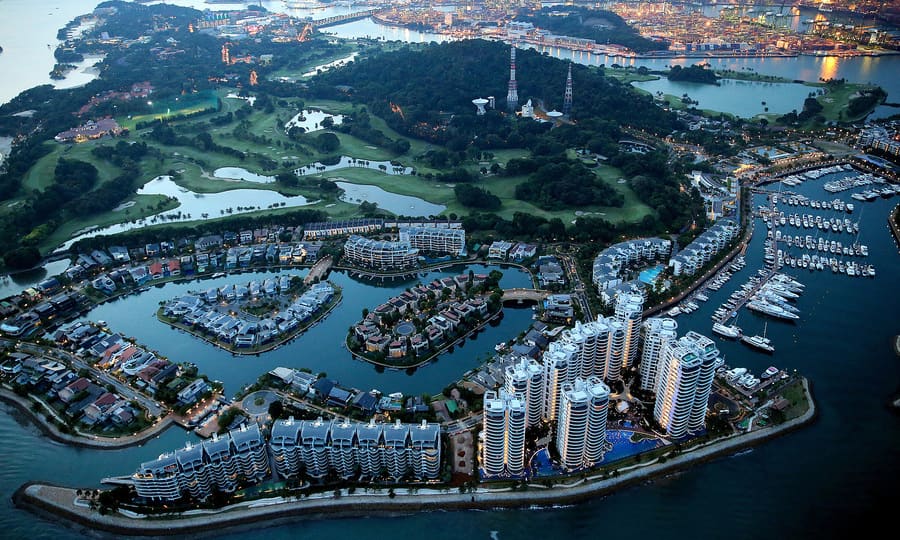
Singapore's Sentosa Cove, the city-state's attempt at creating an exclusive residential enclave for the global wealthy, has recorded losses on 64.5% of residential resale transactions since May 2023, according to data from real estate portal Mogul.sg. The figure represents a deterioration from the 62.8% loss rate recorded between March 2020 and April 2023.
The analysis, which tracked both landed and non-landed property transactions through June 2026, reveals average losses of S$1.28 million (US$1 million) on unprofitable resales. While that represents an 18% decline from the previous period, profitable transactions saw gains plummet 62% to an average of S$655,590. These figures exclude stamp duties, property taxes, legal fees, and agent commissions.
Landed properties marginally outperformed condominiums, with approximately half of landed resales generating profits. Separate analyses by Cushman & Wakefield and Newmark confirmed the broader trend of loss-making transactions across the development.
From Military Outpost to Stalled Dream
Sentosa Cove occupies the eastern portion of Sentosa Island, a 5-square-kilometer area that transitioned from military use to a leisure destination in the 1970s. Developed in the early 2000s largely on reclaimed land, the enclave comprises five man-made islands: Coral, Paradise, Treasure, Sandy, and Pearl.
The project was explicitly designed to attract wealthy foreigners, marketed as Singapore's answer to Monte Carlo or Dubai's Palm Jumeirah. To sweeten the proposition, Sentosa Cove received exemptions from mainland property restrictions. It remains the only location in Singapore where foreigners can purchase landed homes, subject to government approval.
Initial sales were robust, driving prices upward through the mid-2000s. That momentum stalled after the 2008 global financial crisis and has never fully recovered.
Tax Policy and Structural Barriers
The Singapore government doubled the additional buyer's stamp duty to 60% for most foreign buyers in April 2023, though Americans and select other nationalities remain exempt. The levy applies on top of the standard buyer's stamp duty, creating a significant cost barrier for the enclave's core target demographic.
Nicholas Mak, chief research officer at Mogul.sg, identified several compounding factors working against Sentosa Cove: no new residential land parcels have been sold since 2008, accessibility remains limited compared to mainland neighborhoods, and coastal conditions accelerate property deterioration.
A regulatory constraint further complicates the market. Foreign owners are prohibited from renting out standalone homes, leaving many properties vacant for extended periods while owners reside overseas or maintain other residences on the mainland. Some villas have reportedly fallen into disrepair due to prolonged vacancy.
"There's no catalyst to really excite the market there," Mak noted. "Sentosa Cove has lost its shine."
Local Disinterest Compounds Foreign Buyer Retreat
Demand from Singaporean buyers remains minimal. The enclave lacks the amenities local families prioritize: shopping malls, wet markets, hawker centers, and proximity to schools. Most domestic buyers favor mainland locations with established infrastructure and community facilities.
Ivan Chin, the Singaporean founder of Indonesian conglomerate Enesis Group, has invested over S$100 million developing six homes within a gated Sentosa Cove estate. He characterized the dynamic bluntly: "Sentosa is a foreigners' place. When you block the foreigners, that's it. The tax is too high for foreigners, but foreigners love to live here, not Singaporeans."
What Comes Next
The confluence of high foreign buyer taxes, rental restrictions, infrastructure stagnation, and local disinterest has created a structural impasse. Without new residential development since 2008 or policy adjustments to either attract locals or re-enable foreign demand, the enclave faces continued pressure.
Property investors who purchased during the boom years are now navigating a market where capital preservation has replaced capital appreciation as the primary concern. The loss rates suggest that the original vision of Sentosa Cove as a thriving international residential hub has diverged sharply from on-the-ground reality.
For Singapore's broader real estate strategy, the Sentosa Cove experience offers a case study in how rapidly tax policy and regulatory frameworks can reshape demand in even the most exclusive segments. Whether the government will revisit the 60% levy or the rental ban remains an open question, but current data indicates the status quo is unsustainable for sellers and developers alike.
RELATED STORIES
Singapore Releases Two Prime Residential Plots in Orchard and Marina Bay Areas
Lim Hui Ying · 3 min

Centurion Secures Second Major Dormitory Site as Singapore Bets Pay Off
Lim Hui Ying · 3 min
Hotel Properties Slides to S$39 Million First-Half Loss as Costs Climb
Lim Hui Ying · 4 min
Singapore Home Prices to Climb 3-4% in 2026 on Lower Rates, Policy Shift
Lim Hui Ying · 3 min
Spot something wrong? Email editor@briefasia.com. We log every correction publicly.