Asia · Trade
Singapore Faces $9.5 Billion Export Hit From US Labor Tariff
Deputy Prime Minister Gan Kim Yong says one-third of domestic exports to America now subject to 12.5% levy, with no trading partner receiving full exemption
KEY TAKEAWAYS
- ·Singapore faces a 12.5 percent US tariff on S$9.5 billion of domestic exports, representing one-third of shipments to America, affecting optical instruments and chemical products.
- ·Deputy Prime Minister Gan Kim Yong says no trading partner among 60 economies received full exemption, and Singapore was assessed at the higher rate because it lacks forced-labor import prohibitions.
- ·Negotiating a lower tariff through an Agreement of Reciprocal Trade could require export controls and third-country restrictions, with significant compliance costs and broader trade relationship implications.
Scale of the Impact
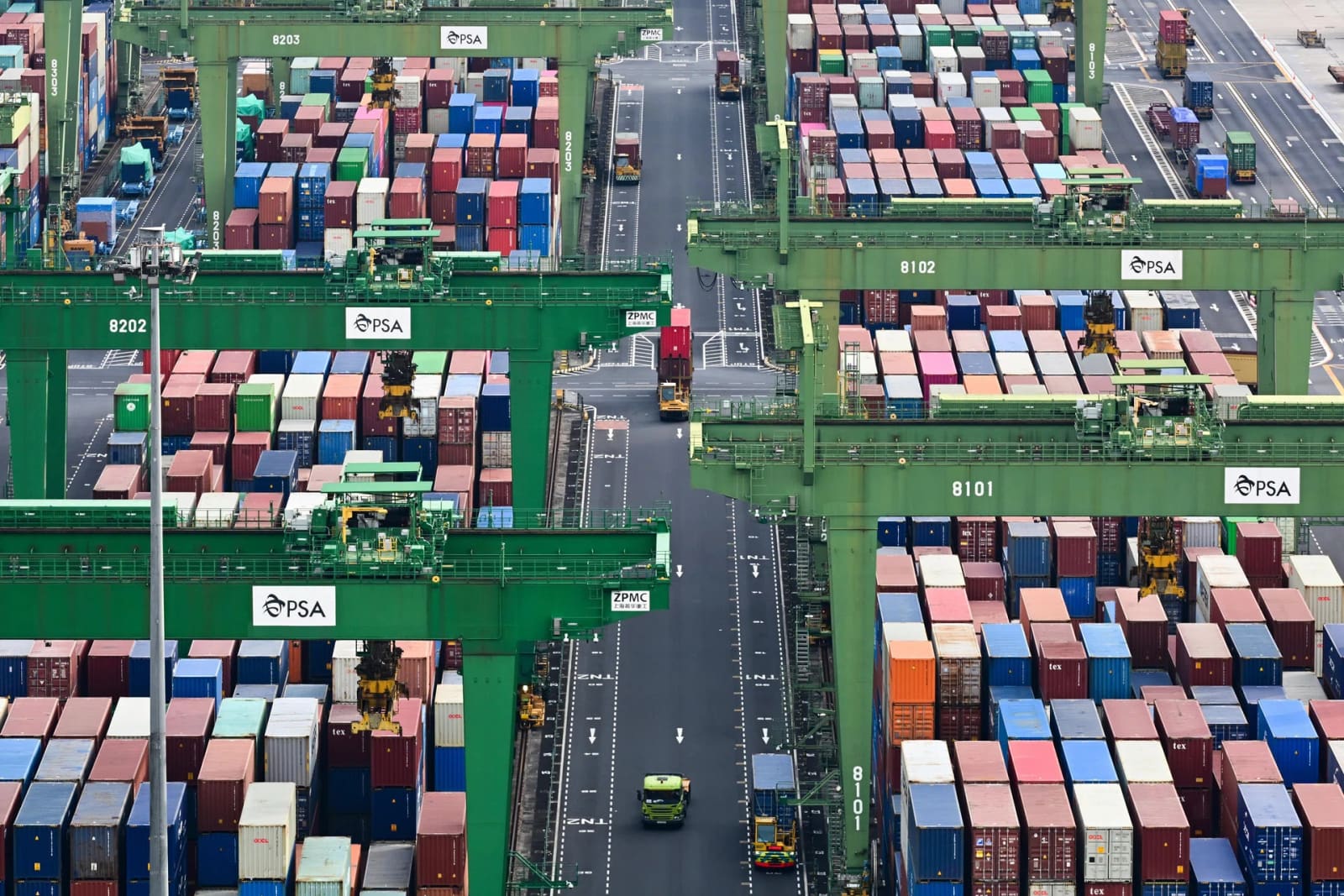
Singapore confronts a direct hit to roughly one-third of its domestic exports to the United States following Washington's imposition of a 12.5 percent tariff on S$9.5 billion worth of goods, Deputy Prime Minister Gan Kim Yong disclosed in Parliament on August 5.
The levy, which took effect July 24, targets optical instruments and chemical products while sparing energy goods, select electronics, aerospace equipment, pharmaceuticals, and semiconductors. The new rate lifts the overall effective tariff on Singapore's US-bound shipments by an estimated 0.7 percentage point compared to an earlier 10 percent measure.
According to Gan, who also serves as minister for trade and industry, the tariff stems from a US investigation into 60 economies accused of failing to prevent forced labor in supply chains. None of the targeted trading partners secured full exemption, though roughly 10 jurisdictions, including Mexico, the United Kingdom, Canada, and India, qualified for a reduced 10 percent rate by demonstrating forced-labor restrictions.
Singapore fell into the higher bracket because it does not prohibit imports of goods produced with forced labor and has not committed to such a ban through an Agreement of Reciprocal Trade with Washington.
Singapore's Defense
Gan outlined a sustained diplomatic effort throughout the investigation, including his own visit to Washington in April, written submissions, and bilateral consultations with the United States Trade Representative.
Singapore emphasized that no evidence links the city-state to trade in forced-labor goods, citing data from the US Department of Labor and Customs and Border Protection. Gan also pointed to America's longstanding trade surplus with Singapore as proof that the Republic's policies do not burden US commerce.
"We also explained that Singapore does not condone forced labour and maintains a comprehensive enforcement framework against such practices," Gan stated in his written parliamentary response to a question from Yio Chu Kang MP Yip Hon Weng. He did not reveal how US officials responded to these representations.
The Trade-Off Calculus
Asked whether Singapore might negotiate a lower tariff, Gan signaled caution. While the government will continue engaging the USTR, any move to secure preferential treatment carries significant downstream consequences.
Singapore's annual goods and services trade totals roughly S$2.5 trillion, with S$1.4 trillion in goods alone. Introducing an import prohibition on forced-labor products would impose substantial compliance costs, Gan warned, particularly for businesses whose production occurs outside Singapore's jurisdiction and beyond its regulatory reach.
Such a step could also ripple through the Republic's broader trade relationships. An Agreement of Reciprocal Trade with the United States, based on precedents with other economies, may require commitments extending beyond import bans to include export controls or restrictions relating to third countries.
"These broader implications must be assessed carefully before Singapore decides on any course of action," Gan said.
Immediate Response
For now, the government's priority centers on helping businesses and workers adjust. Gan chairs the Singapore Economic Resilience Taskforce, which is conducting industry consultations and preparing targeted support through existing grants, financing schemes, and employment programs.
The affected export categories represent a narrow but economically meaningful slice of Singapore's trade with its second-largest goods partner. The city-state recorded a goods trade surplus with the United States of around S$30 billion in 2025, driven by electronics, refined petroleum, and pharmaceuticals.
The new tariff adds to a global environment in which supply-chain scrutiny and trade conditionality are becoming standard tools of economic statecraft. Singapore's response will test how a small, open economy navigates competing pressures from major powers without compromising the neutrality and openness that underpin its role as a regional hub.
Gan's parliamentary disclosure marks the first official quantification of the tariff's impact and the first public acknowledgment that securing relief would require policy concessions with uncertain costs.
RELATED STORIES
Singapore Wage Council Opens Consultation for 2026-2027 Guidelines
Priyanka V. Rao · 2 min
Singapore's Religious Sector Collected $1.4 Billion in Donations Last Year
Priyanka V. Rao · 4 min
Utah Positions Itself as Lower-Profile Alternative to Texas for Asian Capital
Priyanka V. Rao · 4 min
Singapore Banks Hit Record Highs on Wealth Management Surge
Priyanka V. Rao · 2 min
Spot something wrong? Email editor@briefasia.com. We log every correction publicly.