Real Estate · Land
Singapore Extends Boat Quay Nightlife Hours After Pilot Shows 10% Footfall Surge
The government will formalize extended liquor trading hours and new bar approvals following a year-long trial that drew 37 new nightlife applications and stable public order.
KEY TAKEAWAYS
- ·Singapore will formalize extended nightlife hours at Boat Quay after a pilot program increased foot traffic by 10 percent and attracted 37 new bar and nightclub applications between August 2025 and June 2026.
- ·Businesses in the precinct can now apply for liquor sales until 4 am on Thursday and Friday nights, with road closures for pedestrian events starting in October.
- ·Security patrols funded at S$20,000 monthly kept public order stable during the trial, avoiding the crime increase that ended a similar 2018 experiment in Clarke Quay.
Pilot Becomes Policy
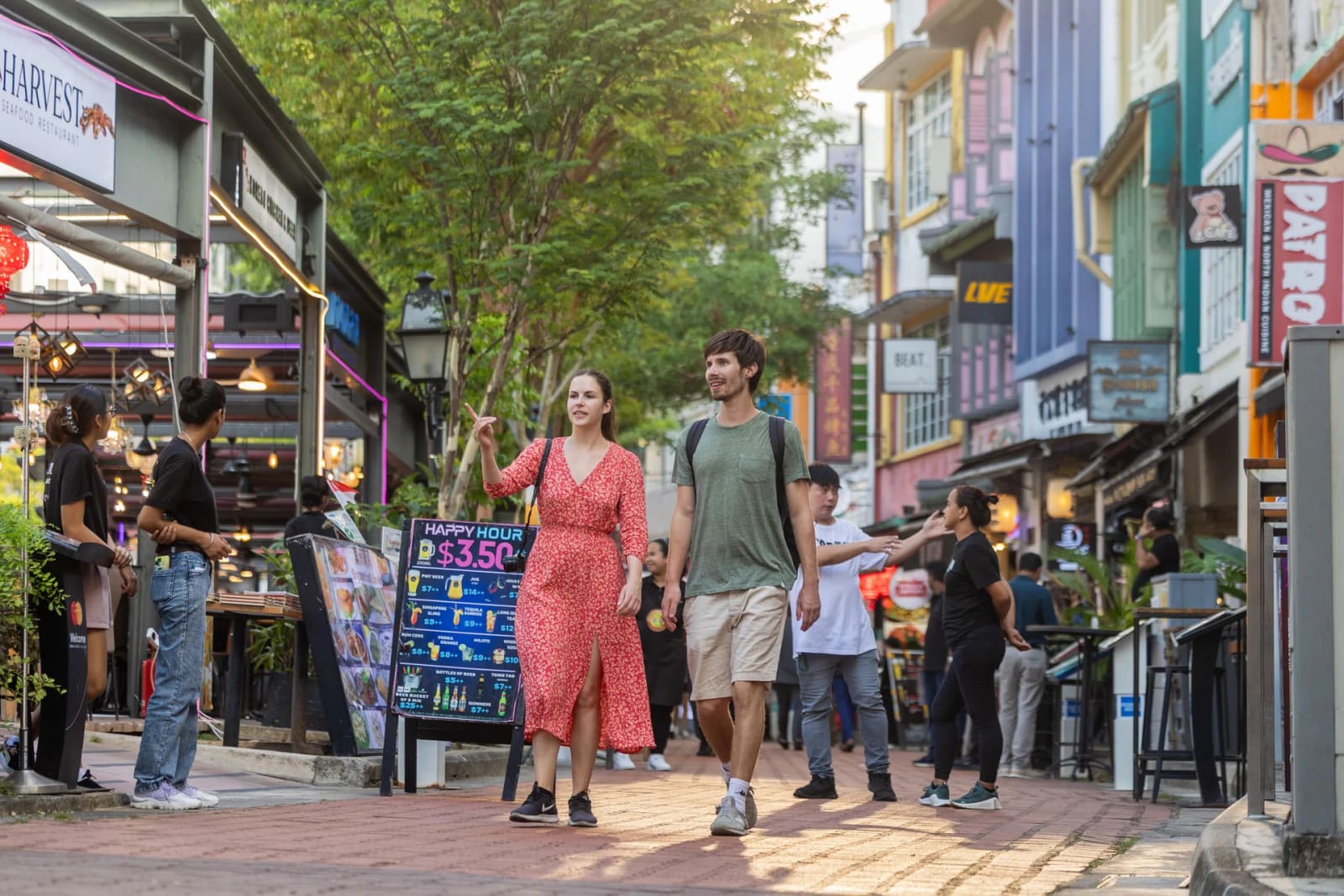
Singapore will continue relaxed nightlife regulations at its historic Boat Quay precinct after a year-long trial delivered measurable gains in foot traffic and business interest. The measures, which include permission for new bars and nightclubs, extended liquor sales until 4 am, and planned road closures for events, will be formalized following results Minister of State for National Development and Foreign Affairs Alvin Tan described as encouraging.
Footfall along Circular Road and the Boat Quay waterfront climbed roughly 10 percent between August 2025 and June 2026, according to Singapore River One (SRO), the precinct management body. The Urban Redevelopment Authority approved 37 applications for new nightlife venues during the same period, while the Singapore Police Force greenlit 92 requests for extended trading hours.
The pilot launched on August 18, 2025, targeting the Boat Quay Historic District, Clarke Quay Conservation Area, and Upper Circular Road. Businesses in these zones can now apply for liquor sales until 4 am on Thursday and Friday nights, one hour later than the previous cap. Approved nightlife proposals receive three-year permits.
New Venues, Longer Hours
The trial zone covers Circular Road, Lorong Telok, Canton Street, and the Boat Quay waterfront. Michelle Koh, executive director of SRO, said the relaxed framework gives landlords and operators confidence to test concepts that would have been difficult under stricter zoning rules.
Between August 2025 and June 2026, the three ministries overseeing the program - Trade and Industry, National Development, and Home Affairs - reported strong application volumes. The 37 new nightlife approvals and 92 extended-hours permits mark a sharp uptick in activity for a precinct that had faced restrictions on new bars and clubs in prior years.
Road closures at Circular Road, announced during the trial but delayed for coordination with businesses and agencies, will begin in October. The first event will carry a Halloween theme. Koh said SRO secured buy-in from close to 90 percent of area operators, a level of consensus she called rare for infrastructure changes.
Security Spending and Public Order
Singapore's 2018 attempt to extend Clarke Quay alcohol sales to 4 am on Saturdays ended after four months when certain public order offenses rose. This time, SRO committed S$20,000 monthly to deploy five additional security officers working 7 pm to 3 am shifts. The three ministries said the law-and-order situation remained stable throughout the pilot.
Danny Loong, president of the Singapore Nightlife Business Association, said the group plans to support events ranging from music festivals to daytime coffee gatherings in the precinct. The association is also working with government agencies to address late-night transport costs and limited service, issues Loong identified as friction points for nightlife growth.
Loong framed the Boat Quay measures as part of a broader effort to "redefine the night" across multiple neighborhoods. An activation at Holland Village is scheduled for late August, and the association is engaging younger consumers to track shifting preferences.
Regional Context
Asian cities from Bangkok to Tokyo have wrestled with balancing nightlife vitality against residential complaints and public safety. Singapore's approach - time-limited permits, geographic zoning, and funded security patrols - reflects the city-state's preference for controlled experimentation before scaling policy.
The formalization of Boat Quay rules follows years of debate over whether Singapore's entertainment offerings can compete with regional rivals. Minister Tan said the measures will help tourism and create jobs in the nightlife sector, a segment that employs bartenders, security staff, event coordinators, and hospitality workers.
The October road closures will test whether pedestrian-only events can draw crowds without disrupting logistics for businesses that rely on vehicle access. Koh's claim of near-unanimous operator support suggests confidence that foot traffic gains will offset any delivery or loading inconveniences.
Singapore's willingness to extend the pilot into permanent policy signals that the 10 percent footfall increase and application volume met internal benchmarks. Whether the precinct can sustain growth as novelty fades, and whether other neighborhoods adopt similar frameworks, will become clearer over the next permit cycle.
RELATED STORIES

CapitaLand Investment Eyes Minority Sale in Ascott to Fund Expansion
Priyanka V. Rao · 3 min
Singapore Food Tenant Sues OG Over Taste Orchard Eviction
Lim Hui Ying · 3 min
Sentosa Cove Resales Show 64.5% Loss Rate as Singapore's Luxury Enclave Struggles
Priyanka V. Rao · 3 min
Singapore Home Prices to Climb 3-4% in 2026 on Lower Rates, Policy Shift
Lim Hui Ying · 3 min
Spot something wrong? Email editor@briefasia.com. We log every correction publicly.