Sustainability · Climate
Singapore Breaks Ground on Sentosa Climate Hub While Collecting Public Input for 2027 Resilience Strategy
The island resort will debut a free-access adaptation learning center by year-end as officials launch a consultation process ahead of the nation's inaugural climate plan
KEY TAKEAWAYS
- ·Singapore broke ground on an experiential climate learning facility at Sentosa funded by a S$1 million government partnership, set to open free to the public by end-2026.
- ·The Ministry of Sustainability launched the National Adaptation Conversation to gather stakeholder input for the nation's first comprehensive climate plan due in 2027.
- ·Officials will conduct phased consultations on heat, flooding, water, food, infrastructure, biodiversity and health, with a public exhibition planned for October and November.
A Resort Island Becomes a Resilience Laboratory
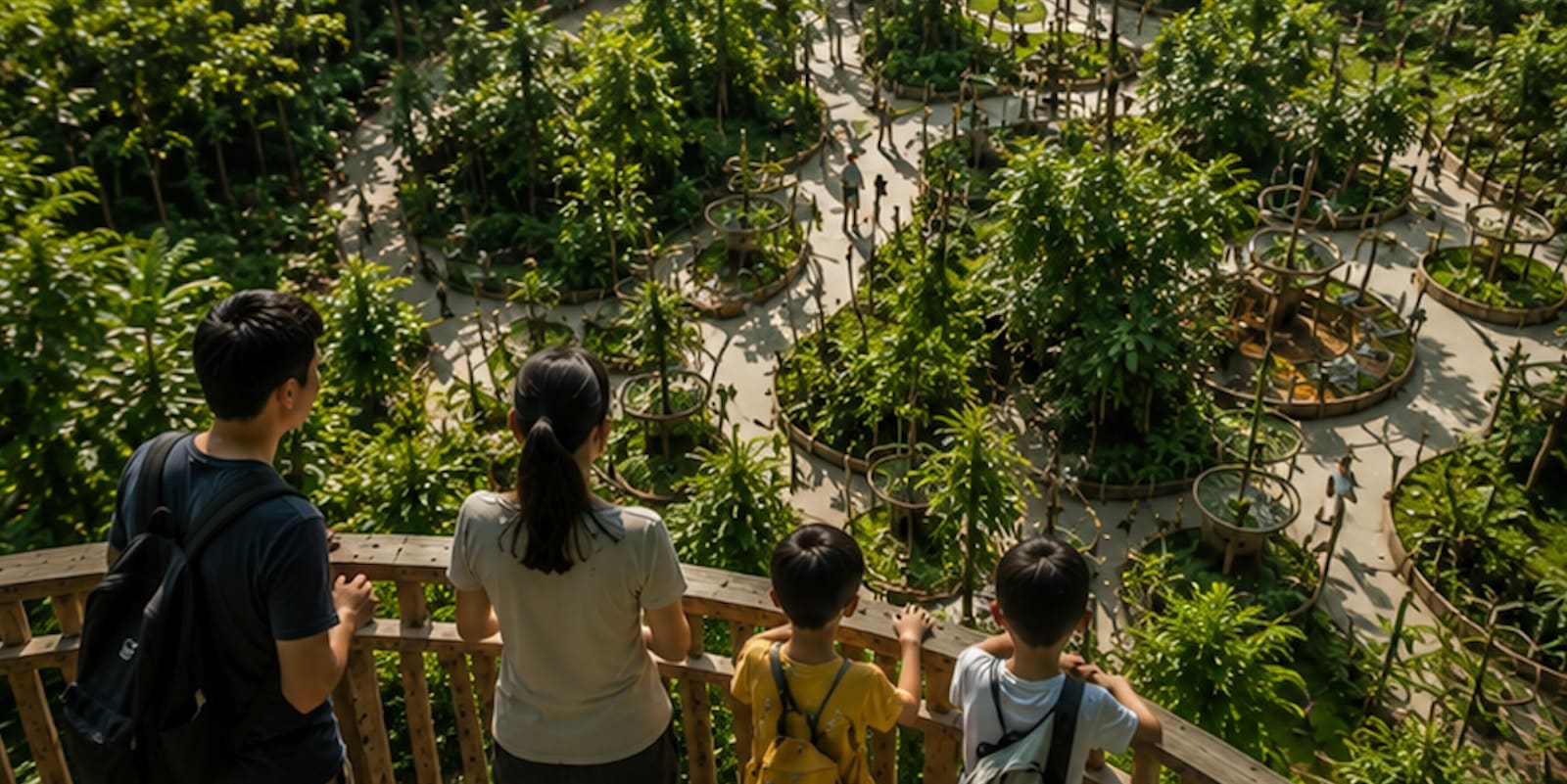
Singapore's government broke ground Thursday on what it describes as a regional first: an experiential climate learning facility that will occupy part of Sentosa, the leisure island better known for beaches and theme parks than environmental education. The ceremony coincided with the launch of a nationwide consultation effort to gather stakeholder views for the city-state's debut climate adaptation blueprint.
Environment Minister Grace Fu presided over the groundbreaking for Changing Course, a collaboration between social enterprise Terra SG and Sentosa Development Corporation. The facility will open free to the public before the end of 2026 at Imbiah Lookout, adjacent to existing nature trails.
The project draws funding from a three-year partnership that channels up to S$1 million from the government's SG Eco Fund, which finances community-led sustainability work. Sentosa Development Corporation and the Ministry of Sustainability and the Environment will use the arrangement to advance initiatives including the Cooling Sentosa Roadmap, an effort to lower ambient temperatures without mechanical air conditioning.
Seven Zones, One Message
Designers have organized the hub around a briefing area and seven thematic sections, each anchored to a species or ecological mechanism native to Sentosa. Terra SG built the curriculum with input from students, educators and university researchers, positioning the venue as what officials call a "living classroom" for observing how natural systems shift under climate pressure.
The attraction represents the inaugural initiative backed by the SG Eco Fund's Climate Adaptation Package, a S$5 million envelope that covers up to 90 percent of eligible costs for community projects addressing heat, flooding, water conservation and local food production.
More than 100 participants from across Singapore's business, civic and academic sectors gathered on Sentosa for the first session of the National Adaptation Conversation, a new consultation mechanism the Ministry of Sustainability and the Environment established to surface trade-offs and priorities. Officials designated 2026 as the Year of Climate Adaptation in March, signaling elevated urgency.
Phased Engagement Through 2027
The ministry has scheduled additional conversation rounds focused on discrete challenge areas: heat stress, coastal and inland flood defense, water and food security, infrastructure durability, urban greenery and biodiversity, and public health. Government agencies began stakeholder outreach in March; the ministry now plans focus groups, sector-specific roundtables and a public exhibition in October and November designed to illustrate how shifting weather patterns will alter daily routines.
Minister Fu indicated in May that the overarching plan, targeted for release in 2027, will inventory existing measures and map climate risks rather than prescribe immediate interventions. That framework is intended to set the stage for subsequent discussions involving ministries, private-sector actors and financial institutions that might underwrite resulting projects.
Starting July 30, the public can submit ideas and concerns directly through the National Adaptation Conversation website, broadening input beyond invitation-only sessions.
Shared Responsibility, Distributed Action
Sentosa Development Corporation chief executive Thien Kwee Eng framed the hub as an expression of the island's evolving identity. "Sustainability is most meaningful when people can experience it for themselves," Thien said, describing Sentosa as a venue where visitors encounter both nature and strategies to reinforce it for coming generations.
Desmond Ho, trust secretary of the SG Eco Fund, emphasized that resilience-building extends beyond government mandates. He pointed to the Sentosa partnership as a model for deepening public awareness of climate impacts and catalyzing grassroots responses.
The consultation timeline suggests Singapore is taking a methodical approach to adaptation planning, prioritizing broad engagement over speed. Whether that process yields actionable commitments or remains primarily educational will become clear when the 2027 document arrives. For now, the city-state is betting that a resort island can double as a proving ground for climate literacy and that public input will translate into durable policy architecture.
RELATED STORIES
Laos Hydropower Faces Solar and Wind Competition as Regional Grid Expands
Tran Quoc Bao · 4 min
DBS Doubles Down on Asia, Ruling Out Global Expansion
Anand Sundaram · 3 min

Grab Pursues Majority Stake in Buy-Now-Pay-Later Platform Atome
Jun-ho Seo · 3 min
Southeast Asian Firms Overlook Digital Pact Worth USD 2 Trillion
Lim Hui Ying · 4 min
Spot something wrong? Email editor@briefasia.com. We log every correction publicly.