Finance · Banking
Singapore Banks Ride Wealth Boom as Lending Margins Compress
OCBC and UOB deliver strong quarterly earnings on record wealth fees, offsetting pressure from narrowing interest spreads across core loan books.
KEY TAKEAWAYS
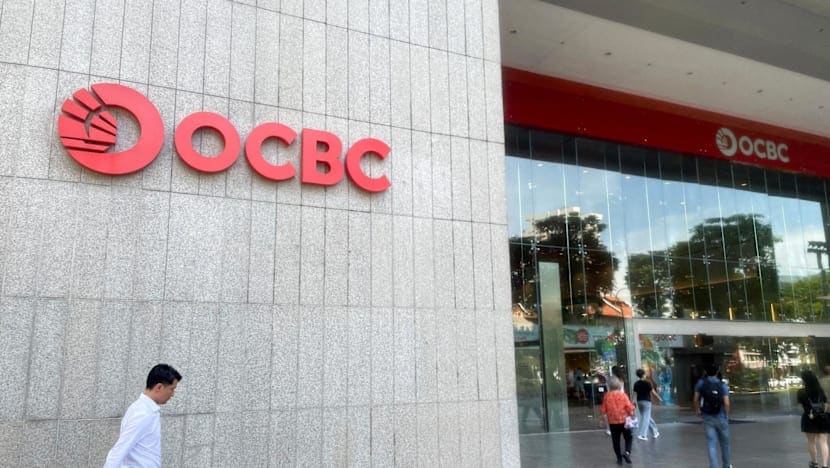
- ·OCBC reported S$2.22 billion in second-quarter net profit, up 22 percent year-on-year, while UOB posted S$1.48 billion, a 10 percent increase, both beating analyst estimates.
- ·Wealth management fees hit record levels at both banks, with OCBC's first-half wealth income rising 27 percent to S$3.29 billion and UOB recording 16 percent growth across the region.
- ·Net interest margins compressed across all three major Singapore lenders, with OCBC falling to 1.70 percent and UOB to 1.74 percent as lower rates squeezed lending profitability.
Record Profits Despite Margin Pressure
OCBC posted net profit of S$2.22 billion for the second quarter, a 22 percent jump from the prior year and above the S$1.93 billion analyst consensus. UOB reported S$1.48 billion in quarterly profit, up 10 percent and beating the S$1.40 billion estimate.
Both lenders attributed the gains to robust fee income from wealth management and other non-lending businesses, which cushioned the hit from tighter lending spreads. OCBC's non-interest income climbed 51 percent to S$1.91 billion, fueled by a 28 percent rise in fees, an 85 percent surge in trading income, and a 68 percent increase from insurance operations.
UOB's net fee income grew 5 percent to S$665 million, led by what the bank described as record wealth-management fees. For the first half, UOB's wealth income rose 16 percent, with 30 percent growth across Malaysia, Indonesia, Thailand, and Vietnam.
Wealth Flows Anchor Singapore's Banking Model
The quarterly figures extend a pattern visible across the city-state's financial sector. DBS, HSBC, and Standard Chartered have all reported rising income from serving high-net-worth clients, a reflection of Singapore's deepening role as a regional wealth center amid market volatility and geopolitical flux.
OCBC's first-half wealth-management income reached a record S$3.29 billion, up 27 percent, while banking assets under management rose 13 percent to S$350 billion. The bank's CEO, Tan Teck Long, pointed to diversified income streams and disciplined risk management as key to navigating uncertainty.
UOB's deputy chairman and chief executive, Wee Ee Cheong, emphasized momentum across ASEAN markets. "We are seeing good progress across our businesses as we deepen customer relationships, expand our capabilities, and connect customers to opportunities across our regional network," he said in a statement.
Net Interest Margins Slide Across the Board
All three of Singapore's major banks reported lower net interest margins in the quarter, a trend that reflects the pressure lower rates exert on core lending operations. OCBC's margin fell to 1.70 percent from 1.92 percent a year earlier. UOB's dropped to 1.74 percent from 1.91 percent. DBS reported a decline to 1.87 percent from 2.05 percent.
The compression underscores a structural shift: as central banks ease and competition for deposits intensifies, Singapore lenders are leaning harder on fee-generating businesses to sustain profitability.
Loan Growth and Dividend Guidance
OCBC raised its full-year loan-growth forecast to high single digits or low double digits, up from a previous mid-single-digit outlook. UOB maintained its expectation for low single-digit loan growth and said it expects full-year net interest margin between 1.75 and 1.80 percent.
UOB cut its 2026 fee-income growth forecast to low single digits from high single digits, though it offered no explanation for the revision.
Both banks lifted interim dividends. OCBC increased its payout to 47 cents from 41 cents. UOB raised its dividend to 88 Singapore cents per share from 85 cents.
What Comes Next
The results confirm that Singapore's lenders are successfully pivoting toward wealth and fee-based revenue as rate tailwinds fade. The question now is whether cross-border flows and ASEAN integration can sustain the momentum if global markets turn choppier or if regulatory scrutiny over private banking intensifies.
For now, the city-state's position as a conduit for regional capital remains firm, and the banks are betting that deeper client relationships and expanded capabilities across Southeast Asia will keep the wealth engine running.
RELATED STORIES
Singapore's Big Three Banks Post Solid First-Half Gains as Wealth Offsets Margin Pressure
Priyanka V. Rao · 3 min
UOB Raises Quarterly Profit 10% on Record Wealth Fees
Cheng Wei-Lun · 2 min
Singapore's Three Banks Show Uneven Momentum in Mid-Year Earnings
Priyanka V. Rao · 4 min
Singapore Banks Split as DBS and OCBC Hit Record Highs While UOB Lags
Priyanka V. Rao · 3 min
Spot something wrong? Email editor@briefasia.com. We log every correction publicly.