Travel & Dining · Trends
Singapore Airlines Reports First Post-Pandemic Loss Despite Record Traffic
The carrier's S$76 million quarterly loss underscores the profitability challenge facing Asia's aviation sector as fuel costs and capacity decisions outweigh passenger growth
KEY TAKEAWAYS
- ·Singapore Airlines reported a net loss of S$76 million in Q1 FY2027 despite record revenue of S$5.7 billion and carrying 10.9 million passengers.
- ·Higher fuel costs from the Middle East conflict and increased losses from Air India offset strong passenger demand during the quarter.
- ·Capacity grew faster than traffic, highlighting the profitability challenge facing Asia airlines as they decide where and how quickly to expand networks.
Record Revenue Meets Red Ink
Singapore Airlines posted its first quarterly loss since the pandemic, reporting a net deficit of S$76 million for the three months ended June 2026 even as it carried a record 10.9 million passengers and generated record revenue of S$5.7 billion. The group attributed the loss to elevated fuel costs tied to the Middle East conflict and a larger share of losses from Air India, in which SIA holds a stake.
The results mark a sharp reversal for the carrier, which had returned to profitability as borders reopened and travel demand rebounded across Asia. Capacity grew slightly faster than passenger traffic during the quarter, a sign that the airline expanded seat supply in anticipation of continued demand recovery.
Fuel and Geopolitics
Fuel expenses climbed as crude oil prices spiked in response to escalating tensions in the Middle East, squeezing margins across the industry. Singapore Airlines operates a predominantly long-haul network that consumes more fuel per passenger kilometer than regional carriers, leaving it more exposed to price swings.
The carrier also absorbed a larger portion of Air India's operating losses during the quarter. SIA and Tata Sons jointly own the Indian flag carrier, which is undergoing a multi-year restructuring that includes fleet renewal, route expansion and service upgrades. While the investment positions SIA in one of the world's fastest-growing aviation markets, near-term losses weigh on consolidated results.
Capacity Decisions Under Scrutiny
The mismatch between capacity growth and load factors points to a broader challenge confronting Asia's airlines: deciding where and how fast to expand. Carriers across the region have been restoring pre-pandemic frequencies, adding aircraft and launching new routes to capture pent-up demand. Yet deploying capacity ahead of demand can erode yields and profitability, particularly on competitive routes where multiple airlines vie for the same traffic.
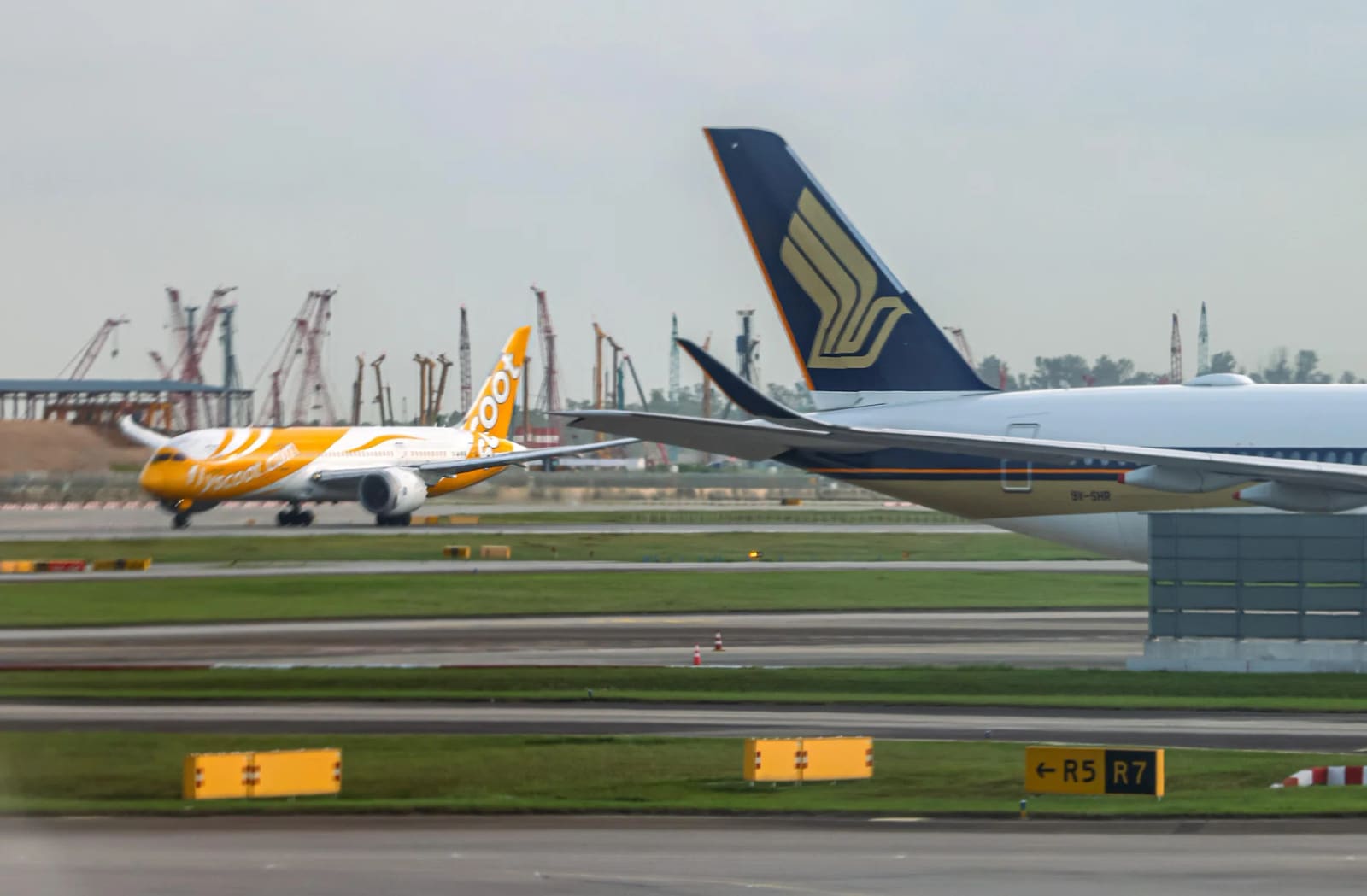
Singapore Airlines operates a dual-brand strategy. The full-service mainline carrier focuses on premium cabins and long-haul routes connecting Asia, Europe, North America and Australia. Scoot, its low-cost subsidiary, serves price-sensitive travelers on regional and medium-haul routes that may not yet justify full-service operations. This segmentation allows the group to address different market segments while managing cost structures, but it requires precise calibration of capacity across both brands.
Regional Context
The quarterly loss at Singapore Airlines reflects pressures evident across Asia's aviation sector. Carriers in Japan, South Korea, India and Southeast Asia are all navigating similar trade-offs: strong passenger demand, rising input costs and the need to deploy capacity profitably in a fragmented and competitive market.
Changi Airport, SIA's home hub, has been expanding infrastructure and restoring connectivity as traffic volumes approach pre-pandemic levels. The airport handled record passenger numbers in recent months, and airlines have responded by increasing frequencies and adding routes. Yet higher airport charges, fuel costs and competition for slots mean that growth does not automatically translate into profit.
What Comes Next
Singapore Airlines will need to balance network expansion with yield management in the quarters ahead. The carrier has historically commanded premium pricing on long-haul routes thanks to its service quality and Changi's connectivity, but maintaining that edge requires disciplined capacity deployment and cost control.
The Air India investment remains a longer-term bet. India's domestic and international aviation markets are expected to grow faster than most of Asia over the next decade, driven by rising incomes and urbanization. If the restructuring succeeds, SIA's stake could generate substantial returns. In the near term, however, the losses add volatility to the group's earnings.
Fuel prices will remain a wildcard. Geopolitical developments in the Middle East, OPEC production decisions and global demand for crude all influence jet fuel costs, which airlines can only partially hedge. Carriers with more fuel-efficient fleets and shorter average stage lengths enjoy a structural advantage in high-price environments.
For now, the message from Singapore Airlines' results is clear: passenger demand alone does not guarantee profitability. Where airlines choose to fly, how they price seats and how they manage costs will determine which carriers thrive as Asia's skies get more crowded.
RELATED STORIES

Renminbi Faces Upward Pressure After US-Japan Yen Intervention
Cheng Wei-Lun · 3 min

China's Tourism Revival Hits 35 Million Foreign Arrivals in 2025
Cheng Wei-Lun · 4 min

Singapore Dessert Chain Deploys 30 Robot Vending Machines After Profit Margin Collapses
Lim Hui Ying · 3 min

Wilmar Posts 2.3% Profit Rise Despite Commodity Market Turbulence
Priyanka V. Rao · 2 min
Spot something wrong? Email editor@briefasia.com. We log every correction publicly.