Asia · Business
JG Summit's Profit Drops 37% as Fuel Costs Slam Cebu Pacific Parent
The Gokongwei conglomerate's first-half core earnings fell to P13 billion, with elevated jet fuel prices and higher parent-level interest expenses offsetting property and food resilience.

KEY TAKEAWAYS
- ·JG Summit's core net income fell 37 percent to P13 billion in the first half of 2026, driven by elevated fuel costs that severely impacted its airline unit and higher parent-level interest expenses.
- ·Revenues across the conglomerate grew seven percent to P200 billion, with Robinsons Land posting a 10-percent increase and Universal Robina achieving four-percent growth despite consumer headwinds.
- ·CEO Lance Gokongwei expects profitability challenges to persist through the rest of 2026, citing continued fuel price pressure, a weaker third-quarter travel season, and uncertainty over consumer spending.
Fuel Shock Hits Aviation Arm
JG Summit Holdings posted a 37-percent decline in core net income to P13 billion for the first half of 2026, dragged down by fuel price pressures that hammered its airline operations and increased interest expenses at the parent level after absorbing debt from a petrochemical subsidiary.
When foreign exchange losses from peso depreciation are included, net income from continuing operations fell 47 percent year-on-year to P11.4 billion. Total net income, including discontinued operations, dropped 29 percent to P10.7 billion, cushioned slightly by narrower losses from the conglomerate's exited petrochemical business.
Revenues across the group rose seven percent to P200 billion, supported by broad-based gains in real estate, steady performance in branded food and animal nutrition, and higher passenger volumes at the airline despite fare increases.
Property and Food Hold Steady
Robinsons Land delivered a 10-percent revenue jump to P25.4 billion, driven by improved occupancy in office and mall portfolios, additional warehouse capacity, expanded luxury hotel footprint, and stronger residential sales. Universal Robina, the group's food and beverage arm, posted a four-percent revenue increase to P89.3 billion, underpinned by resilient consumer demand and continued brand investment.
Cebu Air, the budget carrier operating as Cebu Pacific, recorded eight-percent revenue growth to P68.6 billion, flying 14.5 million passengers during the period. The airline benefited from healthy travel demand, but profitability was severely dented by elevated jet fuel costs that persisted through the half.
Outlook Remains Clouded
Lance Gokongwei, president and CEO of JG Summit, acknowledged the pressure facing the group. He noted that the first-half results reflect the underlying resilience of a diversified portfolio, with topline growth carried by property and food businesses alongside an airline that maintained passenger volumes despite higher fares.
Looking ahead, Gokongwei expects profitability challenges to persist through the rest of 2026, particularly for the airline, citing fuel prices that remain elevated and a leaner travel season anticipated in the third quarter. Inflationary pressures also create uncertainty around consumer spending and near-term revenue growth across the group's other businesses.
The conglomerate absorbed additional debt at the parent level after taking on obligations from its petrochemical subsidiary, contributing to higher interest expenses that weighed on the bottom line. The peso's depreciation against the dollar added unrealized foreign exchange losses, further pressuring reported earnings.
Portfolio Diversification Under Test
JG Summit's performance underscores the tension facing Philippine conglomerates with exposure to capital-intensive, commodity-sensitive businesses. While the group's property and consumer food divisions delivered steady growth, the airline's fuel exposure and the parent company's debt load offset those gains.
The broader Southeast Asian aviation sector has faced similar margin compression in 2026, as crude oil prices remained volatile and carriers struggled to pass through the full cost to price-sensitive leisure travelers. For JG Summit, the airline's underperformance is particularly visible given its scale within the group.
Gokongwei emphasized the conglomerate's commitment to protecting long-term shareholder value while remaining proactive in improving performance amid a challenging economic backdrop. The group continues to invest in brand strength and capacity expansion across its property and food businesses, betting that diversification will carry it through the current cycle of fuel and currency volatility.
RELATED STORIES
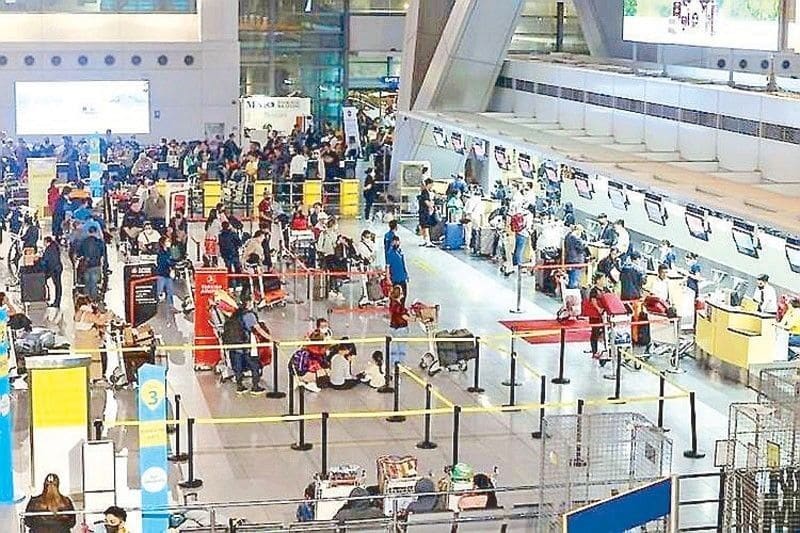
MacroAsia Profit Falls 34 Percent as NAIA Lease Costs Surge
Priyanka V. Rao · 2 min

SM Investments to Transfer Atlas Mining Stake to Dominion by 2027
Priyanka V. Rao · 3 min
ADB Expands Philippines Health Financing to $750 Million as Oil Shock Widens Budget Gap
Priyanka V. Rao · 3 min

Philippine Growth Forecast Cut as Consumer Spending Stalls
Priyanka V. Rao · 3 min
Spot something wrong? Email editor@briefasia.com. We log every correction publicly.