Asia · Business
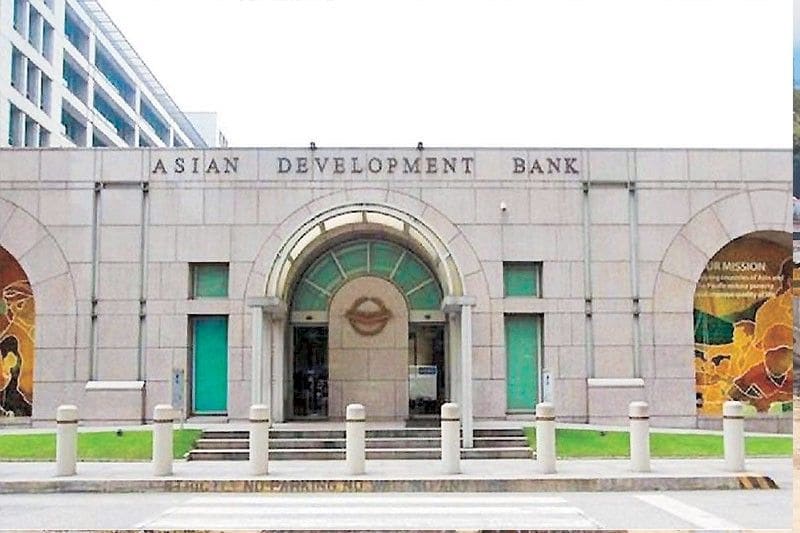
ADB Expands Philippines Health Financing to $750 Million as Oil Shock Widens Budget Gap
The Asian Development Bank raised its universal health care loan by a third, responding to fiscal pressures from Middle East energy disruptions and expanding access to primary care and no-copayment beds.
KEY TAKEAWAYS
- ·The Asian Development Bank increased its universal health care loan to the Philippines to $750 million, adding $250 million in response to fiscal pressures from oil price shocks linked to Middle East conflict.
- ·Household out-of-pocket health spending in the Philippines declined to 42.7 percent in 2024 from 48.8 percent in 2019, supported by expanded PhilHealth benefit packages and no-copayment beds.
- ·Japan International Cooperation Agency raised parallel co-financing to approximately $188 million, bringing total program support above $900 million for mobile health units and community teams in underserved areas.
Loan Increase Responds to Energy Market Pressures
The Asian Development Bank has raised its financing for the Philippines' universal health care expansion to $750 million, a 50 percent increase driven by fiscal strain from oil market volatility. The multilateral lender added $250 million to the Build Universal Health Care Program Subprogram 3, according to ADB.
The decision reflects how energy shocks stemming from Middle East conflict have compressed Manila's fiscal space. Oil price and supply disruptions widened the government's financing requirements, prompting the bank to draw on a $1.75 billion support package that ADB president Masato Kanda offered President Marcos in May.
Japan International Cooperation Agency lifted its parallel co-financing to approximately $188 million from an initial $130 million, bringing total program support above $900 million when combined with ADB's commitment.
Expanding Coverage and Reducing Out-of-Pocket Costs
The program targets improved access to quality health services across the archipelago, with particular emphasis on women's health and climate-related medical needs as extreme weather events increase. Subprogram 3 continues efforts to enroll all Filipinos in the Philippine Health Insurance Corporation, the country's national insurer known as PhilHealth.
Household out-of-pocket health spending fell to 42.7 percent of total health expenditure in 2024, down from 48.8 percent in 2019, data from the program shows. The decline signals progress toward reducing the direct financial burden on families seeking medical care.
The financing has enabled PhilHealth to broaden its benefit packages to include primary care services, emergency treatment, and an expanded list of covered medications. Public and private health facilities have added no-copayment beds, removing upfront payment barriers for insured patients.
Mobile Units and Community Teams Reach Underserved Areas
Under the PuroKalusugan initiative, the program deployed mobile health units, emergency medical assistance teams, and community health teams to provinces and municipalities with limited infrastructure. These mobile assets extend diagnostic and treatment capacity beyond fixed hospital networks, addressing geographic inequities in service delivery.
The approach reflects a broader regional trend in Southeast Asia, where governments are leveraging mobile platforms to reach rural and island populations that lack proximity to tertiary care centers. Indonesia, Vietnam, and Thailand have pursued similar strategies over the past five years.
Geopolitical Shocks and Fiscal Constraints
Kanda framed the loan increase in terms of how external crises ripple through household budgets. "Conflict does not have to cross a border to enter a family's home. It arrives in the price of medicine and in whether the lights stay on," he said in a statement. The comment underscores the linkage between energy costs, inflation, and access to essential services in import-dependent economies.
The Philippines imports roughly 95 percent of its crude oil requirements, leaving consumer prices vulnerable to supply disruptions in the Persian Gulf and global benchmarks. When fuel costs rise, transport expenses for medical supplies, power generation for hospitals, and household purchasing power all compress simultaneously.
Manila's fiscal position has tightened as subsidy programs absorb revenue to cushion fuel price spikes, while tax collections face headwinds from slower economic activity. The ADB loan expansion provides budget relief that allows the Department of Health to maintain program implementation without cuts to service targets.
Implications for Regional Health Financing
The expanded commitment positions the ADB loan as one of the largest health sector financings in Southeast Asia during 2026. It reflects a policy bet that sustained investment in primary care and insurance coverage can reduce long-term costs by shifting treatment upstream and lowering emergency admissions.
Other multilateral lenders, including the World Bank and the Asian Infrastructure Investment Bank, are watching whether the Philippines model of pairing insurance expansion with mobile service delivery achieves measurable improvements in health outcomes and financial protection. Early results on out-of-pocket spending suggest the approach is gaining traction, though enrollment compliance and benefit utilization rates remain works in progress.
For Manila, the challenge lies in ensuring that increased financing translates into durable infrastructure and workforce capacity, rather than temporary relief absorbed by recurring operational costs. The next phase of the program will test whether no-copayment bed expansion and mobile unit deployment can be sustained beyond the initial loan cycle.
RELATED STORIES
Philippine Growth Forecast Cut as Consumer Spending Stalls
Priyanka V. Rao · 3 min

Wilcon Depot Posts 3.5% Earnings Growth as Philippine Home Improvement Demand Strengthens
Mariel D. Santos · 3 min
Philippines Regulator Seeks to Drop VAT on Power System Losses
Mariel D. Santos · 2 min
MacroAsia Profit Falls 34 Percent as NAIA Lease Costs Surge
Priyanka V. Rao · 2 min
Spot something wrong? Email editor@briefasia.com. We log every correction publicly.