Travel & Dining · Dining
Singapore Dessert Chain Deploys 30 Robot Vending Machines After Profit Margin Collapses
Rollney pivoted from physical stores to automated retail when margins fell from 28% to 6%, now selling Hungarian chimney cakes through franchised vending units across the city-state.
KEY TAKEAWAYS
- ·Rollney Singapore deployed 30 robotic soft-serve vending machines after profit margins collapsed from 28% in 2024 to 6% in 2026, investing S$125,000 in the first five units in November 2025.
- ·The company now operates four revenue streams including a VivoCity store, company-owned machines, S$28,000 franchised units with full servicing, and event rentals, targeting 100 machines by January 2027.
- ·Rollney sells 2,000 to 2,500 Hungarian chimney cakes monthly, with vending machines moving 20,000 to 25,000 soft-serve cups to date and monthly sales growing 3% to 4%.
A Hungarian Dessert Meets Asian Automation
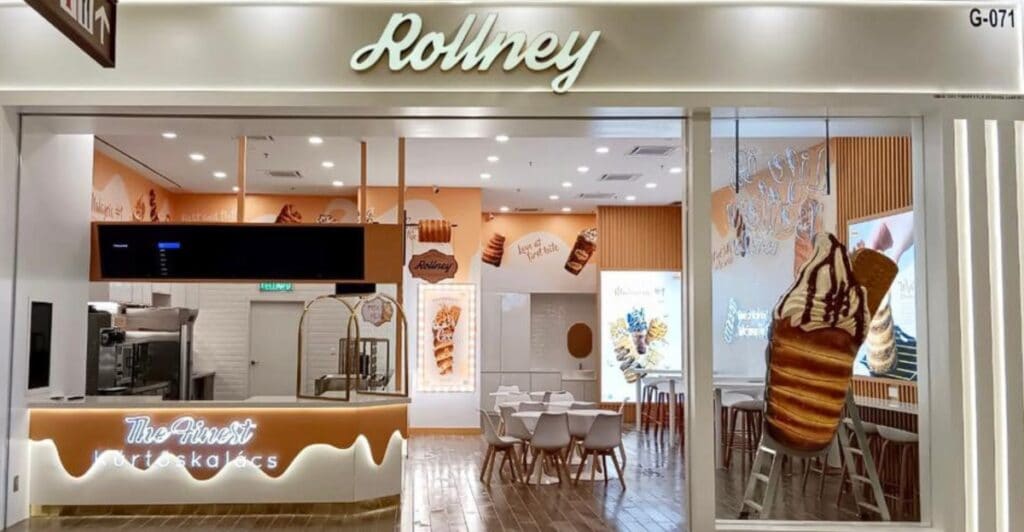
A single-outlet dessert shop in Singapore has built a network of 30 vending machines in less than a year, each equipped with a robotic arm that dispenses soft-serve ice cream on demand. Rollney Singapore, which sells kürtőskalács (Hungarian chimney cakes), made the shift after its profit margin dropped from 28% in 2024 to 6% in 2026, according to director Narresh Babu.
The company deployed its first five vending machines in November 2025 with an investment of S$125,000. The units use robotic arms to prepare soft-serve from scratch inside the machine, a feature Babu says is a first for Singapore's automated retail market. The machines now sell between 20,000 and 25,000 cups of soft-serve to date, with monthly sales growth running at 3% to 4%.
Rollney currently moves 2,000 to 2,500 chimney cakes per month from its 300-square-foot VivoCity store, which has been operating since January 2024. Babu put S$260,000 into the Singapore operation at launch, funding 60% from personal savings and 40% from a family loan that was later converted to a gift.
The Economics That Forced a Pivot
The VivoCity outlet required five staff members and generated an average customer transaction of S$5 to S$8. Babu calculated that the shop needed roughly double the daily foot traffic of a typical restaurant to cover overheads. When he ran projections for a second physical location, the cost matched what six vending machines would require, without the flexibility or reduced labor demands.
The chimney cake itself remains a niche product in Singapore. Each one starts as yeasted dough hand-wrapped around a wooden spit, then baked in a vertical oven for three to five minutes. After baking, the hollow center is filled with compote and crunchy toppings before soft-serve (made daily in Rollney's central kitchen) is added. Customers can choose from more than 30 topping options, including Milo powder, pistachio sauce, and seasonal specials.
Rollney's parent brand launched in Malaysia in 2017, founded by Tan Yee Ke after a trip to Hungary where he spent three months learning to bake the pastry. The Malaysian operation grew to 12 outlets across Kuala Lumpur, Johor Bahru, and Perak. Babu, a friend of Tan's, joined through a joint venture to launch the Singapore entity, which operates independently and oversees international expansion.
Four Revenue Streams From One Product
Rollney Singapore now generates income from four channels: the VivoCity store, company-owned vending machines, vending machine franchises, and event rentals. The VivoCity location will close on September 5 and reopen in October as a 20 to 40-square-foot kiosk, cutting rental costs while maintaining brand presence at the mall.
The vending machines sell soft-serve from S$3 per cup. Franchisees pay S$28,000 per unit, with Rollney handling cleaning, maintenance, servicing, and refills. A single servicing run costs around S$6,000 and covers 12 to 15 machines, with per-unit costs declining as the network expands. Thirty franchisees are now operating machines across Singapore, and the company is targeting 50 units by September.
Event rentals add a fourth stream, with machines deployed at corporate and private functions. The model gives Rollney exposure beyond fixed retail locations while generating incremental revenue.
Speed as a Structural Advantage
Babu operates without a purchasing team or R&D committee, allowing him to move from concept to menu in as little as three days. The Milo Dinosaur Kurtos, a National Day limited edition, was conceived, tested, and launched within that window. Babu sources ingredients, tests flavor and texture combinations, and calculates pricing himself before deciding whether a product goes live.
During the 2026 World Cup, Rollney introduced ten kurtos flavors inspired by footballing nations. Other recent releases include the Kaya Toast Kurtos, which pairs Hokkaido ice cream with pandan kaya and sugar breadcrumbs, and a Pistachio Kunafa variant.
The company is targeting 100 vending machines across Singapore by January 2027, followed by two to three additional physical outlets by the end of 2027. Babu's growth strategy prioritizes operational flexibility over store count, a stance shaped by the margin pressures that nearly stalled the business in its first two years.
Singapore's dessert market has seen other players experiment with automation, but few have combined franchising, event services, and retail under a single brand anchored by a relatively obscure European pastry. Whether kürtőskalács gains traction beyond its current niche will depend in part on whether Rollney's distribution model can generate the repeat exposure that a single storefront could not.
RELATED STORIES

AI Demand Pushes Southeast Asia Data Centre Investment Despite Power Constraints
Cheng Wei-Lun · 2 min
China's Tourism Revival Hits 35 Million Foreign Arrivals in 2025
Cheng Wei-Lun · 4 min

Wilmar International Reports 9.9% Jump in Core Profit Amid China Demand and India Consolidation
Priyanka V. Rao · 3 min
Singapore's Economy Expands 5.9% in Q2 as AI Spending Offsets Mideast Tensions
Cheng Wei-Lun · 2 min
Spot something wrong? Email editor@briefasia.com. We log every correction publicly.