Finance · Deals
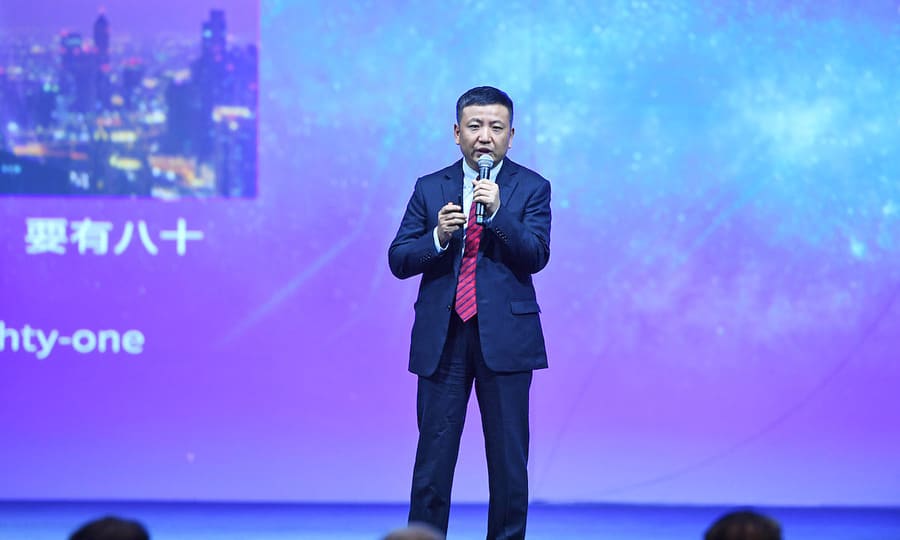
Shanghai Listing Vaults CXMT Chairman Into Billionaire Ranks With $15.9B Fortune
Zhu Yiming's wealth jumped by more than $12 billion as the memory chipmaker's shares climbed over 500% on debut, cementing its position as China's largest domestically traded company.
KEY TAKEAWAYS
- ·CXMT chairman Zhu Yiming's wealth increased by over $12 billion to $15.9 billion after the chipmaker's shares surged 500% on its Shanghai debut Monday.
- ·The company raised $8.6 billion in Asia's largest IPO this year and now holds a market capitalization of $546 billion, making it China's largest domestically listed firm.
- ·CXMT supplies memory chips to Alibaba, ByteDance, Tencent, Lenovo, and Xiaomi, positioning itself as a national champion in China's semiconductor self-sufficiency drive.
A 500% Rally on Day One
Zhu Yiming's personal fortune expanded by more than $12 billion in a single trading session after ChangXin Memory Technologies opened on the Shanghai exchange Monday. The memory chipmaker's stock price climbed over 500%, pushing the company's market value to 3.7 trillion yuan, or approximately $546 billion.
The 54-year-old executive now commands an estimated net worth of $15.9 billion, according to Forbes. That figure reflects his holdings in CXMT as well as his stake in GigaDevice, the flash memory chipmaker he established in 2004 and which trades in Shanghai. Zhu studied in the United States and holds permanent residency status in Singapore.
CXMT's debut ranks as Asia's largest initial public offering so far this year. The company sold roughly 6.7 billion shares at 8.7 yuan each, raising 57.9 billion yuan before any over-allotment option. Proceeds are earmarked for production expansion and research initiatives, according to the prospectus.
National Champion Status Fuels Demand
The dramatic first-day surge was expected by market observers who view CXMT as a cornerstone of Beijing's semiconductor strategy. Shen Meng, managing director at Chanson&Co, a Beijing-based boutique investment bank, noted that domestic demand will continue to drive the company's trajectory.
Investor enthusiasm centers on CXMT's role in China's effort to reduce reliance on foreign chip suppliers amid intensifying technology competition with Washington. Theodore Shou, CEO at Yiyi Capital, said he expects the company to evolve into a global leader. "It's maybe just a question of time that it can be not only a challenger, it can be a global champion in this particular sector," Shou said.
Founded in 2016, CXMT counts the China Integrated Circuit Industry Investment Fund, known informally as the Big Fund, among its largest shareholders. The Hefei municipal government and Alibaba's cloud computing division also hold significant stakes.
From Loss-Maker to Profit Machine
CXMT burned through billions of dollars in its early years, pouring capital into research and development to close the technology gap with established players in South Korea and the United States. The company posted its first annual profit in 2025 as artificial intelligence applications fueled demand for memory chips.
Its customer base spans Chinese technology giants including Alibaba, ByteDance, and Tencent, alongside device manufacturers such as Lenovo and Xiaomi. Beijing Nuohua analyst Zeng observed that CXMT has not yet reached the ceiling of either its technology capabilities or its market penetration, leaving substantial room for expansion.
A Silicon Valley Veteran Returns
Zhu earned bachelor's and master's degrees in physics from Tsinghua University before pursuing electronic engineering studies at the State University of New York at Stony Brook. He worked as an engineer at iPolicy Networks and as a project manager at Monolithic System Technologies in Silicon Valley.
According to a post by the Tsinghua Alumni Association, Zhu returned to China after concluding the country offered superior growth prospects. A key factor in his decision was China's dependence on imports for over 90% of its memory chips at the time.
After founding GigaDevice, Zhu was recruited to lead CXMT with backing from the Hefei municipal government. The city's support reflects a broader pattern of local governments partnering with Beijing's central industrial policy to cultivate semiconductor capacity.
Asia's Chip Ambitions Take Shape
CXMT's valuation underscores the urgency behind China's push to secure domestic supply chains for critical technologies. Export controls imposed by the United States and its allies have accelerated Beijing's timeline for achieving self-sufficiency in advanced semiconductors.
The memory chip sector represents a particularly strategic battleground. DRAM and NAND flash products are essential components in smartphones, data centers, and AI training clusters. Control over this segment translates into leverage across the broader technology stack.
Zhu's rapid wealth accumulation mirrors the fortunes of semiconductor executives across Asia who have ridden government-backed industrialization campaigns. South Korea's Samsung and SK Hynix, Japan's Kioxia, and Taiwan's TSMC have all benefited from decades of state coordination with private capital.
The question facing CXMT is whether it can replicate that trajectory while navigating geopolitical headwinds. Its technology remains several generations behind the leading edge, and access to advanced manufacturing equipment from the Netherlands and Japan faces tightening restrictions.
Yet the sheer scale of China's domestic market provides a cushion that few competitors can match. As long as Beijing prioritizes local sourcing and maintains subsidies for research, CXMT will enjoy a protected runway to close the performance gap. For Zhu, the Monday debut marks a validation of his decision to return from Silicon Valley two decades ago.
RELATED STORIES
China-US Bond Yield Gap Reaches Two-Decade Peak
Cheng Wei-Lun · 3 min
China's Chip Makers Split Three Ways Beneath the Revenue Growth
Tran Quoc Bao · 3 min
JCET Eyes $968 Million to Scale AI Packaging Lines
Tran Quoc Bao · 3 min
China's Social Security Fund Doubles Offshore Holdings to $86 Billion
Jun-ho Seo · 3 min
Spot something wrong? Email editor@briefasia.com. We log every correction publicly.