Finance · Markets
Seoul and Tokyo Markets Tumble as Chip Stocks Face Sharp Sell-Off
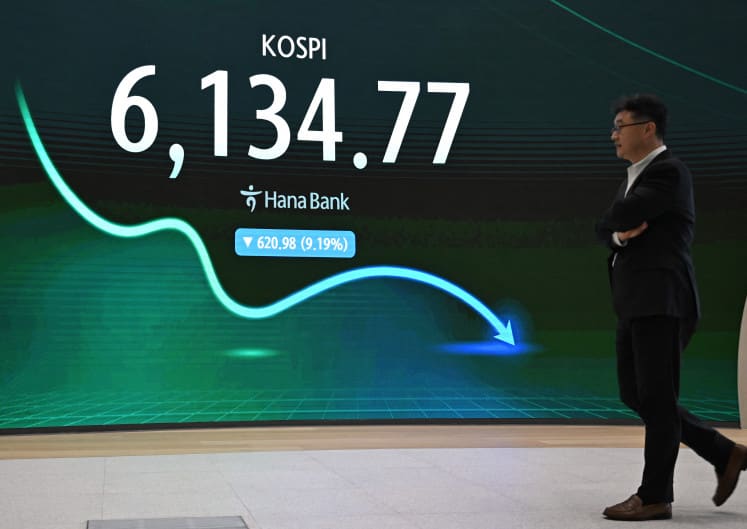
South Korea's Kospi plunged 10.2 percent while Tokyo's Nikkei dropped over four percent as semiconductor stocks bore the brunt of a region-wide rout triggered by concerns over AI valuations and reports of China's chipmaking advance.
KEY TAKEAWAYS
- ·South Korea's Kospi index fell 10.2 percent with SK hynix and Samsung each losing approximately 13 percent, triggering a circuit breaker during the session.
- ·Reports of Shanghai Yuliangsheng beginning mass production of chipmaking technology previously dominated by ASML intensified selling pressure across Asian semiconductor stocks.
- ·Investors are awaiting earnings this week from SK hynix, Samsung, Kioxia, Microsoft, Meta, Apple, and Amazon to assess demand trends and capital spending plans.
Circuit Breakers and Double-Digit Drops
Asian equity markets endured a punishing session Tuesday as semiconductor stocks absorbed steep losses, dragging major indexes sharply lower. South Korea's Kospi index fell 10.2 percent, triggering a 20-minute circuit breaker earlier in the day. SK hynix and Samsung both shed approximately 13 percent, extending a brutal slide that has seen both companies lose nearly half their value since reaching all-time highs last month. The Kospi itself has declined more than 30 percent from its recent peak.
Tokyo's Nikkei 225 sank over four percent as chip-related stocks faced selling pressure. Kioxia dropped 18 percent, while equipment makers Advantest and Tokyo Electron tumbled 11 percent. Taipei's main index fell more than four percent, with TSMC bearing losses despite its position as a market heavyweight. Losses rippled across the region, reflecting broad-based investor retreat from technology exposure.
China Chipmaking Report Adds to Pressure
The sell-off intensified following reports that Shanghai Yuliangsheng has begun mass production using chipmaking technology previously dominated by Dutch firm ASML. The development compounds existing concerns about the sustainability of the artificial intelligence investment boom that has driven valuations to elevated levels over the past two years.
The Philadelphia Semiconductor Index in the United States dropped 2.2 percent Monday as Sandisk plunged 11 percent. Advanced Micro Devices and Nvidia each gave up around five percent. In Amsterdam, ASML shares fell more than eight percent. The coordinated decline across geographies underscores how interconnected global chip supply chains have become and how quickly sentiment can shift.
Valuation Questions Surface
Investor appetite for semiconductor stocks had already begun to wane in recent weeks as questions mounted about when massive AI infrastructure investments would generate meaningful returns. Extended valuations across the sector raised eyebrows among analysts tracking capital deployment by hyperscalers and large technology firms.
According to Stephen Innes at SPI Asset Management, the immediate fundamentals of the semiconductor industry have not collapsed. Demand for high-bandwidth memory remains robust, and major technology companies have not yet scaled back their capital expenditure plans. What has shifted is the market's willingness to assign premium multiples to future earnings promises.
The AI investment cycle had operated as a self-reinforcing mechanism over the past several years. Rising equity values encouraged increased spending, which in turn validated higher earnings expectations and pushed valuations further upward. That dynamic now appears to be reversing, with investors reassessing their positioning at speed.
Earnings Week Ahead
Market participants are awaiting earnings reports this week from SK hynix, Samsung, and Kioxia in Asia, alongside results from Microsoft, Meta, Apple, and Amazon in the United States. These releases will provide concrete data on revenue trends, margin pressures, and forward guidance at a time when investor confidence in the sector has weakened considerably.
The timing of the sell-off is notable given the concentration of results from industry leaders. Any disappointment on revenue growth, capital spending plans, or demand visibility could accelerate the correction, while strong results might offer limited relief if valuation concerns persist.
Geopolitical Backdrop Improves
The technology sector turmoil unfolded even as geopolitical tensions in the Middle East showed signs of easing. The United States and Iran paused retaliatory strikes for a third consecutive day, with President Donald Trump suggesting aboard Air Force One that there is a "good chance" diplomacy could produce an agreement to end hostilities that began in late February.
Reports indicate Oman and Iran are working toward an agreement to resume shipping through the Strait of Hormuz, through which approximately one-fifth of global oil and liquefied natural gas typically passes. The prospect of renewed flows sent oil prices sharply lower, with Brent crude losing more than eight percent Monday and West Texas Intermediate declining over seven percent. Both benchmarks extended losses by more than one percent in Asian trading Tuesday.
Regional Ripple Effects
The scale of declines in Seoul and Tokyo highlights the outsized role semiconductor manufacturing and related industries play in Northeast Asian economies. South Korea and Taiwan host major chip fabrication facilities, while Japan supplies critical materials and equipment to the global supply chain. Sharp moves in these stocks translate directly into broad index performance given their market capitalization weight.
The circuit breaker activation in Seoul, designed to pause trading during extreme volatility, underscores how quickly selling pressure built during the session. Such mechanisms are intended to provide cooling-off periods, but their triggering often signals deeper investor anxiety rather than temporary order imbalances.
For portfolio managers across Asia, the semiconductor correction presents a challenge. The sector had been a primary driver of equity returns, and its reversal leaves fewer sources of positive performance. Rotation into other sectors has proven difficult given global growth concerns and the limited number of industries capable of absorbing capital at scale.
The coming days will test whether buyers emerge at lower valuation levels or whether the reassessment of AI investment timelines has further to run. Asian markets open Wednesday facing the same uncertainty that has gripped investors globally as they recalibrate expectations for technology earnings growth.
RELATED STORIES

Japan Deploys $96.5 Billion in Currency Intervention to Halt Yen's Slide
Aiko Nakamura · 3 min

Samsung Electronics Drops 8% as Market Questions Buyback Strategy
Cheng Wei-Lun · 2 min
Seoul Stocks Drop on Mideast Tensions and Oil Price Surge
Tran Quoc Bao · 3 min
Index Funds Face Hidden Concentration Risk From AI Boom
Cheng Wei-Lun · 3 min
Spot something wrong? Email editor@briefasia.com. We log every correction publicly.