Finance · Markets
Seoul Sells Dollars to Prop Up Won as Currency Hits Nine-Month High
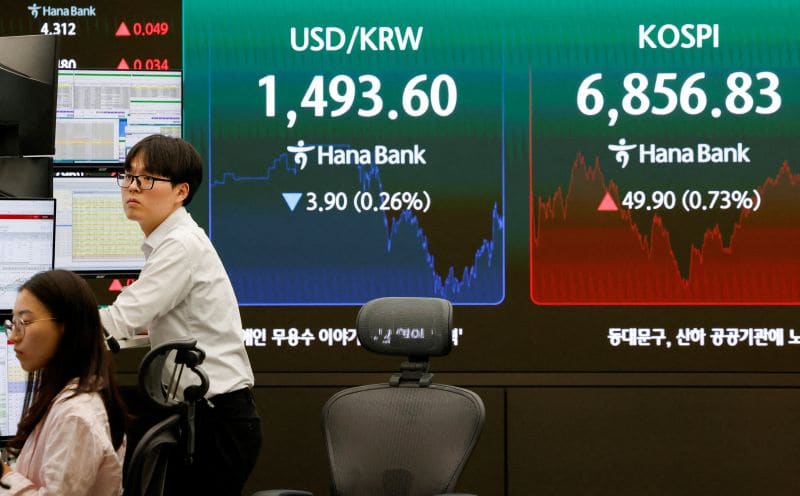
South Korean authorities intervened in foreign exchange markets Thursday, driving the won to its strongest level since October amid coordinated regional action.
KEY TAKEAWAYS
- ·South Korean authorities conducted dollar-selling intervention Thursday, pushing the won to 1,418.0 per dollar, its strongest level since October 20.
- ·The won has gained over eight percent in July after hitting a 17-year low of 1,561.50 last month, marking its biggest monthly jump since March 2009.
- ·Seoul and Tokyo signaled coordination on currency issues in early July statements, with Thursday's simultaneous interventions reinforcing regional policy alignment.
Coordinated Regional Move
South Korean foreign exchange authorities executed a rare dollar-selling intervention Thursday, propelling the won to its strongest position in nine months. A market source familiar with the operation confirmed the action Friday, marking one of Seoul's most direct currency interventions in recent memory.
The won surged two percent Thursday to reach 1,418.0 per US dollar, its highest level since October 20. The intervention occurred as Tokyo simultaneously conducted yen-buying operations in New York trading sessions, pulling Japan's currency back from four-decade lows. Currency traders noted the timing suggests deliberate coordination between the two Asian financial hubs.
Seoul's finance ministry declined to confirm the intervention when contacted. However, multiple currency dealers operating in Asian markets observed the simultaneous moves by both governments, reinforcing the view that the operations were planned in tandem.
Won's Dramatic Recovery
The Korean currency has mounted a sharp recovery this month after touching a 17-year low of 1,561.50 in June. July alone has seen the won appreciate more than eight percent, positioning it for its largest monthly gain since March 2009 when global markets rebounded from financial crisis lows.
That dramatic reversal reflects both policy intervention and shifting capital flows into Korean assets. Foreign portfolio investors have returned to Seoul's equity markets in recent weeks, while export data has shown resilience in semiconductor and automotive shipments, Korea's two largest hard-currency earners.
The currency's weakness earlier this year stemmed from persistent dollar strength globally, coupled with concerns about Korea's export outlook as global electronics demand softened. Trade data released earlier this month, however, showed exports climbing for a third consecutive month, easing fears of a prolonged downturn.
Signal of Regional Policy Alignment
Seoul and Tokyo have telegraphed their intent to work together on currency issues for weeks. On July 2, South Korea's vice finance minister told reporters that Seoul maintained close communication with Japan and other key allies on foreign exchange matters. Five days later, Japan's top currency diplomat echoed that stance, noting that financial markets in Japan and South Korea often move in parallel and require coordinated monitoring.
That public messaging set the stage for Thursday's joint action. Currency strategists in Singapore and Hong Kong interpreted the coordinated intervention as a warning to speculative traders betting on further Asian currency weakness. Both the won and yen had faced sustained selling pressure from hedge funds and momentum traders through June.
The interventions also carry implications for monetary policy divergence in the region. While the US Federal Reserve has maintained elevated interest rates, both the Bank of Korea and Bank of Japan face domestic pressures that complicate aggressive rate hikes. Currency intervention offers an alternative tool to manage exchange rate volatility without tightening domestic credit conditions.
Market Reaction and Outlook
Trading volumes in won-dollar pairs spiked Thursday evening Seoul time, with dealers reporting sudden dollar supply hitting the market during typically thin trading hours. That pattern is consistent with official intervention, as central banks often act when liquidity is lower to maximize price impact per dollar deployed.
Foreign exchange reserves data due next week will likely provide indirect confirmation of the intervention's scale. South Korea held USD 413 billion in reserves at the end of June, according to central bank figures, providing ample capacity for currency operations.
Analysts expect Seoul to maintain vigilance on won volatility in coming weeks, particularly as US employment and inflation data could shift dollar sentiment. The won's rapid appreciation this month, while welcome after June's weakness, also poses risks for Korean exporters who benefit from a weaker currency when competing in global markets.
Regional currency stability remains a priority for both Seoul and Tokyo as they navigate uncertain global trade conditions and divergent monetary policy cycles among major economies. Thursday's interventions demonstrate that both governments retain the capacity and willingness to act when currency moves threaten economic stability.
RELATED STORIES
Japan Deploys $96.5 Billion in Currency Intervention to Halt Yen's Slide
Aiko Nakamura · 3 min
Seoul Stocks Drop on Mideast Tensions and Oil Price Surge
Tran Quoc Bao · 3 min

Samsung Electronics Drops 8% as Market Questions Buyback Strategy
Cheng Wei-Lun · 2 min

Samsung Biologics Plans $2.2 Billion Rights Offering to Fund Peptide Acquisition
Jun-ho Seo · 3 min
Spot something wrong? Email editor@briefasia.com. We log every correction publicly.