Technology · Startups
Seoul Pushes Tech Partnerships With Silicon Valley as Lee Visits US
President Lee Jae-myung calls for deeper cooperation on innovation and startups beyond traditional security ties
KEY TAKEAWAYS
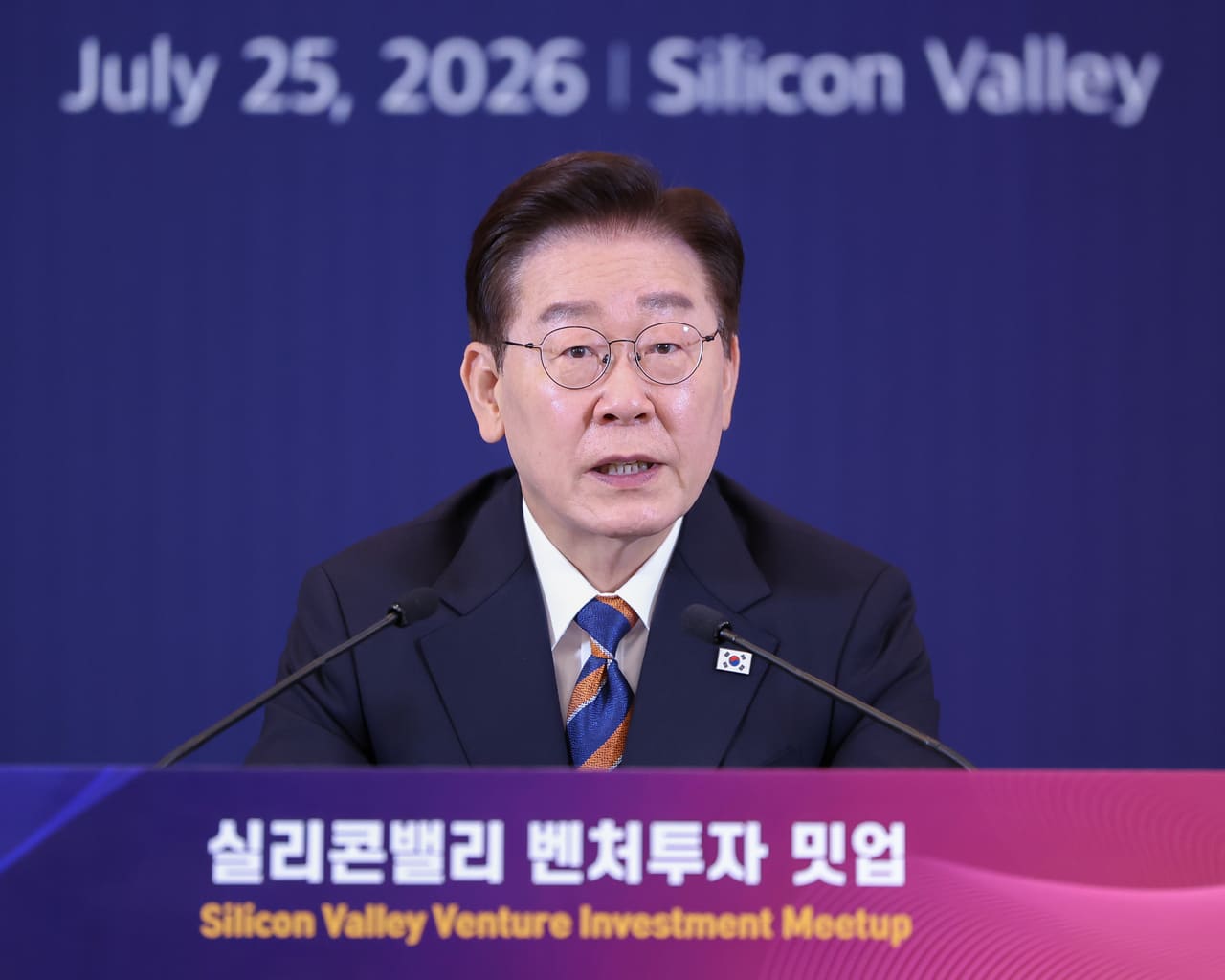
- ·President Lee Jae-myung met with six Silicon Valley venture capital firms in San Francisco, urging expanded cooperation on technology and startups beyond the traditional security alliance.
- ·The meeting reflects Seoul's strategy to position itself as a key node in global technology networks amid shifting supply chains and geopolitical pressures.
- ·Lee's US stop precedes a broader tour of South America, beginning with Brazil, as Seoul seeks to diversify economic partnerships beyond its traditional markets.
A New Agenda for Seoul-Washington Ties
South Korean President Lee Jae-myung is pushing to reframe his country's relationship with the United States around technology and venture capital, moving beyond the security-focused alliance that has anchored the partnership for seven decades.
Speaking to a group of venture investors in San Francisco on Saturday, Lee outlined a vision in which bilateral cooperation extends into innovation ecosystems, startup funding, and technology development. The president arrived in the Bay Area on Friday as part of a multi-country tour that will take him to Brazil and other South American destinations.
Six venture capital firms with significant Silicon Valley portfolios attended the closed-door session, according to the office of the South Korean president. The meeting represents the latest effort by Seoul to position itself as a key node in global technology networks, particularly as geopolitical tensions reshape supply chains and investment flows across the Pacific.
Beyond Defense and Diplomacy
The remarks signal a strategic shift in how Seoul views its primary alliance. While defense cooperation remains central to the relationship between the two countries, Lee's administration is emphasizing economic and technological interdependence as a complementary pillar.
South Korea has long been a major exporter of semiconductors, displays, and consumer electronics, but its venture capital ecosystem has historically lagged behind counterparts in China, Japan, and Southeast Asia. In recent years, Seoul has introduced tax incentives and regulatory reforms designed to attract both domestic and foreign capital into early-stage technology companies.
The timing of Lee's outreach is notable. US export controls on advanced semiconductors and chip-making equipment have created new pressure points in the global technology supply chain, with South Korean manufacturers caught between Washington's security priorities and their commercial interests in China. By deepening ties with Silicon Valley investors, Seoul may be seeking to diversify its technology partnerships and secure access to capital and expertise that can sustain its innovation ambitions.
Silicon Valley's Asia Calculus
For venture capitalists, South Korea presents both opportunity and complexity. The country boasts world-class engineering talent, a mature digital infrastructure, and a consumer market that has proven receptive to new technologies. Yet its startup ecosystem remains dominated by large conglomerates, and regulatory barriers have historically limited the growth of independent ventures.
Recent policy changes have begun to address some of these constraints. The government has expanded visa programs for foreign entrepreneurs, streamlined business registration processes, and committed public funds to co-investment vehicles that pair state capital with private venture money.
Lee's San Francisco meeting follows similar efforts by other Asian governments to court Silicon Valley. Singapore, Tokyo, and Bangalore have all launched initiatives aimed at attracting US venture capital and forging partnerships between their domestic startups and American technology firms. The competition for investment dollars and strategic alliances has intensified as capital flows into Asia have slowed amid rising interest rates and geopolitical uncertainty.
The South America Detour
Lee's stop in San Francisco is a prelude to a broader diplomatic and economic mission in South America. Brazil, the first official destination of the tour, has emerged as a key partner for South Korea in sectors ranging from agriculture to energy. The visit is expected to include discussions on trade, infrastructure investment, and supply chain collaboration.
The itinerary reflects Seoul's broader strategy of diversifying its economic relationships and reducing dependence on any single market. As US-China rivalry reshapes global commerce, middle-power economies like South Korea are seeking to hedge their bets by deepening ties with regions that have historically been outside their primary focus.
For now, the San Francisco meeting remains a signal of intent rather than a policy breakthrough. Whether Lee's call for expanded cooperation translates into concrete investment flows, joint ventures, or technology transfers will depend on follow-through from both governments and the willingness of private capital to commit resources.
What is clear is that Seoul views its future prosperity as increasingly tied to its ability to compete in innovation, not just manufacturing. And that means building bridges to the venture capitalists who fund the next generation of technology companies.
RELATED STORIES
South Korea Taps Three Telecom Giants to Deliver Free AI Services Nationwide
Cheng Wei-Lun · 3 min
Samsung Display Restarts Asan OLED Campus as Foldable Phones Stage Recovery
Cheng Wei-Lun · 4 min
Samsung and SK Hynix Turn Down KEPCO's Multibillion-Dollar Prepayment Demand
Cheng Wei-Lun · 4 min
LG Pivots to AI-Defined Vehicle Platform as Korea Chases China's Self-Driving Lead
Jun-ho Seo · 3 min
Spot something wrong? Email editor@briefasia.com. We log every correction publicly.