Finance · Markets
Seoul Market Opens Down 1.6% as Tech Losses Ripple From Wall Street
The Korea Composite Stock Price Index shed 105 points in early trading after Nasdaq's overnight decline weighed on sentiment
KEY TAKEAWAYS
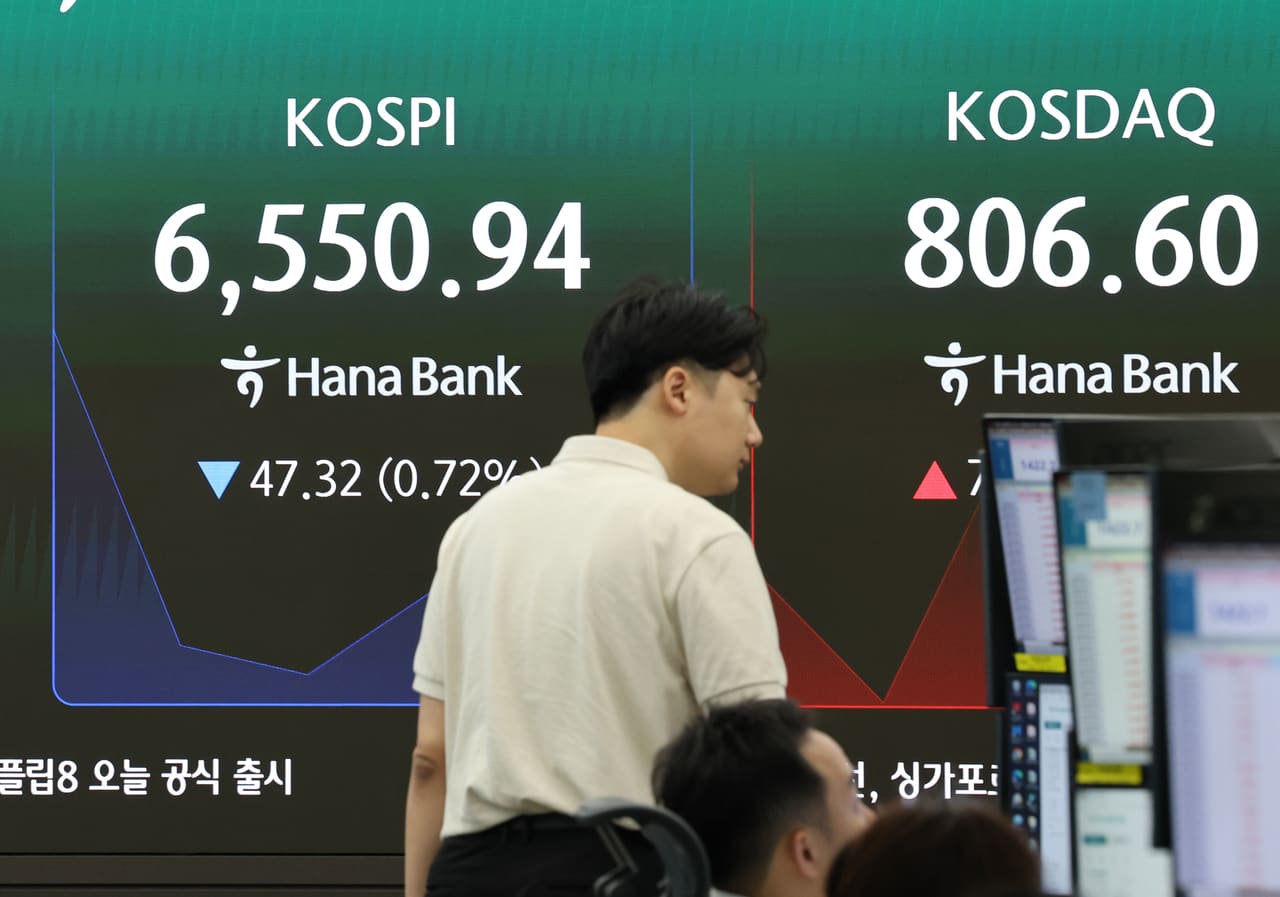
- ·South Korea's KOSPI index dropped 105.95 points to 6,492.31 in early trading Thursday, a 1.61 percent decline driven by technology sector weakness.
- ·The losses followed an overnight 0.83 percent fall in the Nasdaq Composite, while the Dow Jones Industrial Average gained 0.49 percent.
- ·Diplomatic progress on the Strait of Hormuz situation coincided with profit-taking in tech stocks, highlighting sector rotation dynamics.
Sharp Decline in Early Trading
South Korean equities opened with notable losses Thursday morning, pulled down by weakness in global technology stocks. The Korea Composite Stock Price Index dropped 105.95 points to 6,492.31 in the first 15 minutes of trading, according to exchange data. The decline represented a 1.61 percent fall from the previous close, after an initial gap-down opening of 1.81 percent.
The selloff followed a mixed session on Wall Street, where technology shares bore the brunt of selling pressure. The Nasdaq Composite retreated 0.83 percent overnight as several large-cap technology companies faced profit-taking. In contrast, the Dow Jones Industrial Average managed a 0.49 percent gain, suggesting divergence between traditional industrials and growth-oriented tech stocks.
Geopolitical Backdrop
The market movements came as diplomatic signals pointed to potential de-escalation in the Strait of Hormuz, a critical chokepoint for global energy shipments. While reduced geopolitical risk typically supports equity markets, the immediate effect appeared to trigger profit-taking in sectors that had benefited from recent safe-haven flows and defense-related positioning.
For Seoul's technology-heavy index, the overnight performance of U.S. tech giants carries outsized weight. South Korean semiconductor manufacturers and electronics producers maintain deep supply-chain ties to American counterparts, making the local market particularly sensitive to sentiment shifts in Silicon Valley and across the Pacific.
Regional Context
The morning decline places Seoul among several Asian markets navigating mixed signals from the world's largest economy. U.S. equities have delivered uneven performance in recent sessions, with rotation between sectors reflecting uncertainty about growth trajectories and monetary policy outlooks.
South Korea's export-driven economy remains closely tethered to global demand for semiconductors, displays, and consumer electronics. Any sustained weakness in U.S. technology shares tends to filter through to Korean suppliers and manufacturers within hours, a pattern that has played out repeatedly during earnings seasons and macro turning points.
Market Dynamics
The gap-down opening suggests institutional investors moved quickly to adjust positions ahead of the regular trading session. Such sharp initial moves often reflect overnight algorithm-driven trading and pre-market order imbalances, though they can moderate as the day progresses and local buyers step in at lower levels.
Trading volumes in the opening minutes were not disclosed, but the magnitude of the index move indicates broad-based selling rather than isolated weakness in a handful of names. Technology stocks, which account for a significant portion of the KOSPI's market capitalization, likely led the decline given the sector's correlation with Nasdaq performance.
The divergence between the Dow and Nasdaq overnight also highlights a familiar pattern: when investors rotate out of growth stocks into value and cyclical names, Korea's tech-heavy benchmark typically underperforms broader U.S. indices. This dynamic has been a recurring theme during periods of rising interest rates or shifting risk appetite.
What Comes Next
Market participants will be watching whether the early losses stabilize or deepen as the session unfolds. Seoul's market has shown resilience in past episodes of overnight U.S. weakness, particularly when domestic economic data or corporate earnings provide countervailing support.
The broader question for Korean equities centers on whether U.S. technology stocks have entered a sustained correction or are simply experiencing routine volatility. For now, the linkage between Silicon Valley's fortunes and Seoul's market remains as tight as ever, with little sign that local factors can insulate the KOSPI from shifts in global tech sentiment.
RELATED STORIES
Seoul Market Climbs on Tech Rally After US Jobs Data
Cheng Wei-Lun · 3 min
South Korea's Pension Giant Faces Questions Over Market Timing
Jun-ho Seo · 3 min
Seoul Stock Market Drops 4.6% as AI Profit Concerns Hit Tech Sector
Cheng Wei-Lun · 3 min

KT&G Posts Fourth Consecutive Quarter of Double-Digit Profit Growth
Cheng Wei-Lun · 3 min
Spot something wrong? Email editor@briefasia.com. We log every correction publicly.