Asia · Business
Seoul Lifts 2026 GDP Forecast to 3% as Memory Chip Exports Surge
Record profits from Samsung and SK hynix drive economic optimism, with government planning strategic investments from windfall tax revenues
KEY TAKEAWAYS
- ·South Korea raised its 2026 economic growth forecast to 3% from 2%, driven by record semiconductor profits as AI demand lifts memory chip sales.
- ·The government plans to channel windfall tax revenues from Samsung and SK hynix into a future response fund targeting regional development and emerging industries.
- ·Finance ministry officials identified currency volatility and wealth polarization as key risks requiring policy adjustments despite the upgraded outlook.
Growth Revision Reflects Semiconductor Strength
South Korea's finance ministry has raised the country's 2026 economic growth forecast to 3%, marking a full percentage-point increase from its earlier 2% projection. The upward revision comes as memory chipmakers post exceptional results amid accelerating demand for AI infrastructure.
Finance Minister Koo Yun-cheol announced the revised outlook during a cabinet meeting Tuesday, pointing to the semiconductor sector's performance as a primary driver. Per capita income is expected to hold steady near the $40,000 threshold, though currency volatility remains a variable, according to Koo.
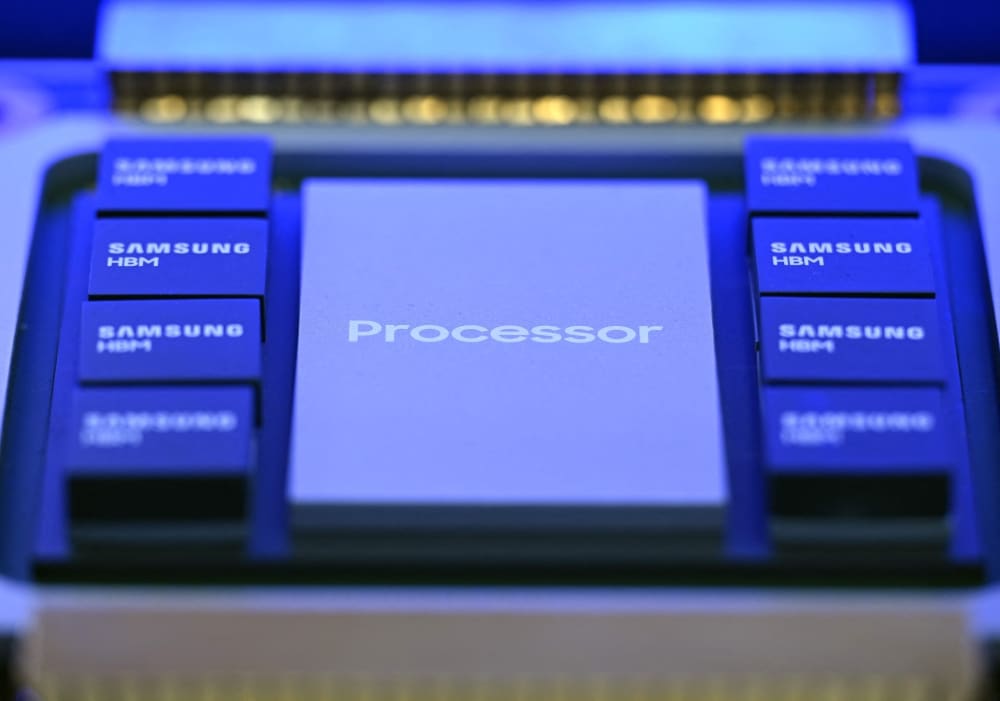
The ministry's internal briefing materials explicitly identified the robust chip market as beneficial for broader economic indicators. Samsung Electronics and SK hynix, the nation's two semiconductor powerhouses, have reported record earnings as their high-bandwidth memory products become critical components in AI processing systems.
Tax Windfall Creates Strategic Opening
President Lee Jae Myung characterized the increased tax revenues from chip sector profits as a unique opportunity for strategic deployment. The administration intends to establish a dedicated future response fund, directing resources toward emerging industries, youth programs, regional development initiatives, and education infrastructure.
The government has not disclosed specific allocation amounts or timelines for the fund. However, the approach signals a shift toward leveraging cyclical industry gains to address structural economic challenges, including regional disparities that have widened in recent years.
SK hynix and Samsung are already participating in an 800 trillion won public-private initiative to construct a semiconductor manufacturing cluster in southwestern South Korea. The project represents one element of efforts to distribute economic activity beyond the capital region.
Market Dynamics and Labor Pressures
Three manufacturers control the advanced memory chip market: Samsung Electronics and SK hynix in South Korea, alongside Micron Technology in the United States. Their high-bandwidth memory chips pair with graphics processing units to power generative AI applications, from conversational interfaces to image synthesis tools.
The sector's profitability has intensified labor negotiations. Samsung Electronics reached an agreement on worker bonuses in May, averting a significant work stoppage as employees pressed for compensation reflecting the company's financial performance.
The finance ministry flagged several risk factors during Tuesday's meeting, including elevated exchange rates, interest rate levels, and consumer price pressures. Ongoing conflict in the Middle East was cited as a potential source of economic disruption.
Regional Implications
South Korea's upgraded forecast offers a data point for regional economic planning as Asian economies navigate uneven post-pandemic recovery trajectories. The semiconductor cycle's upswing provides a buffer for Seoul, though the ministry's presentation acknowledged that wealth polarization has accelerated and requires policy intervention.
The revised projection assumes continued strength in memory chip exports through year-end. Any slowdown in AI infrastructure investment by hyperscale computing companies, or supply chain disruptions affecting chip production, could alter the growth path. Currency movements also introduce uncertainty into income projections denominated in dollars.
For now, the government is positioning the current environment as a window to deploy capital into longer-term structural investments, using short-term revenue gains to fund initiatives aimed at balancing growth across regions and demographic cohorts.
RELATED STORIES
South Korea Creates Fiscal Buffer Fund to Manage Semiconductor Tax Surge
Cheng Wei-Lun · 4 min
South Korea Breaks Full-Year Export Record in September
Tran Quoc Bao · 3 min
SK Hynix Union Rejects Wage Deal in Razor-Thin Vote
Cheng Wei-Lun · 3 min
Seoul Faces Economic Pressure as US Policy Shift Strains Trade and Security Ties
Cheng Wei-Lun · 4 min
Spot something wrong? Email editor@briefasia.com. We log every correction publicly.