Finance · Markets
Seoul Exchange Triggers Trading Curbs as Kospi Jumps Over 4 Percent
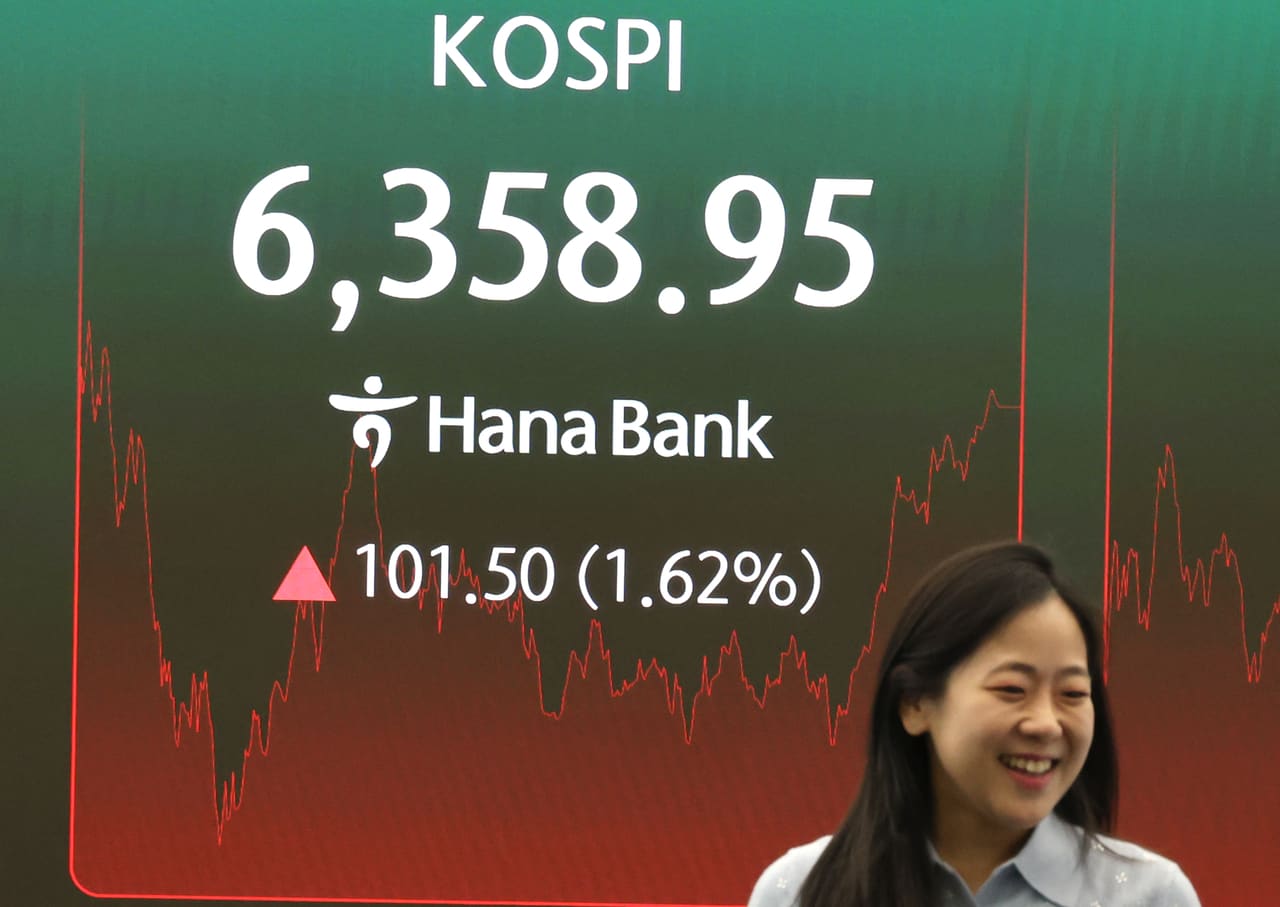
Korea Exchange activated buy-side circuit breaker Wednesday morning as technology shares drove the benchmark index sharply higher in early trading.
KEY TAKEAWAYS
- ·The Korea Exchange halted program trading for five minutes at 9:25 a.m. Wednesday after the Kospi climbed 4.53 percent, activating its buy-side sidecar mechanism.
- ·Technology stocks led the rally, extending gains from overnight US markets and benefiting from improved sentiment around potential US-Iran diplomatic progress.
- ·The circuit breaker applies only to algorithmic program trades, giving the market a brief cooling-off period without stopping manual order execution.
Circuit Breaker Deployed at Market Open
The Korea Exchange suspended program trading on the benchmark Kospi for five minutes Wednesday morning after the index climbed sharply in the first moments of the session. The exchange activated its buy-side sidecar mechanism at 9:25 a.m. local time, just minutes after the opening bell.
The Kospi opened 3.85 percent higher and continued climbing, reaching a 4.53 percent gain by 9:27 a.m., according to Korea Exchange data. Technology stocks led the rally, extending momentum from overnight gains in US equity markets.
How the Sidecar Works
South Korea's circuit breaker system, known as a sidecar, automatically triggers when the Kospi futures index moves 5 percent or more within a single minute compared to the previous day's close. The mechanism temporarily halts program trading - automated buy and sell orders executed by algorithms - to prevent excessive volatility from cascading through the market.
The five-minute pause applies only to program trades on Kospi-listed equities. Individual investors and institutional traders can still execute manual orders during the suspension. The sidecar does not halt trading itself; it creates a brief cooling-off period for algorithmic systems that can amplify sharp price swings.
Korea Exchange introduced the sidecar rule after the 1997 Asian financial crisis, refining it over subsequent years to balance market stability with liquidity. The buy-side variant - triggered by sharp gains rather than losses - is less common than its sell-side counterpart but serves the same function: giving market participants time to reassess conditions before automated systems resume full activity.
Technology Shares Drive the Rally
The morning surge reflected strength in semiconductor and electronics manufacturers, sectors that dominate the Kospi by market capitalization. Chipmakers benefited from positive sentiment in US technology stocks overnight, where major indexes posted solid gains after recent turbulence.
Investor sentiment also improved on reports of potential diplomatic progress between Washington and Tehran. Easing geopolitical tension in the Middle East typically supports risk appetite across Asian equity markets, particularly in export-driven economies like South Korea where supply chain stability is paramount.
The Kospi had experienced heightened volatility in recent sessions, swinging between gains and losses as traders weighed mixed economic signals from China, South Korea's largest trading partner, and uncertainty over US Federal Reserve policy direction.
Broader Market Context
South Korea's equity market remains sensitive to external shocks given its heavy weighting in cyclical technology and industrial stocks. The Kospi's performance often mirrors movements in US tech-heavy indexes, with Samsung Electronics and SK Hynix together accounting for a significant portion of the benchmark's total value.
Wednesday's rally offered relief after a stretch of uneven trading. Foreign investors, who had been net sellers in recent weeks, showed signs of returning to Korean equities as global risk sentiment stabilized. Institutional buying also picked up, contributing to the sharp opening move that triggered the circuit breaker.
The activation of the buy-side sidecar underscores how quickly sentiment can shift in Seoul's market. While the mechanism is designed to prevent disorderly trading, its deployment signals both the strength of the rally and the role of algorithmic systems in amplifying directional moves.
Market participants will watch whether the momentum holds through the rest of the session or whether profit-taking emerges after the initial surge. The Kospi's trajectory in coming days will likely hinge on follow-through in US technology stocks and any further clarity on macroeconomic conditions in the region.
RELATED STORIES
Seoul Market Climbs on Tech Rally After US Jobs Data
Cheng Wei-Lun · 3 min
South Korea's Pension Giant Faces Questions Over Market Timing
Jun-ho Seo · 3 min

KT&G Posts Fourth Consecutive Quarter of Double-Digit Profit Growth
Cheng Wei-Lun · 3 min
South Korean Retail Investors Pivot to US Leveraged ETFs After Domestic Crackdown
Cheng Wei-Lun · 3 min
Spot something wrong? Email editor@briefasia.com. We log every correction publicly.