Finance · Markets
Seoul Chipmakers Rally 26% as Leveraged Volatility Grips Korean Markets
Samsung and SK Hynix post record intraday gains after Philadelphia Semiconductor Index surge, but KOSPI remains 30% below June peak amid retail leverage crisis
KEY TAKEAWAYS
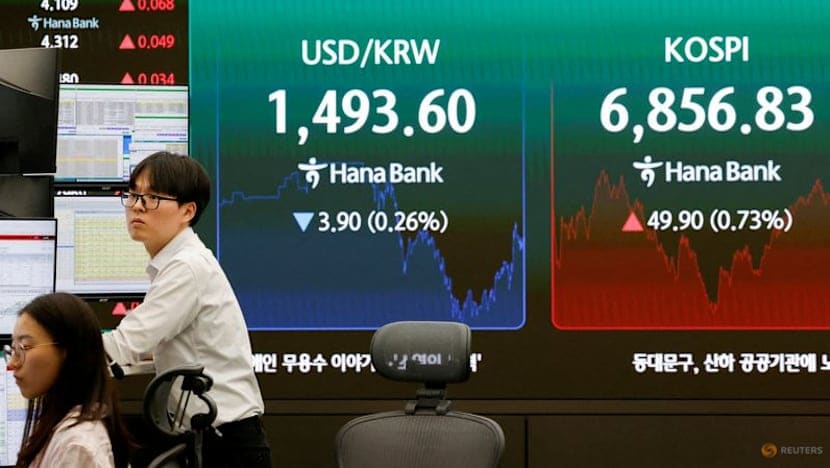
- ·The KOSPI surged 16.4 per cent Friday with Samsung and SK Hynix posting record intraday gains of 26.3 per cent and 29.7 per cent after US chip stocks rallied overnight.
- ·Despite the rebound, the index remains 30 per cent below its June peak and is tracking a 25 per cent monthly decline, the steepest since the 1997 Asian financial crisis.
- ·Korean authorities introduced leverage curbs this week, but analysts warn the measures may not sufficiently dampen volatility driven by retail investors attempting to recover losses.
Record Swing After Three-Day Rout
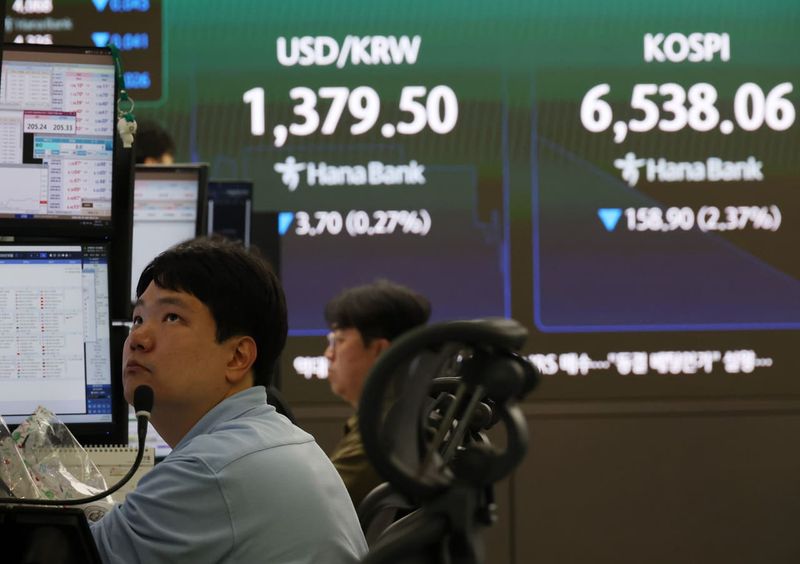
The KOSPI benchmark surged 16.4 per cent in early trading Friday, climbing 919 points to 6,512 after three consecutive sessions dragged the index to its lowest close since early April. Samsung Electronics jumped as much as 26.3 per cent and SK Hynix climbed 29.7 per cent, both on track for their largest single-day gains on record. The two chipmakers represent more than half the index's market capitalisation.
Foreign investors bought 5.8 trillion won ($4 billion) of Korean equities during the session, according to exchange data. The buying spree followed an 8 per cent rally in the Philadelphia Semiconductor Index overnight, led by an 18 per cent surge in Micron Technology. Microsoft's 15 per cent jump, its steepest gain in eighteen years, injected fresh confidence into artificial intelligence capital expenditure after the company reported quarterly earnings that exceeded analyst estimates.
Contagion Across Asia Tech Bourses
The rebound rippled across regional technology indices. Japan's Nikkei 225 rose more than 5 per cent and Taiwan's benchmark added 7 per cent as semiconductor exposure drove gains. Korean chipmakers supply critical memory components to data centre operators scaling AI infrastructure, making them sensitive to sentiment shifts around hyperscaler spending.
Despite Friday's rally, the KOSPI remains more than 30 per cent below its late-June high and is headed for a monthly decline of nearly 25 per cent, the steepest since the Asian financial crisis in 1997. The index's fragility reflects the outsized role of retail investors employing leverage through exchange-traded products, amplifying both upswings and drawdowns.
Leverage Products Fuel Whipsaw Moves
Earlier this week, South Korean authorities unveiled measures aimed at curbing the leveraged instruments contributing to market turbulence. Analysts at local brokerages caution the interventions may prove insufficient to dampen volatility as retail participants attempt to recoup losses accumulated during the month's sell-off.
"It is a concern that there is investor sentiment of trying to recover losses from the recent market slump through leveraged bets," said Han Ji-young, an analyst at Kiwoom Securities. Retail positioning in leveraged and inverse ETFs has magnified price swings, creating feedback loops that push the index further in both directions.
The dynamic mirrors patterns seen in other markets where retail leverage concentrates risk. Korean retail investors have historically favoured domestic semiconductor names, viewing them as core portfolio holdings. When coupled with leveraged products, that preference translates into sharp directional moves on relatively modest fundamental catalysts.
AI Spending Outlook Remains Key Driver
The Philadelphia Semiconductor Index's overnight rally hinged on renewed optimism that cloud hyperscalers will sustain elevated capital spending through 2027. Microsoft's results suggested demand for AI compute capacity continues to outpace supply, supporting the case for ongoing investment in chips, servers, and data centre infrastructure.
Korean memory chipmakers stand to benefit if that trajectory holds. Samsung and SK Hynix dominate the market for high-bandwidth memory used in AI accelerators, a segment experiencing tight supply and rising average selling prices. Both companies have guided for sequential revenue growth in their memory divisions through the second half of the year.
However, investor confidence remains brittle. Any sign of spending moderation among US tech giants could trigger another round of selling in Seoul, particularly if leveraged positions remain elevated. The KOSPI's 30 per cent decline from its June peak underscores how quickly sentiment can reverse when positioning is crowded and margin calls cascade.
What Comes Next for Korean Equities
Market participants will watch whether Friday's gains hold through the session close and into next week. If the rally proves durable, it may signal that forced selling has run its course and that valuations have reached levels attractive to longer-term buyers. If the rebound fades, it would reinforce concerns that structural issues around leverage and retail positioning continue to destabilise the market.
Korean policymakers face a delicate balancing act. Measures to restrict leverage risk alienating retail investors who view equity markets as a wealth-building avenue. Yet allowing unbridled use of leveraged products invites the kind of volatility that erodes confidence and deters institutional capital. The government's recent interventions suggest officials recognise the stakes, but implementation and enforcement will determine whether the measures succeed in stabilising the market.
For now, Seoul's equity market remains hostage to sentiment shifts in US technology stocks and the behaviour of domestic retail investors armed with leverage. Friday's rally offers temporary relief, but the underlying fragility persists as long as positioning remains concentrated and volatility elevated.
RELATED STORIES
Seoul Stocks Drop on Mideast Tensions and Oil Price Surge
Tran Quoc Bao · 3 min
Samsung Electronics Drops 8% as Market Questions Buyback Strategy
Cheng Wei-Lun · 2 min
Index Funds Face Hidden Concentration Risk From AI Boom
Cheng Wei-Lun · 3 min
Seoul Markets Tumble as Tech Selloff Ripples Across Asia
Cheng Wei-Lun · 3 min
Spot something wrong? Email editor@briefasia.com. We log every correction publicly.