Travel & Dining · Trends
Sarawak's AirBorneo Targets 15-Jet Fleet for Break-Even Operations
State-backed carrier says scale economics demand broader network and higher frequencies to cover fixed costs across Malaysia's Borneo routes
KEY TAKEAWAYS
- ·AirBorneo Airways requires a fleet of 14 to 15 aircraft to achieve commercial profitability by spreading fixed costs across higher passenger volumes and more frequent routes.
- ·The state-owned carrier, backed by Sarawak government funding, plans to expand from current operations to 17 jets by end-2030, starting with wet-leased Boeing 737-800s.
- ·AirBorneo assumed Rural Air Services from MASwings on January 1 and is building a regional jet network from Kuching to serve connectivity and tourism goals.
Fleet Economics Drive Expansion Plan
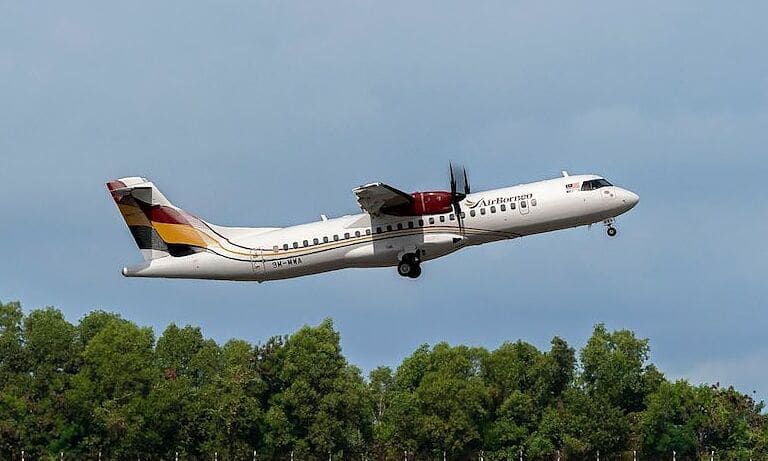
AirBorneo Airways has identified a minimum operational threshold of 14 to 15 jets as necessary to achieve commercial viability, according to Chief Executive Officer Megat Ardian Aminuddin. The state-owned carrier, which launched jet service in July connecting Kuching to Kuala Lumpur and Singapore, currently operates fewer aircraft but plans to expand to 17 by the close of 2030.
Operating below that threshold with only a handful of planes would fail to deliver sufficient economic scale, Megat told Business Times. The airline's strategy centers on spreading fixed operational expenses across a larger passenger base while simultaneously increasing route frequencies and adding destinations.
The underlying logic is straightforward: higher passenger volumes generate proportionally greater revenue, eventually surpassing the fixed cost baseline. A fleet of 15 jets enables the carrier to serve trunk routes more frequently and launch secondary markets while maintaining unit cost discipline.
State Funding Anchors Start-Up Phase
What distinguishes AirBorneo from typical aviation start-ups is direct capital backing from the Sarawak state government. Megat emphasized that working capital, operating expenditure, and capital expenditure for the coming years have already been allocated under an approved business plan.
"The state has allocated the working capital, operational expenditure and capital expenditure for the next few years, so the funding has already been provided for," Megat said.
This financial foundation reflects Sarawak's strategic interest in air connectivity. As Malaysia's largest state by land area, Sarawak occupies the northwestern portion of Borneo and relies on aviation to link remote communities and support economic development across its rainforest-covered terrain.
The airline assumed full legal and operational control of services previously run by MASwings, a subsidiary of Malaysia Aviation Group, effective January 1. That transfer included Rural Air Services across Sarawak, Sabah, and Labuan. AirBorneo is now building a regional jet network radiating from Kuching, the state capital.
Profitability Timeline Depends on Market Conditions
The path to profitability remains contingent on several variables, including aircraft delivery schedules, passenger demand, fuel prices, and broader market dynamics. AirBorneo's fleet plan calls for initial deployment of wet-leased Boeing 737-800s, followed by the introduction of dry-leased aircraft beginning in 2028.
Wet leases, in which the lessor provides aircraft, crew, maintenance, and insurance, offer operational flexibility during the ramp-up phase. Transitioning to dry leases, where the airline supplies its own crew and maintenance, typically reduces unit costs once the operation reaches steady state.
The airline's network design prioritizes inbound and outbound travel for Sarawak residents while attracting external visitors for tourism, business, medical services, investment, and education. This dual focus addresses both social connectivity mandates and commercial revenue opportunities.
Competitive Landscape in Malaysian Skies
AirBorneo enters a market already served by six commercial passenger airlines: AirAsia, AirAsia X, Firefly, Malaysia Airlines, Batik Air, and now AirBorneo itself, according to the Civil Aviation Authority of Malaysia. The state-owned carrier differentiates itself through its Sarawak-centric network and government backing, rather than competing head-to-head on high-density trunk routes dominated by low-cost carriers.
The emphasis on rural connectivity and regional jet operations positions AirBorneo as a hybrid model: part public service obligation, part commercial airline. Whether that formula delivers sustainable profitability will hinge on execution discipline and the airline's ability to capture sufficient passenger yield on routes that larger carriers have historically found marginal.
For now, the carrier's growth trajectory is clear. Reaching the 15-aircraft mark represents not just an expansion milestone but the minimum viable scale required to turn state subsidy into self-sustaining operations.
RELATED STORIES
Asia's Budget Carriers Bet on Fuel-Sipping Jets for Secondary Routes
Priyanka V. Rao · 5 min

Wise Adds Sri Lanka QR Payments for International Visitors
Priyanka V. Rao · 3 min
Malaysia's Benchmark Index Holds Steady Ahead of Holiday and Earnings Season
Priyanka V. Rao · 3 min

Malaysian Palm Oil Giant KLK Swings to RM1.34 Billion Quarterly Loss
Priyanka V. Rao · 3 min
Spot something wrong? Email editor@briefasia.com. We log every correction publicly.