Travel & Dining · Trends
Asia's Budget Carriers Bet on Fuel-Sipping Jets for Secondary Routes
AirAsia X's 150-aircraft commitment to the Airbus A220 reveals how low-cost operators are deploying smaller airframes to connect underserved cities across Southeast Asia and beyond
KEY TAKEAWAYS
- ·AirAsia X ordered 150 Airbus A220-300 aircraft valued at approximately USD 19 billion at list prices, with first deliveries scheduled for 2028 across ASEAN and Asia-Pacific routes.
- ·The A220 bridges the capacity gap between regional jets and conventional narrowbodies, enabling carriers to serve thinner routes and secondary cities with lower trip costs and reduced commercial risk.
- ·Delivery backlogs, limited support infrastructure in Asia, and competition from established A320 and 737 families may constrain the A220's regional expansion despite its operational advantages.
A New Tool for Connecting Smaller Cities
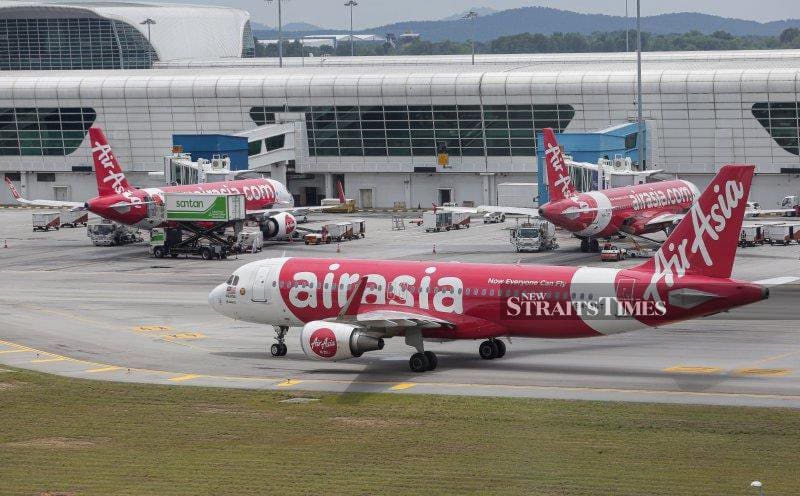
Asian budget carriers are rethinking fleet strategy, deploying narrower aircraft to reach secondary markets that larger jets struggle to serve profitably. AirAsia X finalized a commitment for 150 Airbus A220-300 airframes in May at Airbus's Mirabel facility, a transaction carrying a catalogue price near USD 19 billion. The deal represents the single largest firm purchase in the A220 program's history and includes options to expand the total to 300 units. First deliveries are slated for 2028, with deployment concentrated in ASEAN and the wider Asia-Pacific theater.
Jetcraft Commercial president Raphael Haddad, who worked at Bombardier during the A220's predecessor C Series development, views the purchase as evidence that ultra-low-cost operators can scale a type originally designed for niche regional work. For AirAsia, the A220 will handle short-haul city pairs while freeing up A320s and A321s for medium-distance segments and redeploying A330 widebodies onto trans-continental services to Europe, Australia, and North America.
Bo Lingam, chief executive of AirAsia Group, said in May that the A220 enables the carrier to construct a denser network while trimming unit costs. Tony Fernandes, Capital A's chief executive and advisor to AirAsia Group, framed the purchase as a hedge against persistent fuel volatility, arguing that standing still is riskier than investing in efficiency.
Economics of Right-Sizing Capacity
The A220-300 occupies a segment between regional jets and conventional single-aisle models. It carries fewer passengers than an A320neo or 737 MAX yet offers comparable range with lower trip expenses. That profile suits routes linking secondary hubs where demand cannot consistently fill a 180-seat cabin but exceeds the capacity of a turboprop or 70-seat regional jet.
Haddad notes that many travelers in Asia still route through major gateways because direct links between smaller cities remain scarce. An airline launching a thin route with a 150-seat A220 incurs less commercial risk than deploying a larger narrowbody, can build frequency as demand grows, and retains the option to upgrade to higher-capacity equipment once traffic justifies the move.
Markets such as Malaysia and Vietnam stand to benefit from point-to-point services between provincial centers. In Japan, carriers can increase daily departures on domestic trunk routes while maintaining tighter yield control. The flexibility to match seats closely to booking patterns becomes especially valuable during off-peak periods and early stages of route development.
Regional turboprops and smaller jets will retain roles in island archipelagos, mountainous terrain, and airports constrained by runway length. ATR, Dash 8-400, and Embraer regional families remain suited to those environments. The A220 targets a different sweet spot, connecting cities too distant or populous for a turboprop yet unable to sustain the seat count of a full-size narrowbody.
Delivery Queues and Infrastructure Gaps
Three constraints may temper the A220's expansion across Asia. Airbus and Boeing both carry order backlogs stretching into the next decade, forcing airlines to extend leases, retain older airframes, and scout the pre-owned market for interim capacity. Carriers identifying an operational need for the A220 may struggle to secure delivery slots within their planning windows.
Support infrastructure must scale alongside the fleet. Airlines require trained cockpit crews, certificated engineers, spare-part inventories, and reliable maintenance capacity. The A220's service network in Asia remains narrower than the ecosystem surrounding the A320 and 737 families. Introducing a new type imposes upfront costs for pilot conversion, tooling, and line-maintenance procedures. A small sub-fleet can make those investments difficult to justify, but AirAsia's 150-unit commitment provides the volume needed to distribute fixed costs and establish a dedicated support chain.
Competition from entrenched narrowbody families also looms. Airlines with homogeneous A320 or 737 fleets enjoy training commonality, parts pooling, and operational simplicity. Adding a different type fragments pilot bases and complicates scheduling. For AirAsia, the A220 will complement rather than displace the A320 family. High-density trunk routes will continue to favor larger single-aisles, while the A220 handles developing markets where lower trip cost outweighs maximum seat count.
Implications for Malaysia's Aviation Ecosystem
Haddad expects the order to ripple through Malaysia's aviation supply chain, lifting demand for pilot academies, engineering services, parts logistics, and fleet-management platforms. The country already hosts large maintenance, repair, and overhaul facilities and a technically skilled workforce. Expanding airline fleets can amplify those strengths, but building a competitive leasing and finance hub requires policy support beyond fleet growth.
Singapore has established itself as a regional center for aircraft finance. Malaysia's opportunity lies in complementary advantages such as airline scale, technical capability, cost competitiveness, and proximity to ASEAN markets. Competitive tax treatment, efficient aircraft registration and repossession procedures, and a predictable legal framework will determine whether Malaysia can capture a meaningful share of the region's leasing business.
Balancing New and Pre-Owned Assets
Haddad anticipates that new aircraft will account for the majority of Asia's long-term fleet expansion, driven by the region's need for additional capacity and replacement of aging equipment. Yet production delays, engine reliability issues, and maintenance bottlenecks ensure that the pre-owned market remains active. Operators are scrutinizing fuel burn, engine condition, maintenance exposure, and delivery timing rather than focusing solely on airframe age.
Widebody demand will be supported by network carriers and long-haul operators, while freighter fleets benefit from e-commerce and manufacturing growth. The strongest opportunity, however, resides in narrowbodies that allow airlines to align capacity with demand more precisely. Flexible ownership structures combining purchased, financed, and leased aircraft help carriers preserve liquidity and avoid overdependence on a single capacity source.
Hong Leong Investment Bank forecasts a robust recovery in air travel demand during the fourth quarter of fiscal 2026, propelled by stronger inbound traffic from China and intra-ASEAN flows. Although geopolitical uncertainty persists, airlines and passengers are gradually adapting, allowing bookings to normalize. The interplay between new deliveries and pre-owned inventory will define how quickly carriers can capitalize on that rebound.
AirAsia's A220 commitment signals that Asia's next growth chapter will be written not only in mega-hubs but also in secondary cities and underserved corridors. Whether other regional operators follow suit will depend on delivery availability, infrastructure readiness, and each carrier's tolerance for fleet complexity. For now, the order demonstrates that efficiency and flexibility have become as critical as scale in Asia's competitive skies.
RELATED STORIES
Thai Carriers Face Profit Squeeze as Jet Fuel Prices Triple
Priyanka V. Rao · 4 min
Indonesian Petrochemical Giant Chandra Asri Expands Into Singapore, Malaysia Auto Markets
Priyanka V. Rao · 4 min

Chandra Asri Acquires Jardine's Singapore and Malaysia Dealerships for $265 Million
Priyanka V. Rao · 3 min

Malaysian Rubber Prices Climb on China Restocking and Supply Risks
Priyanka V. Rao · 3 min
Spot something wrong? Email editor@briefasia.com. We log every correction publicly.