Technology · AI
Samsung and SK Hynix Lock $950 Billion Chip Supply Deals With US Tech Giants
Seoul's two largest semiconductor manufacturers commit to multi-year memory chip agreements as President Lee courts Silicon Valley investment for national AI strategy
KEY TAKEAWAYS
- ·SK Hynix and Samsung Electronics secured $950 billion in multi-year supply commitments with US tech firms including Nvidia and Broadcom during a presidential visit to San Francisco.
- ·SK Hynix's $750 billion arrangement and Samsung's $200 billion Broadcom deal focus on high-bandwidth memory chips essential for AI data center infrastructure.
- ·The agreements support President Lee Jae-myung's state-backed AI agenda, which includes attracting venture capital and positioning South Korea as a hub for US tech partnerships.
Seoul's Chipmakers Cement Silicon Valley Partnerships
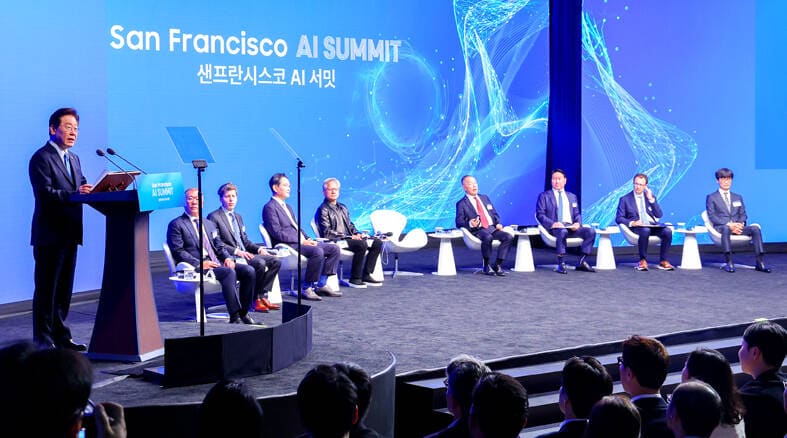
Two of South Korea's dominant semiconductor producers have finalized supply commitments totaling $950 billion with leading US technology firms, according to Kim Yong-beom, presidential chief of staff for policy. The agreements were announced during President Lee Jae-myung's San Francisco visit, where he met with executives from Nvidia, OpenAI, Anthropic, and Broadcom.
SK Hynix disclosed a five-year arrangement valued at $750 billion covering memory chip deliveries to multiple US buyers, with Nvidia among the primary recipients. Samsung Electronics separately confirmed a $200 billion memorandum of understanding with Broadcom that spans advanced memory products and foundry capacity dedicated to AI processor manufacturing over the same timeframe.
The scale of these commitments reflects the surging demand for high-bandwidth memory chips, a specialized category of DRAM that pairs with graphics processing units in data centers running large language models and generative AI workloads. SK Hynix, Samsung, and US-based Micron Technology currently dominate global HBM production, with their products integral to training and inference tasks that power chatbots and image synthesis tools.
Technical Collaboration Beyond Supply
SK Hynix framed its Nvidia arrangement as a joint development effort rather than a simple vendor relationship. The Seoul-based manufacturer said the partnership would "co-develop and optimize next-generation AI memory solutions" to address infrastructure requirements spanning language model training through to physical AI applications, a term encompassing robotics and embodied intelligence systems.
Samsung's agreement with Broadcom similarly emphasizes collaborative engineering. The companies plan to align on "industry-leading memory solutions, including HBM, supporting Broadcom's next-generation AI accelerators," according to Samsung's statement. Broadcom designs custom AI chips for hyperscale cloud operators, making it a strategic gateway to data center procurement cycles independent of Nvidia's ecosystem.
The announcements underscore how memory chip suppliers are embedding themselves deeper into the product roadmaps of their largest customers, moving upstream from commodity parts to co-engineered components that shape system architecture.
Presidential Diplomacy Backs National AI Agenda
Lee's San Francisco itinerary combined corporate diplomacy with policy signaling. At an AI summit in the city, the president outlined what he termed the "San Francisco AI Declaration," positioning South Korea as a hub for technological cooperation with the United States. He highlighted the country's "dynamic AI ecosystem" and pledged to expand market access for industrial and consumer AI applications through partnerships with global firms.
The trip included a Saturday session between South Korea's National Pension Service, the world's third-largest pension fund, and US venture capital firms. The objective was to channel more international capital toward Korean AI startups, part of a broader state-backed initiative to build domestic capabilities across the AI value chain.
Lee's agenda reflects the reality that South Korea's semiconductor strength remains concentrated in memory and foundry services, while much of the AI innovation in software, models, and system design happens in the United States and China. By securing long-term supply relationships and attracting venture investment, Seoul aims to capture a larger share of the economic value generated by the AI buildout.
Memory Chips as Strategic Leverage
High-bandwidth memory has emerged as a bottleneck in AI infrastructure. HBM stacks multiple DRAM dies vertically and connects them with through-silicon vias, delivering bandwidth several times higher than conventional memory. This architecture is essential for feeding data to GPU clusters fast enough to keep processors utilized during training runs that can cost tens of millions of dollars.
SK Hynix has held a lead in HBM production, shipping the technology to Nvidia for its H100 and H200 accelerators. Samsung has invested heavily to close the gap, ramping production of its HBM3E products. The $200 billion Broadcom deal signals Samsung's push to diversify beyond Nvidia and secure footholds with alternative chip designers serving hyperscalers like Google and Meta.
Micron, the sole US-based HBM producer, trails the Korean duo in volume and technology maturity, leaving American cloud operators dependent on Asian supply chains for a critical component. That dependency has drawn attention in Washington, though no major policy intervention has materialized beyond incentives for domestic memory fab construction under the CHIPS Act.
Asia's AI Infrastructure Race
South Korea's aggressive courtship of US tech firms parallels efforts by Taiwan and Japan to deepen semiconductor partnerships with American buyers. Taiwan Semiconductor Manufacturing Company recently announced an additional $100 billion investment in Arizona fabs, driven by demand from US customers and pressure to localize production. Japan has attracted investments from TSMC, Micron, and Samsung through subsidies aimed at rebuilding its semiconductor manufacturing base.
These moves reflect a broader reconfiguration of chip supply chains, with geopolitical considerations and export controls reshaping investment decisions. South Korea's emphasis on memory and foundry services positions it as a complement rather than competitor to Taiwan's logic chip dominance, though Samsung's foundry ambitions put it in direct rivalry with TSMC for advanced process node customers.
The $950 billion in commitments announced in San Francisco will unfold over five years, and actual shipment volumes will depend on AI demand trajectories that remain uncertain beyond the current buildout cycle. For Seoul, the agreements provide revenue visibility for its two largest exporters and political validation for Lee's bet on state-led AI industrial policy.
RELATED STORIES
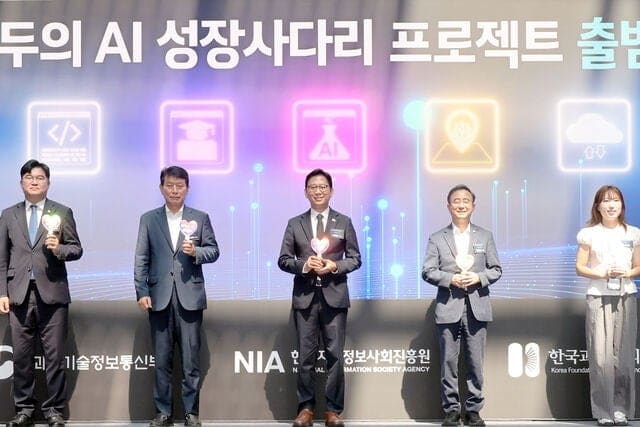
South Korea Taps Three Telecom Giants to Deliver Free AI Services Nationwide
Cheng Wei-Lun · 3 min
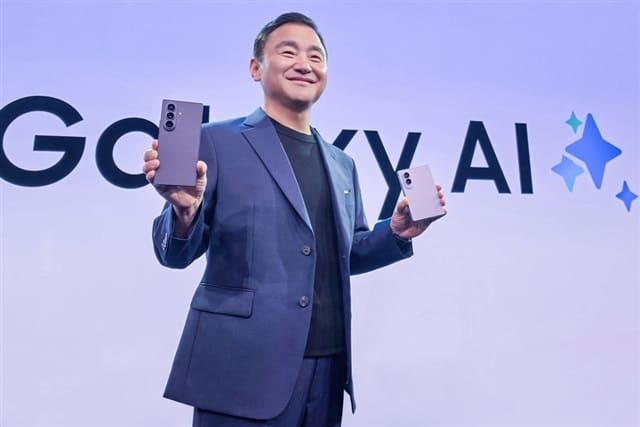
Samsung's Device Division Reports First Quarterly Loss as Chip Costs Surge
Cheng Wei-Lun · 3 min
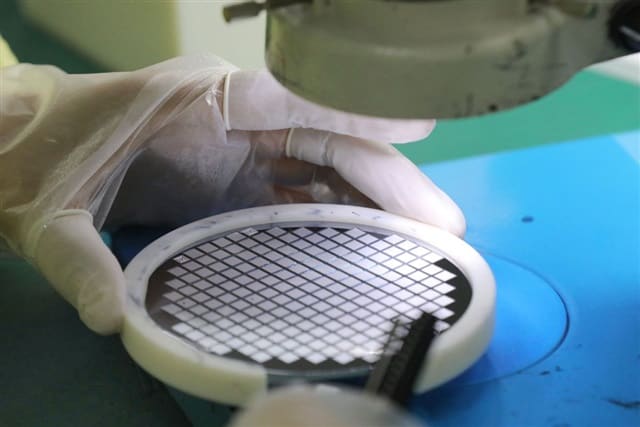
South Korean Chip Materials Suppliers Ride AI Boom to Profit Surge
Cheng Wei-Lun · 3 min
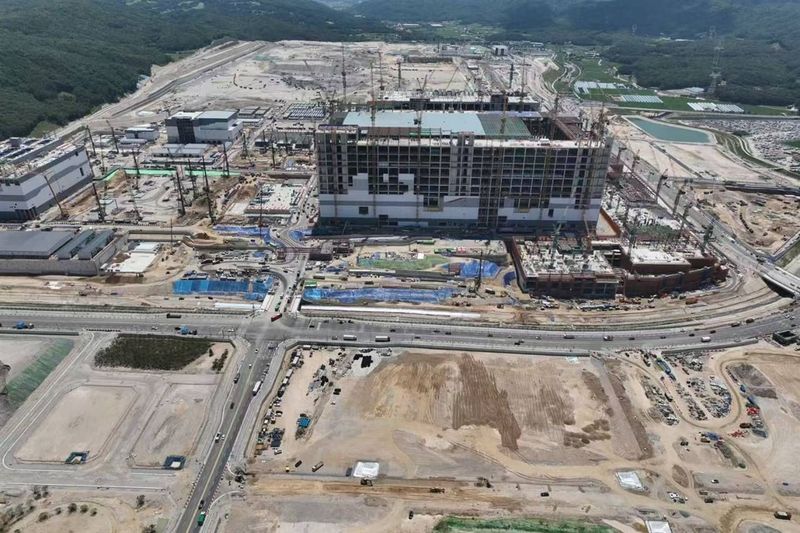
SK Hynix May Fast-Track Gwangju Fab Investment Alongside Yongin Expansion
Jun-ho Seo · 3 min
Spot something wrong? Email editor@briefasia.com. We log every correction publicly.