Finance · Fintech
Samsung Launches Galaxy Credit Card to Challenge Apple in US Financial Services
South Korean tech giant partners with Barclays and Visa to offer rewards card targeting its device ecosystem, marking deeper push into consumer finance
KEY TAKEAWAYS
- ·Samsung Electronics America introduced the Samsung Galaxy Card through Barclays and Visa, with no annual fee and 5 percent cash rewards on direct Samsung purchases.
- ·The card directly competes with Apple Card in the US consumer finance market, mirroring the ecosystem lock-in strategy Apple adopted in 2019.
- ·Applications opened to the general public on Wednesday, with early-access customers able to apply immediately following Tuesday's announcement.
Samsung's Entry into US Credit Cards
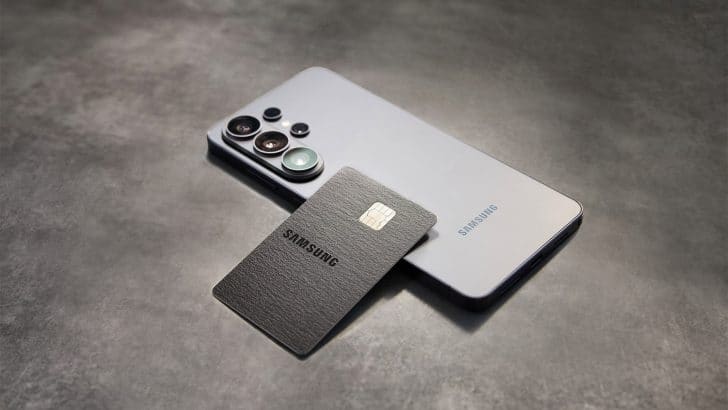
Samsung Electronics has entered the US consumer credit market with a branded payment card, directly challenging Apple's established financial services footprint in North America. Samsung Electronics America announced the Samsung Galaxy Card on Tuesday, a co-branded product issued by Barclays and running on the Visa network.
The card carries no annual fee and provides 5 percent cash rewards on purchases made directly from Samsung, according to the company. Applications opened to the general public on Wednesday, though eligible early-access customers could apply immediately upon announcement.
The move represents Samsung's most direct foray into American consumer finance, mirroring the strategy Apple adopted in 2019 when it launched the Apple Card with Goldman Sachs. That product, which runs on the Mastercard network, has accumulated millions of cardholders and generated substantial transaction volume, cementing Apple's role as a financial services player alongside its hardware business.
Rewards Structure and Ecosystem Lock-In
The 5 percent reward rate on Samsung purchases is designed to deepen customer loyalty within the Galaxy ecosystem, which spans smartphones, tablets, wearables, home appliances, and televisions. By offering elevated rewards for direct purchases, Samsung creates a financial incentive for consumers to bypass third-party retailers and buy hardware and accessories straight from the manufacturer.
Industry observers note that co-branded credit cards serve dual purposes for technology companies. They generate interchange revenue from every swipe while simultaneously reinforcing brand loyalty and increasing the lifetime value of each customer. Apple Card, for instance, offers 3 percent cash back on purchases made directly from Apple, a structure Samsung appears to be replicating.
Barclays, a British multinational bank with a significant US credit card portfolio, brings underwriting expertise and regulatory infrastructure to the partnership. Visa provides the payment network, ensuring global acceptance at millions of merchant locations. The collaboration allows Samsung to offer a financial product without building its own banking license or payment rails, a capital-intensive and time-consuming process.
Asia's Tech Giants Eye Financial Services
Samsung's credit card launch fits within a broader trend of Asian technology companies expanding into financial services. In South Korea, Samsung already operates Samsung Card, a subsidiary that issues credit and debit products domestically. The new US card, however, marks the company's first attempt to replicate that model in a Western market.
Across Asia, technology firms have aggressively moved into payments, lending, and wealth management. Alibaba's Ant Group and Tencent's WeChat Pay dominate digital payments in China, while Grab and Gojek operate digital wallets and lending platforms across Southeast Asia. Samsung's US card represents a reverse flow, with an Asian hardware manufacturer using its brand strength to compete in American consumer finance.
The timing is notable. Apple has faced challenges with its Goldman Sachs partnership, with reports indicating the Wall Street bank is seeking to exit the consumer lending business. If Apple transitions to a new issuing bank, Samsung may find an opening to capture customers frustrated by service disruptions or product changes.
Competitive Landscape and Consumer Adoption
Samsung faces a crowded US credit card market. Beyond Apple Card, consumers can choose from hundreds of rewards cards, many offering competitive cash-back rates, travel benefits, or introductory bonuses. The success of the Galaxy Card will hinge on whether Samsung's existing customer base finds the rewards structure compelling enough to add another card to their wallets.
The company has not disclosed additional reward tiers for non-Samsung purchases, nor has it detailed benefits such as purchase protection, extended warranties, or travel insurance. These features, common among premium cards, can differentiate a product in a saturated market.
Early-access eligibility criteria remain unclear, though Samsung typically reserves such perks for customers enrolled in loyalty programs or those who have recently purchased flagship devices. The phased rollout suggests Samsung is managing initial application volume and testing operational systems before scaling to a mass-market launch.
For Barclays, the partnership offers access to Samsung's substantial US customer base. The bank has issued co-branded cards for airlines and retailers but lacked a major technology partner. Visa, meanwhile, secures another high-profile issuer on its network, countering Mastercard's relationship with Apple.
What Comes Next
The Galaxy Card's performance will be closely watched by competitors and analysts tracking the convergence of technology and finance. If Samsung achieves significant adoption, other hardware manufacturers may pursue similar strategies, further blurring the line between consumer electronics and financial services.
Samsung has not announced plans to expand the card internationally, but the company's global footprint and existing financial services operations in Asia position it to replicate the model in other regions. Markets such as India, Vietnam, and Indonesia, where Samsung holds strong smartphone market share, could be natural candidates for future credit card launches.
The card also raises questions about data and ecosystem integration. Apple Card integrates tightly with the iPhone's Wallet app and provides spending analytics and budgeting tools. Samsung will need to offer comparable digital experiences within its Galaxy devices to maximize the card's appeal and utility for users.
RELATED STORIES

Samsung Pledges Up to $80 Billion in Shareholder Returns This Year
Cheng Wei-Lun · 3 min

Samsung Unveils $80 Billion Buyback in Bid to Restore Investor Confidence
Cheng Wei-Lun · 3 min
Samsung Insurers Post $2.3 Billion Profit on Different Growth Engines
Jun-ho Seo · 3 min
Samsung Settles Netlist Patent Fight With $897 Million Deal
Cheng Wei-Lun · 3 min
Spot something wrong? Email editor@briefasia.com. We log every correction publicly.