Technology · Dev
Samsung Foundry Shifts to Cloud and AI Customers as Leading-Edge Capacity Tightens
The Korean chipmaker's Q2 2026 earnings reveal a customer roster dominated by hyperscalers and HPC designers, signaling a strategic pivot away from its mobile-heavy past
KEY TAKEAWAYS
- ·Samsung Electronics disclosed foundry customers in Q2 2026 including cloud service providers, AI and HPC chip designers, and an LPU maker ramping at 4nm.
- ·The customer shift reflects industrywide capacity constraints at leading-edge nodes as AI infrastructure demand outpaces supply from incumbent foundries.
- ·Samsung's ability to attract cloud and AI clients positions South Korea as a critical alternative to Taiwan-centric advanced logic production.
A Different Customer Base
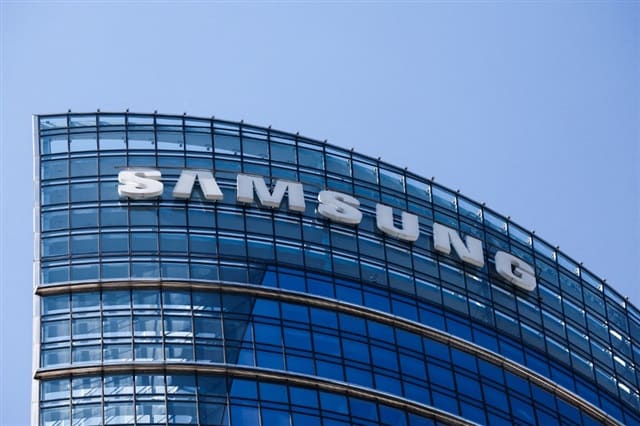
Samsung Electronics' foundry division outlined a customer profile during its second-quarter 2026 earnings briefing that diverges sharply from the mobile processor work that has historically anchored the business. The company disclosed engagements with cloud service providers, AI and high-performance computing chip designers, a logic processing unit manufacturer ramping production at the 4-nanometer node, and ongoing discussions with Broadcom.
The shift reflects structural changes in semiconductor demand rather than a deliberate repositioning by Samsung alone. Leading-edge foundry capacity across the industry has become constrained as AI infrastructure buildouts accelerate, pushing designers to secure manufacturing slots wherever advanced nodes are available. Samsung's ability to offer 4nm and 3nm processes positions it to absorb demand that cannot be accommodated elsewhere.
What the Numbers Did Not Say
Samsung did not break out revenue figures by customer segment or node during the call, but the composition of its client roster tells a more instructive story. Cloud service providers typically design custom silicon for data center workloads - inference accelerators, networking chips, and storage controllers - that require leading-edge process technology and high-volume production. AI and HPC designers, meanwhile, operate at the performance frontier, where transistor density and power efficiency directly determine competitiveness.
The presence of an LPU maker at 4nm suggests Samsung has secured at least one high-profile design win in the emerging category of domain-specific architectures. LPUs, or language processing units, are optimized for large language model inference and represent a growing segment within AI silicon. Ramping such a chip at 4nm indicates both technical validation of Samsung's process and the customer's confidence in yield and supply stability.
Broadcom's involvement, even at the discussion stage, carries weight. The company designs a range of custom ASICs for hyperscale customers and has historically split its foundry allocation between multiple suppliers to manage risk. Any incremental volume Samsung captures from Broadcom would further diversify its revenue base and reduce dependence on a narrow set of clients.
Capacity Overflow and Strategic Timing
The broader context is one of tight supply. TSMC, which commands more than half of global foundry revenue, has reported full utilization at its most advanced nodes and a backlog extending into 2027. Intel Foundry Services, while investing heavily in capacity expansion, remains early in its customer acquisition cycle and has yet to demonstrate high-volume manufacturing at 3nm-class nodes. This leaves Samsung as the primary alternative for designers seeking leading-edge capacity in the near term.
Samsung's foundry strategy over the past three years has emphasized process technology improvements - gate-all-around transistors, backside power delivery, and advanced packaging - alongside capacity expansion at its Pyeongtaek and Hwaseong fabs. The company has also worked to rebuild customer confidence after yield issues at earlier nodes affected client relationships. The customer mix disclosed in the Q2 call suggests those efforts are gaining traction, at least among designers willing to diversify their foundry partners.
Asia's Foundry Landscape
For the broader Asian semiconductor ecosystem, Samsung's progress matters. South Korea has positioned advanced logic manufacturing as a national priority, with government support for fab construction and R&D. A viable Samsung foundry business strengthens the region's bargaining position in global supply chains and provides an alternative to Taiwan-centric production, a consideration that resonates with customers managing geopolitical risk.
Japan and India, meanwhile, are investing in trailing-edge and specialty fabs but lack the capital and expertise to compete at the leading edge. Southeast Asian nations host assembly and test operations but remain dependent on external wafer supply. Samsung's ability to attract cloud and AI customers thus reinforces South Korea's role as one of the few locations capable of producing cutting-edge logic chips at scale.
The foundry market is entering a period where customer diversification and supply security weigh as heavily as process leadership. Samsung's Q2 customer roster reflects that shift. Whether the company can convert these engagements into sustained revenue growth will depend on execution - yield stability, on-time delivery, and continued process innovation. But the profile of the business has already changed. It is no longer a mobile foundry with ambitions. It is a leading-edge fab serving the infrastructure layer of the AI economy.
RELATED STORIES

South Korea Records Highest September Export Start on Semiconductor Demand
Tran Quoc Bao · 3 min

South Korea Taps Three Telecom Giants to Deliver Free AI Services Nationwide
Cheng Wei-Lun · 3 min
SK Hynix Eyes Deeper Collaboration With Japan's Chip Sector
Cheng Wei-Lun · 4 min
Memory Makers Gain Leverage as AI Server Costs Climb
Cheng Wei-Lun · 3 min
Spot something wrong? Email editor@briefasia.com. We log every correction publicly.