Technology · Dev
Samsung Takes Double Win at California Memory Conference
South Korean chipmaker recognized for V10 BV-NAND and LPDDR5X-PIM technologies at Future of Memory and Storage 2026
KEY TAKEAWAYS
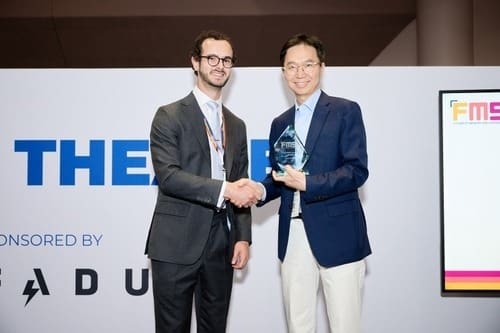
- ·Samsung Electronics received the 3D & NAND Innovation Award for V10 BV-NAND and the Next-Gen Memory Award for LPDDR5X-PIM at the Future of Memory and Storage 2026 conference in California.
- ·The V10 BV-NAND technology features ultra-high-layer vertical architecture to boost density, while LPDDR5X-PIM embeds compute logic into memory chips to reduce data movement bottlenecks in AI workloads.
- ·The awards come as South Korean memory makers navigate competition from Chinese manufacturers and U.S. export controls, with Samsung committing billions to expand high-performance memory capacity.
Recognition for Next-Generation Memory
Samsung Electronics announced Thursday it secured two honors at the Future of Memory and Storage 2026 conference held in California, underscoring the company's push into advanced memory architectures as the semiconductor industry wrestles with performance bottlenecks and power constraints.
The Seoul-based manufacturer claimed the 3D & NAND Innovation Award for its V10 BV-NAND technology and the Next-Gen Memory Award for its LPDDR5X-PIM solution, according to Samsung. Both technologies represent distinct approaches to addressing memory challenges that have become critical as data centers, mobile devices, and AI workloads demand faster, denser, and more efficient storage and processing.
V10 BV-NAND: Pushing Vertical Density
Samsung's V10 BV-NAND technology centers on an ultra-high-layer architecture that stacks memory cells vertically to achieve greater density without expanding the chip footprint. The company has been racing competitors including SK hynix and Micron Technology to reach higher layer counts in vertical NAND, a race that directly impacts cost per gigabyte and production efficiency.
The BV-NAND designation signals a design evolution from Samsung's existing V-NAND lineup, which has scaled from 24 layers in its first generation to over 200 layers in recent iterations. Industry analysts have noted that moving beyond 200 layers introduces manufacturing complexity, including challenges in etching deep channels and maintaining uniform electrical characteristics across the stack.
Samsung has not disclosed the exact layer count for its V10 generation, but the award recognition suggests the architecture has cleared technical validation milestones that matter to enterprise storage customers and hyperscale data center operators. Those customers prioritize endurance, write performance, and power efficiency alongside raw capacity.
Processing-in-Memory: Tackling the Data Movement Bottleneck
The LPDDR5X-PIM award highlights Samsung's work on processing-in-memory, a design philosophy that embeds compute logic directly into memory chips to reduce the energy and latency penalties of shuttling data between memory and processor. Data movement has emerged as a critical bottleneck in AI training and inference, where models routinely exceed the capacity of on-chip caches and rely on external memory bandwidth.
Samsung's LPDDR5X-PIM combines the low-power DRAM standard used in mobile and edge devices with processing elements that can execute operations such as matrix multiplication and vector arithmetic without invoking the main CPU or GPU. The approach can cut energy consumption for certain workloads by an order of magnitude, a metric that resonates with mobile device makers constrained by battery capacity and thermal limits.
The technology also has implications for edge AI applications, where inference tasks must run on devices with limited power budgets. Samsung has positioned LPDDR5X-PIM as a bridge between traditional memory and specialized AI accelerators, offering a path to improved efficiency without requiring wholesale platform redesigns.
Asia's Memory Battleground
The awards arrive as South Korea's memory semiconductor industry faces pressure from multiple directions. Chinese manufacturers continue to ramp domestic NAND and DRAM production with state backing, eroding market share in commodity segments. Meanwhile, U.S. export controls have tightened access to advanced chipmaking equipment in China, forcing Samsung and SK hynix to navigate geopolitical constraints on their Chinese fab operations.
Samsung remains the global leader in NAND flash revenue and the second-largest DRAM supplier behind SK hynix. The company has committed tens of billions of dollars to expanding its memory fabrication capacity in South Korea, with new production lines in Pyeongtaek and Hwaseong aimed at high-performance memory for AI and data center applications.
The Future of Memory and Storage conference, organized annually by industry groups, serves as a venue for chipmakers, system vendors, and researchers to present roadmaps and technical breakthroughs. Awards at the event carry weight with enterprise buyers who use the conference to evaluate supplier capabilities and emerging standards.
What Comes Next
Samsung has signaled that both V10 BV-NAND and LPDDR5X-PIM are moving toward commercial production, though the company has not provided specific timelines. Volume production typically lags technical demonstrations by 12 to 18 months in the memory industry, as manufacturers optimize yields and qualify chips with major customers.
The broader question is whether these innovations can translate into sustained margin improvement for Samsung's memory division, which has cycled through boom and bust as supply and demand swings have driven volatile pricing. Higher-layer NAND and processing-in-memory solutions command premium pricing in theory, but commoditization pressures remain fierce in an industry where competitors quickly match technical advances.
For now, the California conference awards offer Samsung a validation point as it competes for design wins in AI servers, smartphones, and automotive platforms where memory performance increasingly shapes system capabilities.
RELATED STORIES
Seoul Rejects Profit-Sharing Pressure on Samsung and SK Hynix
Cheng Wei-Lun · 3 min
South Korea Mobilizes Conglomerates for Humanoid Robot Push
Cheng Wei-Lun · 3 min
SK Hynix Eyes Stake Sale in $3 Billion China Packaging Facility
Cheng Wei-Lun · 2 min
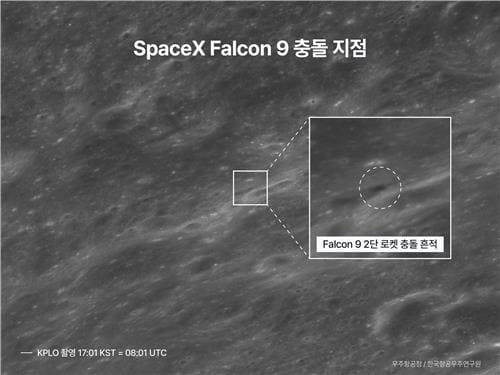
South Korea's Danuri Orbiter Photographs SpaceX Rocket Impact on Moon's Far Side
Cheng Wei-Lun · 4 min
Spot something wrong? Email editor@briefasia.com. We log every correction publicly.