Technology · Dev
Samsung Accelerates US Campus Recruiting to Secure Chip Talent
Korean semiconductor giant schedules career events at three major engineering schools as industry faces engineer shortage amid capacity expansion.
KEY TAKEAWAYS
- ·Samsung's Device Solutions division will hold career events at Texas A&M, University of Illinois Urbana-Champaign, and University of Wisconsin-Madison between late August and early September.
- ·The recruiting push supports Samsung's $17 billion Texas fab under construction and capacity expansion in Korea amid an industry-wide shortage of semiconductor engineers.
- ·The initiative reflects intensifying competition for chip talent across Asia and North America as fab construction outpaces university graduation rates in relevant engineering disciplines.
Targeting the Midwest Engineering Pipeline
Samsung Electronics is stepping up efforts to recruit semiconductor engineers directly from American universities, scheduling a series of campus career events across the Midwest in late August and early September. The Device Solutions division, which handles the company's memory and foundry operations, will visit Texas A&M University on August 26, the University of Illinois Urbana-Champaign on September 2, and the University of Wisconsin-Madison on September 4, according to Samsung.
The push reflects the intensifying competition for chip engineers across Asia and North America. As Samsung expands fabrication capacity in both Korea and Texas, the talent pool has not kept pace. These three universities represent established feeders into the semiconductor industry, with strong electrical engineering and materials science programs that have historically supplied engineers to Intel, Texas Instruments, and other chipmakers.
From Partnership to Pipeline
Samsung has maintained relationships with several US engineering schools for years, funding research labs and sponsoring graduate programs. What marks this round of campus visits is the deliberate conversion of those academic ties into a structured recruiting channel. Campus Career Day events typically include facility tours, technical presentations, and on-site interviews, a format designed to compress the hiring funnel and secure commitments before students enter the broader job market.
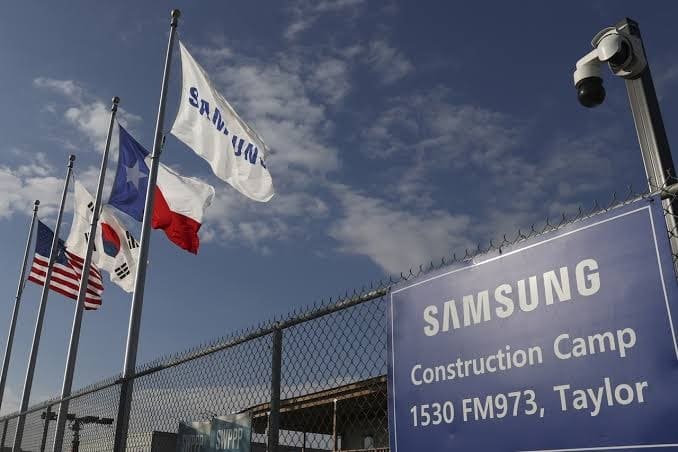
The timing aligns with Samsung's $17 billion fabrication complex under construction in Taylor, Texas, which is expected to begin production in 2024. That facility alone will require thousands of process engineers, equipment specialists, and yield analysts. Simultaneously, Samsung is ramping advanced nodes at its Pyeongtaek and Hwaseong campuses in South Korea, adding further pressure on hiring.
The Broader Talent Crunch
Across the industry, chipmakers are wrestling with a structural shortage of engineers trained in semiconductor manufacturing. TSMC, Intel, and GlobalFoundries have all launched similar campus initiatives in the past two years. The US CHIPS and Science Act, which allocated $52 billion in subsidies to domestic semiconductor production, has accelerated fab construction but not the graduation rate of relevant engineers.
Universities have struggled to scale programs quickly enough. Semiconductor manufacturing requires specialized knowledge in lithography, etching, deposition, and metrology, disciplines that sit at the intersection of physics, chemistry, and electrical engineering. Faculty shortages and the capital cost of teaching labs mean that even top-tier schools graduate only a few hundred qualified students per year.
Asia Angle: Korea's Talent Outflow Concerns
For Samsung, the US recruiting drive carries a dual implication. On one hand, it secures personnel for American operations and demonstrates commitment to local employment, a political requirement under CHIPS Act funding. On the other, it underscores a reality that has worried Seoul policymakers: Korea's own engineering talent is increasingly mobile, and domestic chipmakers face wage competition from US and European peers.
Samsung and SK hynix have both raised starting salaries for engineers in Korea over the past year, but the gap with Silicon Valley compensation remains wide. The company's decision to recruit heavily in the US rather than rely solely on intra-company transfers suggests it views local hiring as both more cost-effective and more sustainable for its Texas operations.
What Comes Next
The success of these campus events will be measured not just in immediate hires but in whether Samsung can establish a recurring presence at these schools, effectively creating a brand among students who might otherwise default to software careers or legacy chipmakers. The company is also expected to expand similar efforts to universities on the West Coast and in the Northeast in the coming academic year.
For the broader semiconductor ecosystem in Asia, the question is whether talent development can catch up to capacity expansion. If it cannot, the bottleneck will shift from lithography tools and clean rooms to the engineers who run them.
RELATED STORIES
Samsung Unveils zHBM and V10 BV-NAND to Address AI Memory Bottleneck
Cheng Wei-Lun · 3 min

SK Hynix Takes Top Stake in Kioxia as Toshiba Reduces Holdings
Cheng Wei-Lun · 3 min
Samsung Pushes Taylor Fab Qualification as 2nm Demand Reshapes US Capacity Strategy
Cheng Wei-Lun · 3 min

South Korea Posts Record Early-August Export Surge on Memory Chip Demand
Cheng Wei-Lun · 3 min
Spot something wrong? Email editor@briefasia.com. We log every correction publicly.