Finance · Markets
Ringgit Gains as US Debt Crosses $40 Trillion Threshold
Malaysia's currency strengthened 140 pips against the dollar while Washington grapples with mounting fiscal pressures and Treasury market interventions.
KEY TAKEAWAYS
- ·The Malaysian ringgit strengthened 140 basis points to 4.0425 per dollar after US national debt surpassed $40 trillion for the first time.
- ·The US Treasury Department intervened directly in bond markets to suppress yields, with 30-year rates falling from above 5.30 percent to around 5.22 percent.
- ·The ringgit gained only against the dollar and Philippine peso while weakening versus the yen, pound, euro, and most regional currencies.
Ringgit Rallies on Dollar Weakness
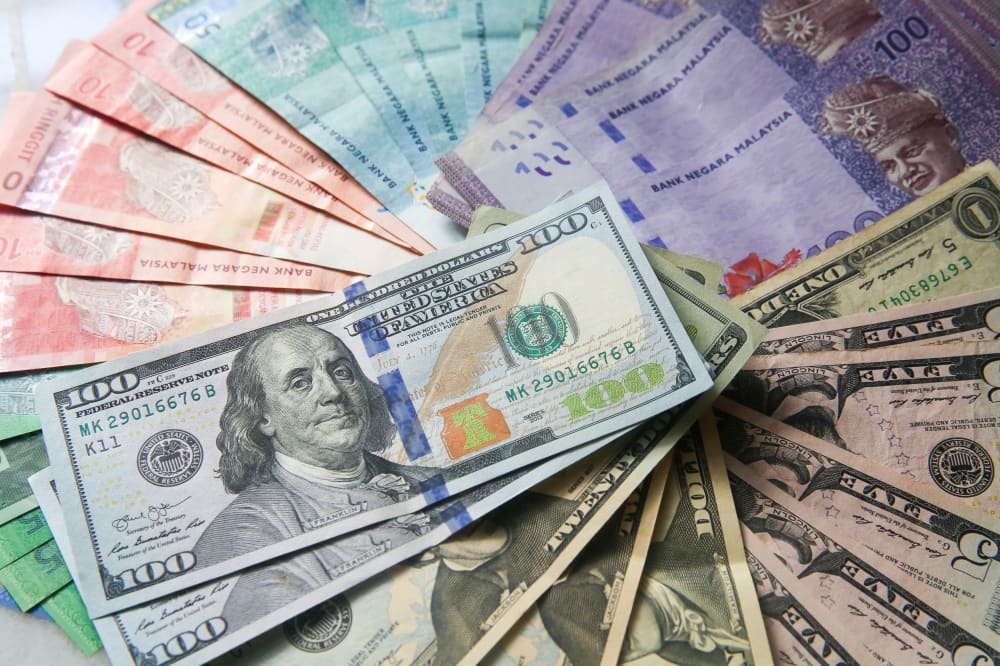
The Malaysian ringgit closed 140 basis points stronger against the US dollar on Thursday, trading at 4.0425/0470 compared to the previous session's 4.0565/0610. The move came as America's national debt breached the $40 trillion mark for the first time, equivalent to RM162 trillion, putting downward pressure on the greenback.
Dr Mohd Afzanizam Abdul Rashid, chief economist at Bank Muamalat Malaysia, noted that the scale of US public debt has become a focal point for global markets. According to the economist, the US Treasury Department has intensified efforts to prevent long-term Treasury yields from climbing too high, with direct government intervention in bond markets now shaping trader sentiment.
The 30-year US Treasury yield currently hovers around 5.22 percent, having recently exceeded 5.30 percent before retreating. The Treasury's actions to suppress yields suggest the Federal Reserve may be less likely to raise the federal funds rate at its September Federal Open Market Committee meeting, Mohd Afzanizam explained.
Mixed Performance Against Major Currencies
While the ringgit strengthened against the dollar, it retreated versus other major currencies. The local currency slipped to 2.5527/5557 against the Japanese yen from 2.5498/5528 in the previous session. It also weakened to 5.5164/5225 per British pound from 5.4994/5055, and eased to 4.7322/7374 against the euro from 4.7080/7132.
The divergence reflects broader currency dynamics in play across global markets, with investors recalibrating positions based on relative monetary policy expectations and debt sustainability concerns.
Regional Currency Moves
Against regional peers, the ringgit showed mostly softer performance. It declined to 227.7/228.1 per Indonesian rupiah from 227.3/227.7, and edged down to 12.3014/3211 against the Thai baht from 12.2686/2871. The Malaysian currency also slipped to 3.1813/1851 versus the Singapore dollar from 3.1778/1816.
The only regional gain came against the Philippine peso, where the ringgit inched up to 6.55/6.57 from 6.56/6.57 in the prior session.
Fiscal Pressure and Market Implications
The $40 trillion debt milestone underscores the fiscal challenges facing the United States as it navigates elevated interest rates and ongoing budget deficits. For Asian currencies, the development creates both opportunity and uncertainty. A weaker dollar can provide breathing room for export-oriented economies and ease debt servicing costs for borrowers with dollar-denominated obligations.
However, the Treasury's direct market interventions to manage yields represent an unusual step that signals concern about bond market stability. If sustained, such actions could alter traditional relationships between currency values, interest rate differentials, and capital flows across the region.
Malaysia's currency has shown resilience in recent sessions, supported by stable domestic economic conditions and commodity price trends. The ringgit's performance against the dollar contrasts with its mixed showing versus other major and regional currencies, suggesting that dollar-specific factors rather than broad ringgit strength are driving the current move.
Market participants will be watching the Federal Reserve's September meeting closely for signals on the trajectory of US monetary policy, as well as any further Treasury interventions that could ripple through Asian foreign exchange markets.
RELATED STORIES

Ringgit Climbs as US Debt Crosses $40 Trillion, Pressures Dollar
Cheng Wei-Lun · 3 min

Malaysian Ringgit Strengthens as Fed Rate Hike Bets Fade
Priyanka V. Rao · 3 min
Ringgit Gains Ground as Weaker US Data Shifts Fed Outlook
Priyanka V. Rao · 2 min

Ringgit Strengthens as US Debt Burden Pressures Dollar
Priyanka V. Rao · 3 min
Spot something wrong? Email editor@briefasia.com. We log every correction publicly.