Asia · Trade
Red Sea Tanker Strikes Push Brent Past $100 as Kazakhstan Cuts Production
Houthi attacks on Saudi vessels and pipeline disruptions in the Black Sea tighten supply routes, driving crude benchmarks toward their steepest weekly gains in months.
KEY TAKEAWAYS
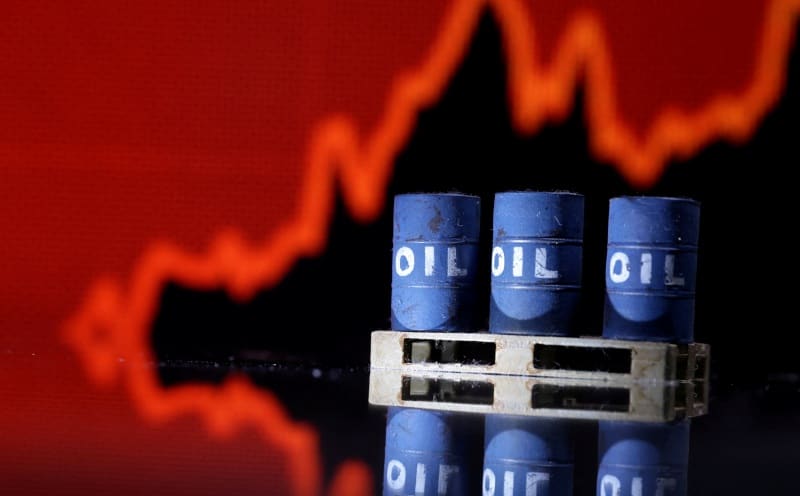
- ·Brent crude rose above $100 per barrel for the first time since May, on track for a 13.5 percent weekly gain after Houthi forces struck Saudi tankers in the Red Sea.
- ·Kazakhstan's energy ministry confirmed temporary production cuts following suspected drone attacks that closed the Caspian Pipeline Consortium terminal, which handles two percent of global daily crude supply.
- ·The dual disruptions in the Red Sea and Black Sea leave Saudi Arabia and Central Asian exporters with limited alternative routes, tightening global oil logistics and raising supply risk premiums.
Supply Routes Under Pressure
Crude benchmarks are heading for their largest weekly gains since spring after twin disruptions threatened to further constrain global oil flows. Brent crude crossed the $100 threshold for the first time since May, driven by escalating maritime threats and production cuts in Central Asia.
The Iran-aligned Houthi movement struck two Saudi oil tankers transiting the Red Sea earlier this week, prompting fears that the Bab el-Mandeb strait could become the second major chokepoint to close in recent weeks. That narrow passage, linking the Red Sea to the Indian Ocean, handles a significant share of seaborne crude and ranks second only to the Strait of Hormuz in strategic importance.
Brent futures traded at $99.97 per barrel Friday morning in Asian hours, down 72 cents but still poised for a 13.5 percent weekly advance. West Texas Intermediate stood at $91.49, on track for a 10.9 percent weekly rise. Both benchmarks jumped more than six percent Thursday, the session that saw Brent settle above the psychologically important $100 mark.
Saudi Arabia Caught Between Two Fronts
The timing of the Houthi strikes adds another layer of complexity to Saudi Arabia's export strategy. The kingdom had been relying on overland pipelines to bypass the Strait of Hormuz, which Iran effectively closed after a fragile truce collapsed two weeks ago. Now, the Houthis have declared a naval blockade targeting Saudi shipments through the Red Sea, squeezing the world's largest crude exporter from both directions.
US President Donald Trump warned that Washington would hold Iran accountable for any further attacks, signaling potential escalation. Market participants see the Houthi declaration as part of Tehran's broader effort to pressure Washington by tightening energy supply routes, with the militia acting as a regional proxy.
Kazakhstan Output Falls After Terminal Attacks
Simultaneously, Kazakhstan's energy ministry confirmed that oil producers have temporarily reduced output after suspected Ukrainian drone strikes forced the closure of the country's main Black Sea export terminal. The Caspian Pipeline Consortium halted crude receipts from Kazakhstan following the suspension of tanker loadings at the facility.
The pipeline system moves roughly two percent of global daily crude supply, making even short-term outages significant for markets already on edge. While the ministry did not quantify the production cuts, one industry source indicated that Kazakhstan's largest field slashed output by more than half.
The confluence of disruptions in the Red Sea and the Black Sea has left traders recalculating global supply balances. With both the Strait of Hormuz and now the Bab el-Mandeb under threat, alternative routes are limited and often involve longer transit times and higher insurance premiums.
Market Implications
Energy analysts note that the current rally reflects genuine supply risk rather than speculative positioning. The closure of multiple chokepoints would force refiners to compete for barrels from a shrinking pool of accessible sources, particularly in Asia, where demand remains robust despite macroeconomic headwinds.
The sharp price moves also underscore the fragility of global oil logistics. Even temporary disruptions can ripple through futures markets when geopolitical tensions overlay existing supply constraints. Kazakhstan's production cuts, though initially framed as temporary, could persist if security concerns at the Black Sea terminal remain unresolved.
For now, the energy complex is bracing for further volatility. Whether prices hold above $100 will depend on the duration of the Red Sea blockade, the speed of Kazakhstan's production restoration, and any diplomatic breakthroughs that might reopen the Strait of Hormuz. Until then, the noose around key energy corridors continues to tighten, leaving little room for complacency among importers and traders alike.
RELATED STORIES
Oil Stockpiles Fall as Hormuz Disruption Stalls Middle East Shipments
Cheng Wei-Lun · 3 min
Brent Crude Jumps 23 Percent as Iran Blocks Hormuz Exit
Priyanka V. Rao · 3 min
Brent Crude Retreats Below $90 as Washington and Tehran Step Back From Confrontation
Priyanka V. Rao · 3 min
China Declines to Join US Sanctions Push Against Iran
Cheng Wei-Lun · 3 min
Spot something wrong? Email editor@briefasia.com. We log every correction publicly.