Finance · Banking
Public Bank Leads Malaysian Banking Sector on Capital Efficiency
Malaysia's third-largest lender posted a 12.2 per cent return on equity in Q2 2026, outperforming rivals as the industry navigates margin pressures and tightening deposit conditions.
KEY TAKEAWAYS
- ·Public Bank achieved a 12.2 per cent return on equity in Q2 2026, the highest among Malaysian banks, with a 0.54 per cent impaired loan ratio and 35.1 per cent cost-to-income ratio.
- ·Deposit growth is lagging credit demand, prompting banks to prioritise small and medium enterprise, commercial and secured lending over lower-yielding assets.
- ·CIMB Securities forecasts loan growth of 5.1 per cent in 2026 and 5.2 per cent in 2027-2028, with net interest margins holding at two per cent through 2027.
Strongest Profitability Metrics
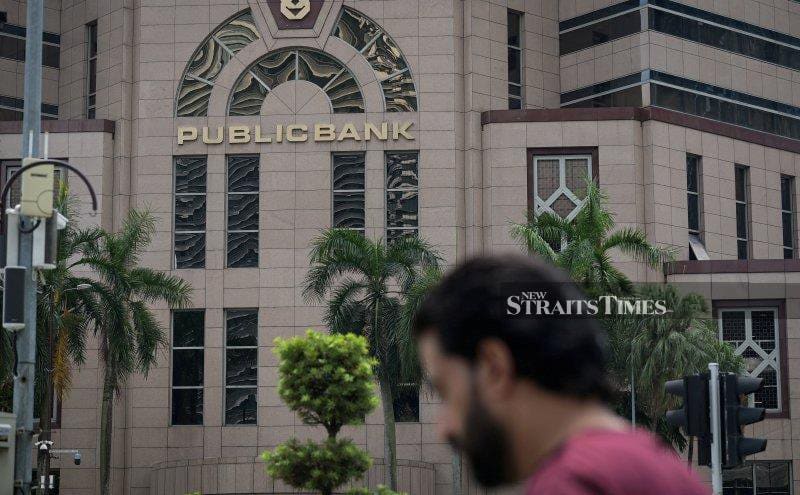
Malaysia's banking sector delivered improved earnings through the second quarter of 2026, with Public Bank emerging as the standout performer on capital efficiency. The Kuala Lumpur-based lender achieved a return on equity of 12.2 per cent, the highest among domestic peers, according to CIMB Securities.
Public Bank's core net profit climbed 3.7 per cent year-on-year during the quarter and two per cent for the January-to-June period, despite minimal overlay write-backs. The bank maintained an impaired loan ratio of just 0.54 per cent, paired with a cost-to-income ratio of 35.1 per cent, the sector's most efficient operating structure.
Hong Leong Bank secured the second position, driven by strengthening operational momentum. Pre-provision operating profit jumped 13.6 per cent quarter-on-quarter and 8.6 per cent year-on-year in its fourth quarter ended June 2026. Loan book expansion of 7.7 per cent year-on-year and a cost-to-income ratio of 38.7 per cent underpinned the performance, while credit recoveries lifted core profit by 20.7 per cent sequentially and 14.2 per cent annually.
Uneven Results Across Peers
Five of the six major banks tracked by CIMB Securities met analyst expectations during the reporting period. Alliance Bank Malaysia, AMMB Holdings and RHB Bank delivered results broadly in line with forecasts.
Affin Bank stood alone as a laggard, weighed down by elevated credit costs for the second consecutive quarter. Net credit cost reached 38 basis points, more than double the bank's full-year guidance of 13 basis points.
Deposit Constraints Reshape Strategy
The sector now confronts a structural challenge as deposit mobilisation fails to keep pace with lending demand. CIMB Securities expects banks to adopt more selective balance-sheet deployment in the months ahead, favouring small and medium enterprise, commercial and secured lending segments that offer better compensation for funding and credit risks.
Lenders are likely to reprice lower-yielding assets as competition for deposits intensifies. This shift could support net interest margins through improved pricing discipline, but tighter credit conditions risk dampening loan growth and borrower appetite.
Fund-based income growth in the second half of 2026 will hinge less on volume expansion and more on funding franchise strength, asset composition and credit selection, CIMB Securities noted.
Outlook for Margins and Growth
The firm projects net interest margins to hold steady at two per cent through 2026 and 2027, edging to 2.01 per cent in 2028 as banks enhance current account and savings account franchises and improve their funding mix.
Loan growth is forecast at 5.1 per cent for 2026, rising slightly to 5.2 per cent in both 2027 and 2028, barring prolonged energy price shocks or significant domestic liquidity constraints. Such constraints could elevate funding costs even without a policy rate increase, undermining banks' capacity to sustain lending activity.
Malaysia's banking sector enters the second half with a healthy credit pipeline and supportive domestic investment activity. Yet the widening gap between credit demand and deposit supply marks a turning point, pushing lenders toward more disciplined capital allocation and risk-based pricing as they navigate the trade-off between growth and profitability.
RELATED STORIES

Malaysian Banks Face Tighter Lending as Deposit War Squeezes Margins
Jun-ho Seo · 4 min
Public Bank Reports 3.7% Profit Growth to RM1.82 Billion in Second Quarter
Priyanka V. Rao · 2 min
CIMB Commits to 55% Dividend Floor as Regional Portfolio Offsets Indonesia Pressure
Priyanka V. Rao · 4 min

Blackstone's AirTrunk Lines Up S$2 Billion Loan for Singapore REIT IPO
Anand Sundaram · 3 min
Spot something wrong? Email editor@briefasia.com. We log every correction publicly.