Sustainability · Mobility
Proton e.MAS Captures 43 Percent of Malaysia's EV Market in Seven Months
The Malaysian automaker's electric vehicle lineup has sold 20,000 units since launch, led by its e.MAS 5 model accounting for over 60 percent of deliveries
KEY TAKEAWAYS
- ·Proton e.MAS sold 20,000 vehicles in the first seven months of 2026, capturing 42.6 percent of Malaysia's EV market and 41.8 percent of the broader electrified vehicle segment.
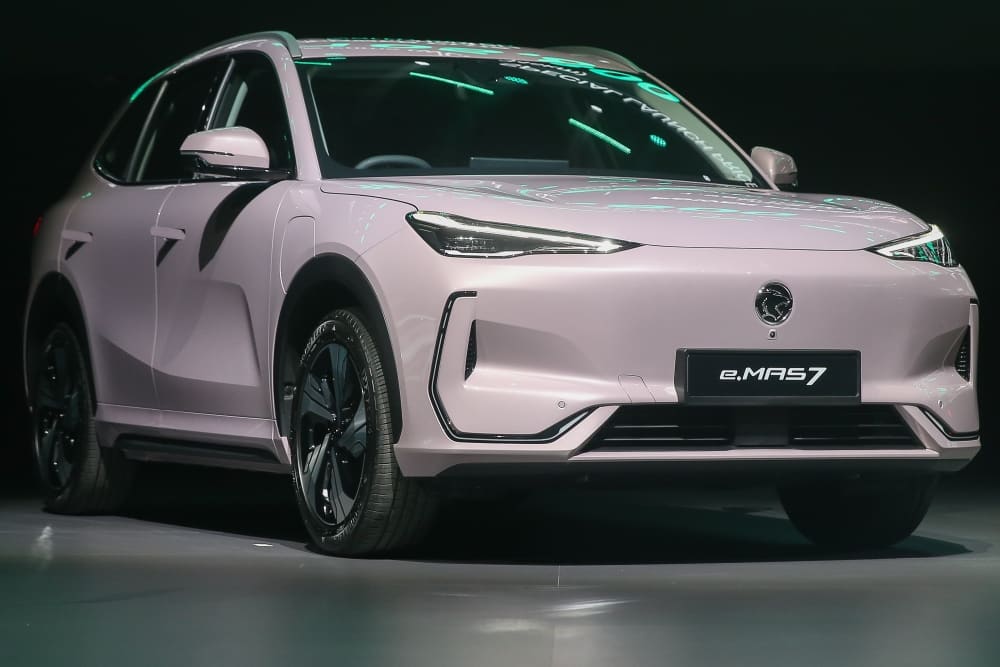
- ·The e.MAS 5 compact crossover accounted for 60.9 percent of sales, while plug-in hybrid and full-electric variants of the e.MAS 7 contributed the remainder.
- ·PRO-NET is expanding dealership and charging infrastructure to support fleet growth, aligned with Malaysian government policy to accelerate low-carbon mobility adoption.
Proton's Electric Push Dominates Home Market
Malaysia's Proton has claimed the largest share of its home country's electric vehicle market through the first half of 2026, with its e.MAS lineup reaching 20,000 sales in just seven months since launch. The milestone positions the state-backed automaker ahead of international rivals in a market where government incentives and infrastructure investment are accelerating EV adoption across Southeast Asia.
PRO-NET, Proton's wholly owned subsidiary managing the e.MAS brand, announced the sales figure alongside market share data showing the brand held 42.6 percent of Malaysia's pure EV segment and 41.8 percent of the broader electrified vehicle category, which includes plug-in hybrids, according to the company.
The performance reflects a regional pattern where domestic automakers in Asia are leveraging local manufacturing, government policy alignment, and competitive pricing to challenge established global brands in the transition to electric mobility. Malaysia's push mirrors strategies in Thailand, Indonesia, and Vietnam, where national champions are positioning themselves as EV leaders before international scale arrives.
Three Models Split the Volume
Proton distributed the 20,000 units across three models with notably uneven performance. The e.MAS 5, a compact crossover, delivered 60.9 percent of total sales, making it the clear volume driver. The e.MAS 7 PHEV, a plug-in hybrid variant, contributed 23.3 percent, while the pure-electric e.MAS 7 accounted for 15.8 percent.
The split suggests Malaysian buyers remain cautious about full battery-electric vehicles, preferring the range flexibility of plug-in hybrids or smaller, more affordable EV formats. That hesitation is common across Southeast Asia, where charging infrastructure remains concentrated in urban centers and long-distance travel often requires crossing regions with limited fast-charging networks.
Zhang Qiang, CEO of PRO-NET, attributed the sales momentum to customer confidence. "Surpassing 20,000 vehicle sales in less than seven months would not have been possible without the confidence and unwavering support of Malaysians who have chosen Proton e.MAS," he said in a statement.
Infrastructure and Policy Tailwinds
PRO-NET emphasized that its results align with Malaysian government objectives to increase low-carbon mobility adoption. Kuala Lumpur has rolled out tax exemptions, rebates, and import duty waivers for EVs and EV components, part of a broader industrial policy to position Malaysia as a regional hub for electric vehicle assembly and battery production.
To support the expanding fleet, PRO-NET is scaling its dealership and service networks and working with charging infrastructure partners to extend coverage beyond the Klang Valley and Penang. The company said it will continue investing in product development and ecosystem infrastructure to support Malaysia's electrified mobility transition.
The rapid uptake of Proton e.MAS vehicles also reflects the brand's legacy position in Malaysia, where Proton has been the national automaker for four decades. That installed base of service centers, parts supply chains, and customer familiarity gives the brand an edge over foreign entrants still building local presence.
Regional Context and Competitive Pressure
Proton's EV lead in Malaysia comes as Chinese automakers, including BYD and Geely (which owns a 49.9 percent stake in Proton), expand aggressively across Southeast Asia. Geely's technology and platform sharing have been central to Proton's e.MAS development, giving the Malaysian brand access to battery systems, powertrains, and software that would otherwise require years of in-house R&D.
At the same time, legacy global brands are ramping up EV imports into ASEAN markets. Tesla, BMW, Mercedes-Benz, and Hyundai-Kia are all increasing allocations to the region, betting that rising incomes and policy support will create a sustained EV growth cycle through the end of the decade.
Whether Proton can maintain its lead depends on how quickly infrastructure scales, how price-competitive imported models become, and whether Malaysian policy continues to favor domestic assembly. For now, the e.MAS numbers show that a well-timed, government-aligned EV launch can capture share early in a market still defining its electric future.
RELATED STORIES

Laos Hydropower Faces Solar and Wind Competition as Regional Grid Expands
Tran Quoc Bao · 4 min
Malaysia Breaks Ground on 500km Transmission Backbone to Unlock Renewable Capacity
Priyanka V. Rao · 3 min

Five ASEAN Members Back Regional Oil Stockpile as Study Nears Completion
Tran Quoc Bao · 3 min
Top Glove Projects Strong FY2026 Results on Tighter Supply and Rising Prices
Anand Sundaram · 3 min
Spot something wrong? Email editor@briefasia.com. We log every correction publicly.