Asia · Business
Posco International Targets Brazil for Rare Earth Supply Diversification
South Korean trading house signs MOU with Australian developer to reduce dependence on single-country sourcing of critical minerals
KEY TAKEAWAYS
- ·Posco International signed a memorandum of understanding with Australian developer Meteoric Resources to establish rare earth supply from Brazil, diversifying beyond concentrated Asian sources.
- ·The partnership is part of South Korea's broader strategy to reduce reliance on single-country sourcing for materials designated as critical to national security and industrial competitiveness.
- ·Brazil remains an early-stage rare earth producer, but Asian conglomerates are increasingly pursuing offtake deals in politically stable jurisdictions to mitigate supply concentration risk.
South Korean Conglomerate Expands Critical Mineral Footprint
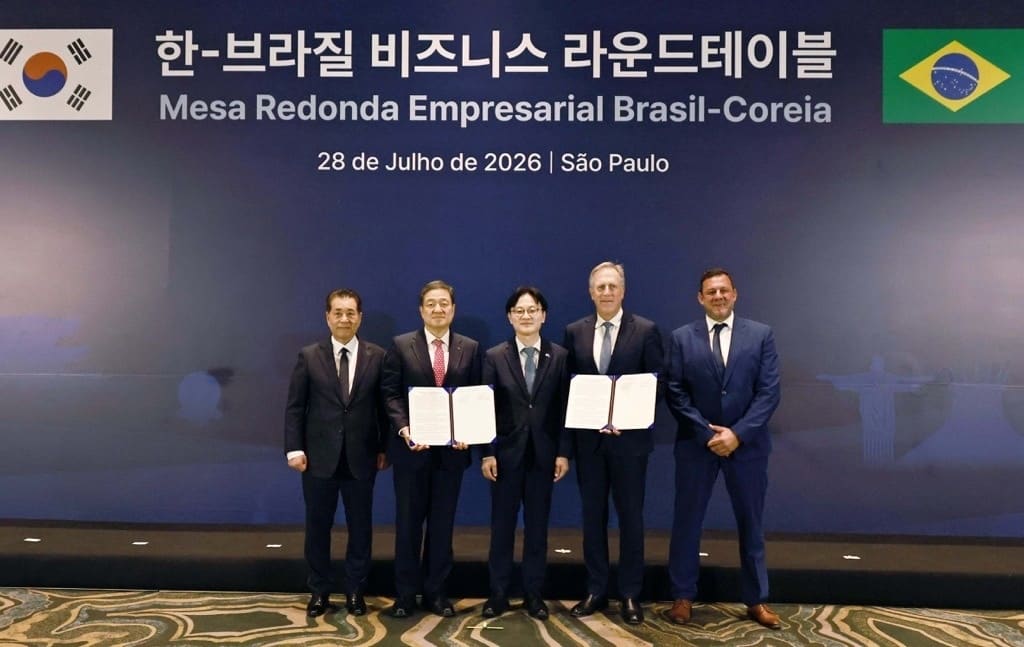
Posco International announced Wednesday it has signed a memorandum of understanding with Meteoric Resources, an Australian rare earth developer, to establish a supply route for critical minerals from Brazil. The agreement represents the trading and energy division of Posco Group's latest move to broaden its sourcing geography for materials essential to electric vehicles, renewable energy infrastructure, and defense applications.
The partnership targets rare earth deposits in Brazil, where Meteoric Resources operates exploration projects. Posco International did not disclose financial terms or volume commitments in its announcement, but the company framed the deal as part of a broader strategy to reduce exposure to supply concentration risk.
Strategic Shift in Asian Procurement
Rare earth elements remain heavily concentrated in a handful of producing nations, creating vulnerabilities for manufacturers in South Korea, Japan, and other Asian economies that depend on stable inflows of neodymium, praseodymium, dysprosium, and terbium for high-tech manufacturing. China controls roughly 60 percent of global rare earth mining and more than 85 percent of processing capacity, according to industry data.
Posco International's move into Brazil follows similar efforts by Japanese trading houses and Korean battery manufacturers to lock in alternative sources. The company has previously announced rare earth partnerships in Australia and Canada, signaling a systematic effort to build a multi-country portfolio rather than rely on any single jurisdiction.
Brazil hosts several rare earth deposits, though the country's production remains a fraction of global output. Meteoric Resources has focused on carbonatite-hosted rare earth projects in the country's southeastern regions, where geological surveys have identified concentrations of light and heavy rare earth elements.
Implications for Asian Supply Chains
The Posco-Meteoric MOU adds to a growing list of deals linking Asian conglomerates with junior mining developers in politically stable jurisdictions. These arrangements typically involve offtake agreements, equity investments, or joint development structures that give Asian buyers access to future production in exchange for capital or technical support.
For Posco International, the Brazil partnership complements its existing portfolio in battery materials, hydrogen infrastructure, and renewable energy projects. The company has positioned itself as a critical minerals aggregator within the Posco Group ecosystem, which includes steelmaking, battery materials production, and energy storage businesses that consume rare earths and other specialty metals.
The timing of the announcement aligns with heightened scrutiny in Seoul over supply chain resilience. South Korean policymakers have designated rare earths, lithium, nickel, and cobalt as strategic materials subject to government-backed supply security initiatives, including funding for overseas mining projects and stockpile programs.
Next Steps and Market Context
Posco International and Meteoric Resources will now move into a due diligence and structuring phase to define the commercial terms of their collaboration. The memorandum of understanding sets the framework for negotiations on volume, pricing mechanisms, and potential equity stakes, though neither party has committed to a binding agreement.
Brazil's rare earth sector remains in early-stage development compared to established producers in China, the United States, and Australia. Infrastructure gaps, permitting timelines, and capital requirements present challenges for developers seeking to bring new supply online. However, the country's geological endowment and proximity to Atlantic shipping routes make it an attractive option for companies seeking to diversify away from Pacific-centric supply chains.
Posco International's announcement reflects a broader recalibration in Asian procurement strategy, where diversification and political risk mitigation now rank alongside cost and quality in sourcing decisions. As battery and clean energy demand accelerates, competition for rare earth offtake agreements is expected to intensify, with Asian conglomerates, Western automakers, and state-backed funds all vying for access to new production capacity outside traditional supply hubs.
RELATED STORIES

SK Chemicals Targets Europe's Can-Coating Shift After BPA Ban
Cheng Wei-Lun · 2 min
South Korea's Export Surge Powers Economic Upturn Through Third Quarter
Jun-ho Seo · 4 min
South Korea Targets $40,000 Per Capita Income as GDP Growth Accelerates
Jun-ho Seo · 4 min
South Korea Breaks Full-Year Export Record in September
Tran Quoc Bao · 3 min
Spot something wrong? Email editor@briefasia.com. We log every correction publicly.