Finance · Deals
Posco Holdings Plans $1.76 Billion Stake Sale Across Two Units
South Korea's steel giant will offload equity in trading arm and digital subsidiary to fund expansion and streamline portfolio
KEY TAKEAWAYS
- ·Posco Holdings will sell 2.5 trillion won in shares from Posco International and POSCO DX on September 7, raising approximately $1.76 billion.
- ·The transaction aims to secure investment capital and improve corporate valuation as South Korean steel producers face margin pressure and decarbonization costs.
- ·Proceeds may fund green steel initiatives or debt reduction, with the parent retaining control of both subsidiaries after the sale.
A Strategic Divestment in Korea's Industrial Core
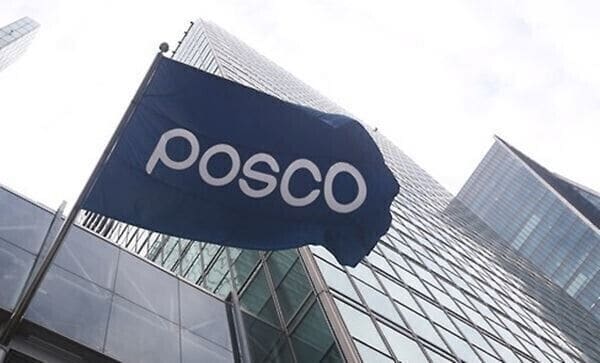
Posco Holdings has initiated a major portfolio restructuring, targeting equity stakes worth 2.5 trillion won - roughly $1.76 billion - across two of its subsidiaries. The steelmaker announced Friday that it intends to reduce holdings in both Posco International, its trading and resources arm, and POSCO DX, the group's digital transformation unit. According to Posco Holdings, the transactions are scheduled for September 7 and aim to generate fresh capital for investment while enhancing overall corporate valuation.
The larger portion of the sale involves Posco International, where Posco Holdings will divest shares valued at 2 trillion won. The remaining 500 billion won comes from POSCO DX, a relatively younger entity focused on digital infrastructure and IT services for the conglomerate. Both subsidiaries operate as publicly listed companies on the Korea Exchange, giving Posco Holdings flexibility to execute block trades or secondary offerings without disrupting day-to-day operations.
Capital Redeployment in a Shifting Market
The decision to liquidate these stakes reflects broader trends in Korean industrial conglomerates, where parent companies are increasingly scrutinized for capital efficiency and return on equity. Posco Holdings has been under pressure from institutional investors to clarify its portfolio strategy, particularly as steel demand in Northeast Asia remains uneven. China's prolonged property sector weakness has weighed on rebar and hot-rolled coil prices, while automotive and shipbuilding steel demand has held up better. By freeing up capital now, Posco Holdings positions itself to redeploy funds into higher-margin segments or debt reduction, depending on market conditions through year-end.
Posco International, originally spun out as the group's trading and investment vehicle, has diversified into energy, food, and infrastructure projects across Southeast Asia and the Middle East. The unit reported consolidated revenue of 38.7 trillion won in 2025, with operating profit margins compressed by volatile commodity prices. Analysts note that Posco Holdings' decision to trim its stake does not signal operational distress but rather a rebalancing act. The parent company will retain a controlling interest even after the sale, ensuring strategic alignment while monetizing a portion of its equity cushion.
POSCO DX, meanwhile, represents the group's push into digital services, offering cloud infrastructure, enterprise resource planning systems, and automation solutions to both internal divisions and external clients. The subsidiary went public in late 2023, and its share price has traded in a narrow band as investors weigh the unit's growth potential against limited scale. The 500 billion won divestment suggests Posco Holdings views the digital unit as sufficiently mature to attract third-party investors, reducing the need for parental capital support.
Regional Context and Competitive Dynamics
South Korea's steel industry is at an inflection point. Domestic producers face rising competition from Vietnam and Indonesia, where new capacity is coming online with lower labor costs and favorable trade agreements. At the same time, environmental regulations are tightening across Northeast Asia, pushing steelmakers toward electric arc furnaces and hydrogen-based reduction technologies. Posco Holdings has committed to net-zero emissions by 2050 and is piloting hydrogen reduction at its Pohang facility. The capital raised from the affiliate stake sales could accelerate this transition, funding pilot plants and partnerships with green hydrogen suppliers in Australia and the Middle East.
The timing also aligns with Seoul's broader industrial policy. The government has encouraged chaebol groups to streamline cross-shareholdings and improve transparency, aiming to boost Korea's appeal to foreign institutional investors. Posco Holdings' move fits this narrative, demonstrating a willingness to rationalize its structure and return capital to shareholders if reinvestment opportunities do not meet hurdle rates.
Peer companies are watching closely. Hyundai Steel, another major producer, has similarly explored asset sales and joint ventures to strengthen its balance sheet. The sector's consolidation phase may accelerate if steel spreads remain compressed and decarbonization costs mount. For Posco Holdings, the September transaction serves as both a liquidity event and a signal to the market that it will prioritize financial discipline over empire-building.
What Comes Next
Market participants will monitor the execution mechanics. A block trade typically involves placing shares with institutional buyers at a slight discount to the prevailing market price, minimizing volatility. If Posco Holdings opts for a secondary public offering instead, retail participation could broaden the shareholder base and improve liquidity for both subsidiaries. Either route requires coordination with underwriters and regulatory filings, which should surface in the coming weeks.
Beyond the immediate transaction, the steel sector faces a challenging macroeconomic backdrop. Interest rates in South Korea remain elevated relative to the past decade, raising the cost of capital for expansion projects. Meanwhile, China's stimulus measures have disappointed, leaving regional demand forecasts uncertain. Posco Holdings' decision to raise cash now reflects a prudent hedging strategy, ensuring it has dry powder if acquisition opportunities or distressed assets emerge later in the cycle.
The divestment also clarifies the group's priorities. By reducing stakes in a trading company and a digital services provider, Posco Holdings implicitly reaffirms its core identity as a steelmaker and materials innovator. The funds unlocked can support research into advanced high-strength steel for electric vehicles, battery materials for the energy storage market, or further international partnerships in green steel. As the global steel industry navigates decarbonization and demand volatility, South Korea's largest producer is choosing flexibility over diversification, a bet that financial agility will matter more than sheer scale in the years ahead.
RELATED STORIES
Seoul Market Climbs on Tech Rally After US Jobs Data
Cheng Wei-Lun · 3 min
KT&G Posts Fourth Consecutive Quarter of Double-Digit Profit Growth
Cheng Wei-Lun · 3 min
South Korean Retail Investors Pivot to US Leveraged ETFs After Domestic Crackdown
Cheng Wei-Lun · 3 min
South Korea's Pension Giant Faces Questions Over Market Timing
Jun-ho Seo · 3 min
Spot something wrong? Email editor@briefasia.com. We log every correction publicly.