Technology · Dev
Chinese Chipmaking Equipment Firm Piotech Reports 1,324% Jump in First-Half Profit
Surging demand for advanced deposition tools and improved scale drive earnings growth at the domestic semiconductor equipment maker
KEY TAKEAWAYS
- ·Piotech Inc. reported a 1,324 percent year-on-year increase in net profit for the first half of 2026, driven by deposition equipment sales and improved scale.
- ·Demand for advanced deposition tools rose as Chinese fabs ramped capacity in sub-10-nanometer processes and adopted domestic equipment under policy pressure.
- ·The company's margin expansion reflects economies of scale as newer deposition platforms entered volume production and the installed base diversified across logic, memory, and power fabs.
Thirteen-Fold Profit Increase
Piotech Inc. posted a 1,324 percent year-on-year rise in net profit for the first half of 2026, according to the company's earnings release. The Chinese semiconductor equipment manufacturer attributed the surge to robust demand for deposition systems, wider customer adoption of advanced process tools, and improving operational scale.
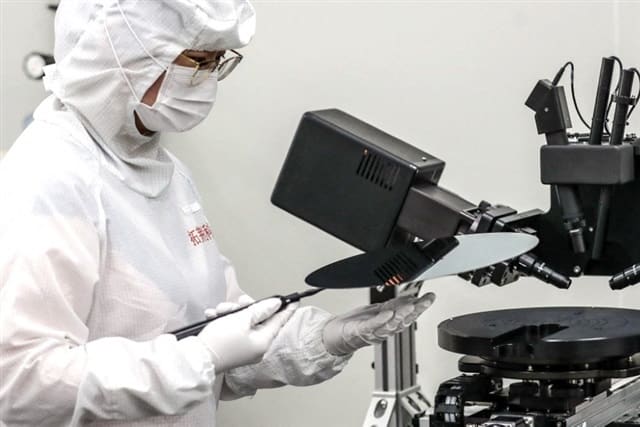
The company, which specializes in plasma-enhanced chemical vapor deposition and atomic layer deposition equipment, has benefited from China's accelerated push to build domestic fabrication capacity. Foundries and memory makers in the country are ramping orders for tools that can handle sub-10-nanometer processes, and Piotech has positioned its latest platforms to serve that segment.
Deposition Equipment Takes Center Stage
Deposition remains a critical bottleneck in advanced node manufacturing. As transistor geometries shrink and 3D architectures proliferate, chipmakers need equipment capable of depositing ultra-thin, conformal films with atomic precision. Piotech's product portfolio spans both high-volume production tools and R&D systems for emerging materials.
Revenue from deposition equipment accounted for the majority of Piotech's first-half sales, reflecting a structural shift in China's semiconductor capital expenditure. Where earlier waves of investment prioritized lithography and etching, the current cycle places greater emphasis on deposition and cleaning, areas where domestic suppliers have made faster progress closing the performance gap with international incumbents.
Economies of Scale Kick In
Piotech's margin expansion in the first half underscores the leverage inherent in the equipment business. Once a platform passes qualification at a leading fab, repeat orders flow with lower sales and engineering costs. The company has also streamlined its supply chain, reducing reliance on imported subsystems and shortening lead times.
Management noted that several of its newer deposition chambers entered volume production during the period, a milestone that typically marks the transition from development expense to recurring revenue. The installed base grew across logic, memory, and power-semiconductor fabs, diversifying the revenue mix and reducing concentration risk.
Regional Context and Competitive Dynamics
China's semiconductor equipment market has become a focal point in the broader technology competition between Beijing and Washington. Export controls on advanced lithography and inspection tools have spurred Chinese chipmakers to look inward for equipment suppliers, even as they pursue workarounds to maintain access to cutting-edge processes.
Piotech competes with established players such as Applied Materials, Lam Research, and Tokyo Electron in deposition, though it remains largely confined to the domestic market. Its recent financial performance suggests it is capturing share in China's mid-tier and trailing-edge nodes, where performance requirements are less extreme and price sensitivity higher.
The company's growth trajectory also reflects Beijing's industrial policy. State-backed investment funds have channeled capital into semiconductor equipment makers, and local fabs face pressure to source domestically where feasible. Piotech's ability to scale hinges on continued policy support and its success in closing the technology gap on the most advanced tools.
What Comes Next
Piotech's first-half results set a high bar for the remainder of 2026. The company has guided for continued revenue growth, though it acknowledged that margin sustainability will depend on maintaining R&D intensity and managing component costs in a volatile supply environment.
The deposition equipment market is entering a phase of heightened technical complexity. Gate-all-around transistors, backside power delivery, and advanced packaging all demand new film stacks and tighter process control. Piotech's ability to deliver tools for these architectures will determine whether its profit surge marks a durable inflection or a cyclical peak tied to a particular investment wave.
For now, the firm stands as a bellwether for China's progress in semiconductor equipment self-sufficiency. Its results suggest that, in at least some segments, domestic suppliers are moving beyond basic capability and beginning to capture meaningful share in volume production.
RELATED STORIES

AMEC Reports 300% Profit Jump as China Chipmaker Bets $520M on Expansion
Cheng Wei-Lun · 3 min

Goertek Posts Revenue and Profit Growth in First Half of 2026
Cheng Wei-Lun · 2 min
China Advances Domestic Chip Production to Replace 85% Foreign Reliance
Cheng Wei-Lun · 3 min

Ubtech and Unitree Share Beijing Robot Spotlight as Nvidia Executives Appear
Cheng Wei-Lun · 3 min
Spot something wrong? Email editor@briefasia.com. We log every correction publicly.