Finance · Banking
Philippines Narrows Tax Penalty Scope for Retirement Account Withdrawals
New BIR rule applies 20% early withdrawal penalty only to assets actually withdrawn, leaving remaining PERA portfolios intact
KEY TAKEAWAYS
- ·The Bureau of Internal Revenue now applies the 20% early withdrawal penalty only to assets actually withdrawn from PERA accounts, excluding unrealized gains and remaining investments.
- ·PERA is a voluntary retirement program under Republic Act 9505 offering tax incentives to supplement mandatory social insurance systems in the Philippines.
- ·The clarification aims to increase investor flexibility and confidence as part of the government's push for clearer tax rules and improved ease of doing business.
Penalty Base Redefined
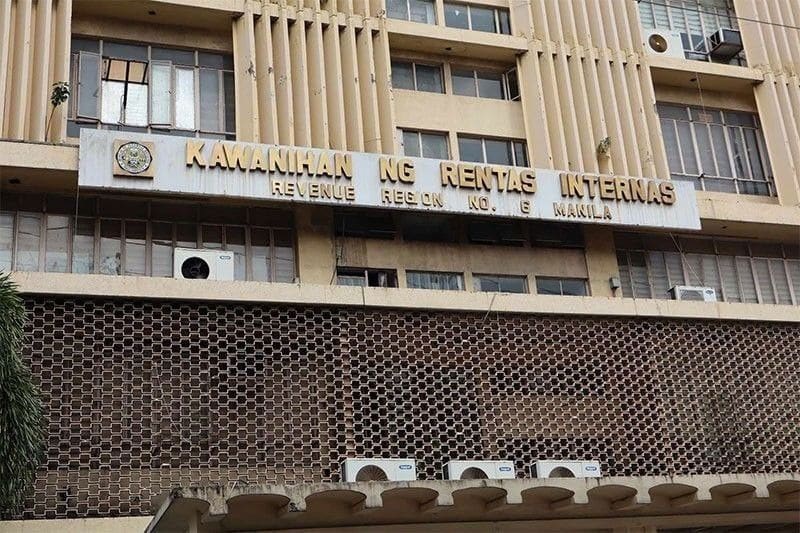
The Philippines' Bureau of Internal Revenue has narrowed the tax penalty for early withdrawals from Personal Equity and Retirement Accounts, clarifying that the 20% charge applies solely to income attributable to assets actually withdrawn. Under Revenue Memorandum Circular 91-2026, unrealized gains and assets that remain invested are excluded from the penalty calculation.
The clarification addresses a longstanding ambiguity in how the Early Withdrawal Penalty is computed. Previously, investors faced uncertainty about whether accessing a portion of their PERA would trigger penalties across their entire retirement portfolio. The new rule establishes that only the withdrawn segment is subject to the levy, while the remaining balance continues to grow tax-advantaged.
BIR Commissioner Charlito Martin Mendoza said the change gives investors greater flexibility in managing retirement savings without exposing untouched assets to penalties. The 20% early withdrawal penalty and recovery of the five percent tax credit now apply exclusively to withdrawn assets, according to the bureau.
PERA Program Structure
Created under Republic Act 9505, the Personal Equity and Retirement Account program is a voluntary savings vehicle designed to supplement mandatory systems including the Social Security System and Government Service Insurance System. The program offers tax incentives to individuals and employers who contribute to designated retirement accounts.
PERA's tax advantages include a five percent tax credit on annual contributions up to a specified ceiling, plus tax-free growth on investment income within the account. Early withdrawals before retirement age forfeit these benefits and incur the 20% penalty, which the new circular now limits to the withdrawal amount rather than the entire account.
The program has attracted modest uptake since its launch, with tax incentives serving as the primary draw for middle- and upper-income earners seeking to build retirement savings beyond mandatory social insurance. The BIR's clarification is intended to remove a friction point that may have discouraged partial withdrawals in emergency situations.
Tax Treatment Details
The circular specifies that taxes not covered by PERA exemptions continue to apply under existing law. Stock transaction tax, value-added tax, documentary stamp tax, and applicable percentage taxes remain in effect for transactions within PERA accounts, according to the bureau.
PERA administrators bear responsibility for calculating, withholding, reporting, and remitting the early withdrawal penalty. The rule places compliance obligations on financial institutions managing the accounts rather than individual account holders, streamlining enforcement.
Mendoza framed the clarification as part of the bureau's taxpayer-centric reform agenda, known as BIR DARES. The initiative aims to clarify requirements, reduce uncertainty, and make tax administration more predictable. President Ferdinand Marcos Jr. and Finance Secretary Frederick Go have directed agencies to improve ease of doing business and strengthen investor confidence, according to the commissioner.
Regional Retirement Policy Context
The Philippines joins other Southeast Asian economies in refining voluntary retirement savings programs to complement state pension systems. Singapore's Supplementary Retirement Scheme and Malaysia's Private Retirement Scheme offer similar tax incentives with varying penalty structures for early access.
The region faces demographic pressure as populations age and traditional family support structures weaken. Governments are seeking to encourage private retirement savings without locking funds so tightly that savers avoid the programs altogether. The BIR's move to limit penalty scope reflects this balance, allowing partial liquidity while preserving incentives to keep the bulk of savings invested until retirement.
Financial advisors in Manila have noted that clarity on penalty calculation removes a barrier to PERA adoption. Wealthier Filipinos often prefer real estate or direct equity holdings over retirement accounts when rules are perceived as rigid or unclear. The new circular may shift some allocation toward PERA vehicles, particularly among professionals and overseas workers seeking tax-efficient retirement planning.
The bureau's clarification arrives as the Philippines seeks to deepen capital markets and expand the investor base beyond institutional players and high-net-worth individuals. Predictable tax treatment is a prerequisite for retail participation in long-term savings vehicles, and the BIR's recent moves suggest recognition that administrative clarity can drive financial inclusion as effectively as headline tax rates.
RELATED STORIES

Philippine Stocks Edge Higher as Investors Hunt for Bargains After Pullback
Mariel D. Santos · 2 min

Philippines Plans Two-Year Return of $1.9 Billion PDIC Reserve
Priyanka V. Rao · 3 min

Visa and UMSI Launch Smartphone Payment System for Philippine Small Businesses
Priyanka V. Rao · 2 min

Alliance Global Reports 3% Profit Growth to ₱16 Billion in First Half
Mariel D. Santos · 3 min
Spot something wrong? Email editor@briefasia.com. We log every correction publicly.