Asia · Business
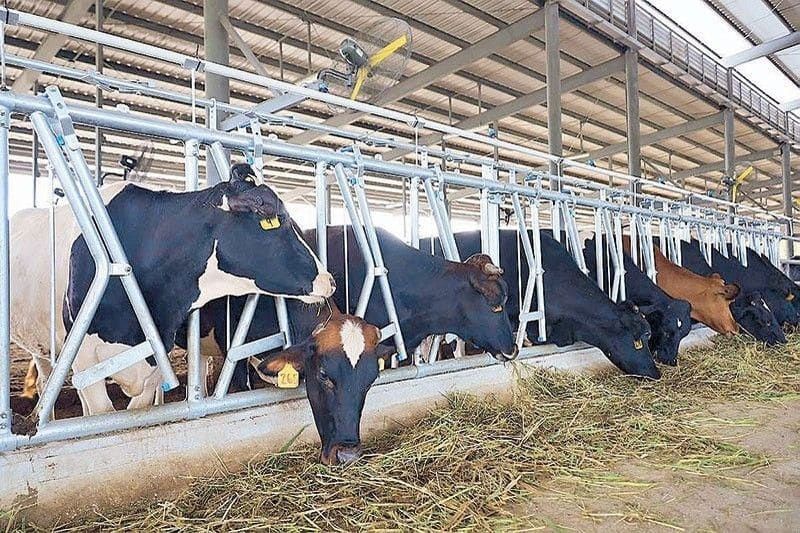
Philippines Milk Output Jumps 21% as Dairy Herd Expands
Government feeding programs and higher farmgate prices drive the strongest first-half growth in years, signaling a shift in the archipelago's import-reliant dairy market.
KEY TAKEAWAYS
- ·Philippine milk production climbed 21.2 percent to 25.38 million liters in the first half, while the national dairy herd expanded 6.5 percent to 165,858 head.
- ·Government feeding programs created reliable institutional demand, encouraging farmers to invest in herd expansion and better feed, with farmgate prices rising modestly.
- ·The sector now faces a scaling test: sustaining double-digit growth will require improved cold storage, supply chain infrastructure, and engagement from private buyers.
Production Surge Reflects Expanding Capacity
The Philippines produced 25.38 million liters of milk in the first six months of this year, a 21.2 percent jump from 20.94 million liters in the same period of 2025, according to the National Dairy Authority. The gain marks one of the strongest half-year performances in recent memory for a sector that has historically struggled to meet domestic demand.
The country's dairy herd grew to 165,858 head during the period, up 6.5 percent from 155,662 head a year earlier. Farmgate prices edged higher as well: cow's milk rose 0.41 percent to 47.05 pesos per liter, while carabao milk climbed 4.95 percent to 89.6 pesos per liter. At constant 2018 prices, the value of dairy production reached 975.73 million pesos, a 21.4 percent increase, data from the Philippine Statistics Authority showed.
The National Dairy Authority attributed the momentum to government feeding programs that have created predictable, large-scale demand for locally produced milk. Schools, hospitals, and nutrition initiatives increasingly source from domestic suppliers, giving smallholder farmers the confidence to expand herds and invest in better feed and equipment.
Confidence and Capital Flow to Farms
"Our farmers are becoming more confident in investing in their farms because they see a growing and reliable market for their milk," NDA administrator Marcus Antonius Andaya said. The shift is visible in Nueva Ecija and other dairy-producing provinces, where cooperatives report higher inflows of working capital and a willingness to upgrade milking infrastructure.
The Philippines remains heavily reliant on imported dairy products, which account for the vast majority of consumption. But the latest figures suggest the gap is narrowing, at least at the margin. Rising production, combined with stable prices and steady herd growth, points to an industry that is beginning to operate at scale rather than as a collection of subsistence operations.
Regional Context and Market Dynamics
Across Southeast Asia, dairy remains a challenging sector. Climate, land constraints, and the economics of feed make large-scale milk production difficult compared to temperate regions. Yet several ASEAN economies have pursued self-sufficiency targets in recent years, driven by food security concerns and the desire to reduce import bills.
The Philippines has taken a different path, focusing less on sweeping tariff protection and more on demand-side interventions. By anchoring production to institutional buyers, the government has created a floor for farmgate prices and reduced the volatility that typically discourages investment in livestock.
The approach appears to be paying off. Herd expansion at this pace is unusual for the archipelago, where access to credit, veterinary services, and quality feed has historically been uneven. The fact that farmers are adding animals suggests they expect the current demand environment to persist.
What Comes Next
The real test will be whether the sector can sustain double-digit growth as it scales. Larger herds require more sophisticated supply chains, better cold storage, and tighter quality control. The National Dairy Authority has signaled it will continue to prioritize institutional procurement, but private buyers will need to step up if the industry is to reach the next tier of production.
For now, the first-half numbers offer a rare bright spot in Philippine agriculture, a sector more often defined by weather shocks and volatile global commodity prices. Milk may not be a traditional export earner for the country, but it is becoming a more credible domestic industry.
RELATED STORIES
Philippines Reopens Doors to Canned Pork Imports After Seven-Year Ban
Priyanka V. Rao · 3 min
Philippines Clears 394 Power Projects in Twelve Months Under New Energy Regulator
Priyanka V. Rao · 4 min
Filipino Workers Say They're Paid Fairly, Yet Half Still Can't Cover Living Costs
Priyanka V. Rao · 3 min

Philippine Lawmakers Push to Remove System Loss From Electricity Bills
Mariel D. Santos · 3 min
Spot something wrong? Email editor@briefasia.com. We log every correction publicly.